Watch For The Dips

'17 Scherzer

For as long as kids have looked at the back of baseball cards, they’ve had a general understanding of ERA (Earned Run Average). If you look up the definition, the general consensus is “A measure of a pitcher’s performance by dividing the total earned runs allowed by the total of innings pitched and multiplying by nine”. My baseball education taught that it was earned runs multiplied by nine, divided by innings pitched but the numbers come out the same. The premise of the statistic was to not burden a pitcher with runs that had been enabled by errors or passed balls. In other words, eliminating from the calculation events that were out of his control.


If you’ve watched enough baseball to give the definition a personal “eye test”, you already know that numerous runs score in a game that don’t necessarily fit the criteria. If a pitcher leaves the game with the bases loaded (through hits & walks) and the relief pitcher gives up a triple, the original hurler just gave up three earned runs while he was sitting in the dugout. If there are runners on 2B & 3B with two outs and a weak groundball trickles under the glove of the shortstop into left field, two earned runs score whether the fielder in question was Pee Wee Reese or Pokey Reese. Outcomes like these are what motivate the development of advanced baseball statistics.


In an attempt to move beyond ERA, we now have a stat called DIPS (Defensive Independent Pitching). The essential theory is that pitchers can only really control strikeouts, walks and home runs allowed. To that end, analysts have come up with a formula to determine a pitcher’s skill based on those three factors and once that number is calculated, they tie it to MLB’s run scoring environment so that it aligns with ERA.


The question for those of us playing Fantasy Baseball is if the DIPS numbers can assist in determining the value and predictability of pitchers. Many a team has been torpedoed by a couple of starting pitchers that didn’t perform to expectations and we’re always looking for an edge. As a 20+ year fantasy veteran has said many times, “I hate pitchers”. Just taking a superficial look at DIPS results for 2017 reveals the following tidbits.


> For the season, only eight (8) major league starting pitchers had an ERA under 3.00, while just four (4) had a DIPS under the same threshold. The members of the exclusive club that land on both lists are Corey Kluber, Chris Sale, Stephen Strasburg & Max Scherzer.


> Let’s look at the other four sub-3.00 ERA hurlers and see how their performance matched up when teammates were taken out of the equation. Clayton Kershaw’s DIPS number of 3.02 was significantly higher than his 2.31 ERA (2nd best overall). Could it be that his season wasn’t quite as good as it looked on the surface? Luis Severino’s 3.06 DIPS number was very close to his actual 2.98 ERA, so that performance looks solid. The other two posted numbers that make you think twice on their Fantasy (and real-world) value. Gio Gonzalez had a DIPS figure (3.87) almost a run higher than his ERA (2.96) and Robbie Ray was in a similar category with a DIPS number of 3.59 compared to a 2.89 ERA. While these are certainly two very good Pitchers, the question is, are they as good as they seemed in 2017?


> So, if you’re a Fantasy owner or a real-world GM, how can these new statistics help your cause? Let’s start with free agent SP’s still on the market (as 1/7)…


* Yu Darvish, 3.86 ERA / 3.73 DIPS – Looking for a six-year deal?

* Jake Arrieta, 3.53 ERA / 4.04 DIPS – In his 30’s looking for a nine-figure contract?

* Lance Lynn, 3.43 ERA / 4.73 DIPS – Is this worth four years and $50-$60 Million?

* Alex Cobb, 3.66 ERA / 4.12 DIPS – A contract similar to Lynn’s?

* Andrew Cashner, 3.40 ERA / 4.73 DIPS – Should be represented by Penn & Teller because this is smoke & mirrors.


> What other rotation members might be slightly over-rated or over-priced? In other words, you might want to temper your expectations.


* Drew Pomeranz, 3.32 ERA / 3.82 DIPS

* Marcus Stromen, 3.09 ERA / 3.90 DIPS

* Sonny Gray, 3.55 ERA / 3.86 DIPS

* Zach Davies, 3.90 ERA / 4.19 DIPS


> How about the hurlers who might have had some bad luck in 2017?


* Chris Archer, 4.05 ERA / 3.34 DIPS

* Jeff Samardzija, 4.42 ERA / 3.52 DIPS

* Jose Quintana, 4.15 ERA / 3.57 DIPS

* Michael Wacha, 4.13 ERA / 3.58 DIPS

* Jon Lester, 4.33 ERA / 3.97 DIPS

* Tanner Roark, 4.67 ERA / 4.00 DIPS


> And, of course, every team wants stability on their staff.


* Aaron Nola, 3.54 ERA / 3.23 DIPS

* Zack Greinke, 3.20 ERA / 3.27 DIPS

* Jacob DeGrom, 3.53 ERA / 3.36 DIPS

* Michael Fullmer 3.83 ERA / 3.70 DIPS

* Carlos Martinez, 3.64 ERA / 3.81 DIPS


You’ll notice that Win-Loss records aren’t part of this analysis. Fantasy players have long understood the cruel category of “Wins” but the real game has begun to catch up. With starting pitchers going less innings and teams spending $8 Million on middle relievers, the concept of a 20-game winner is a thing of the past. In 2017, no big-league Pitcher even won 19 games…Yu Darvish won 10 games! MLB teams are no longer concerned with starters going deep into games because they’ve got lock-down guys in the bullpen. What they want is quality innings.


> Who’s the worst when it comes to DIPS? 2017’s bottom five are Jeremy Hellickson (5.64), Jose Urena (5.11), John Lackey (5.06), Ricky Nolasco (4.89) & Julio Teheran (4.81).


As always, Fantasy success comes from balance, both on your team and in your scouting, so maybe DIPS has a place in your toolbox. And, the next time one of your baseball buddies asks how you are, you can reply, “I’m feeling much better now that I’m monitoring my DIPS”.


Are You A Real Baseball Fan?

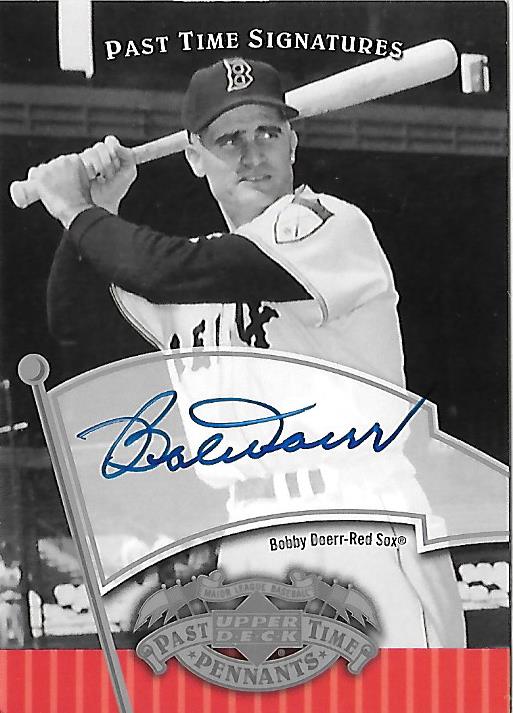
'05 Doerr Auto

Are you a real baseball fan? A true baseball fan? Don’t reply too quickly because membership in this exclusive club requires certain criteria. Can you answer yes to most of the following questions…


> Do you still have a vivid memory of that Home Run you hit in Little League?


> Does it take you back in time when you remember that first autograph from a major leaguer?


> Did you study statistics and do you still know the lifetime batting average of your favorite player?


> Is there at least one big league jersey hanging in your closet?


> Did you get your Grandson a T-shirt that says “6+4+3=2”?


> Does a 3-2 count with the bases loaded still put you on the edge of your seat?


> Is there a Bill James publication somewhere on your bookshelf?


There are dozens more on the baseball SAT, but you get the idea. This marvelous sport we love is part of the fabric of our lives. If you’re a baby boomer or a millennial, the history of the game speaks to you and you’re always ready for a baseball-themed conversation…or debate. You can probably name most of the 31 players who have reached 3,000 hits but a football fan wouldn’t know some of the 30 players with 10,000 career rushing yards if you gave them the names. If you doubt that, ask some of your Fantasy Football buddies about Thomas Jones or Corey Dillon.


So, as we celebrate the history of the game and the wonders of the 2017 season, let’s take a look at who the sport lost in the past year…


> Bobby Doerr, Red Sox 2B 1937-1951 – The heart of the BoSox for parts of three decades, he was the oldest living Hall of Fame member at age 99 when he passed away in November. Made the All-Star team in nine of ten seasons and missed his age 27 year serving in World War II.


> Jim Bunning, Tigers & Phillies P 1955-1971 – The other Hall of Famer we lost in 2017, he won 224 games and pitched over 250 innings in eight different seasons. He threw no-hitters in both leagues and later represented Kentucky in the U.S. Senate.


> Roy Halladay, Blue Jays & Phillies P 1998-2013 – Tragically lost at age 40, he was one of the most dominating hurlers for the good part of a decade. Captured two Cy Young Awards and had a lifetime record of 203-105.


> Jimmy Piersall, Red Sox & Indians OF 1950-1967 – One of the great characters of the game, he was a superb defensive player winning two Gold Gloves.


> Don Baylor, Angels DH 1970-1988 – Built like a football player, he accumulated over 2,000 Hits and 338 HR’s. The 1979 AL MVP, he led the league that season in Runs (120) and RBI’s (139).


> Lee May, Reds & Orioles 1B 1965-1982 – A middle of the lineup slugger, he made three All-Star teams, had over 2,000 Hits and powered 354 HR’s.


> Roy Sievers, Senators OF 1949-1965 – A consistent power-hitter in the 1950’s, he made four All-Star teams and won the AL Rookie of the Year Award in 1949. In 1957, he led the AL in HR’s (42) & RBI’s (114).


> Solly Hemus, Cardinals SS 1949-1959 – His specialty was getting on base. Led the NL in being hit by pitches in both ’52 & ’53 and had a lifetime OBP (On-Base %) of .390.


> Darren Daulton, Phillies C 1983-1997 – A stalwart behind the plate, he made three All-Star teams and led the NL with 109 RBI’s in 1992.


> Jim Landis, White Sox OF, 1957-1967 – One of the great defensive players of his era, he won five consecutive Gold Gloves in CF (1960-1964).


> Frank Lary, Tigers P 1954-1965 – The workhorse of the Bengals staff, between 1956 and 1961, he had 103 Wins & 99 Complete Games.


88 former big-leaguers died in 2017 and if you’re a real fan, you’ll remember many of them. There were guys who played in the 1940’s like Ned Garver & Sam Mele, guys who excelled at more than one sport like Gene Conley, guys with great nicknames like Todd “Which Hand Do You” Frohwirth, players who became Managers like Dallas Green & Gene Michael, guys who were defined by a famous moment like Tracy Stallard and guys with famous roommates like Bob Cerv. For me, there were also players I watched in the 1950’s like Daryl Spencer, Jim Rivera, Bob Kuzava & Dick Gernert.


They’re all part of the history because they were all in the “Show”.


Mama, Let Your Babies Grow Up To Be Relievers

Swarzak

Today’s question is what would you do if, during the next nine months, you received $8 Million? Of course, there would tax obligations and with the current American median household income at about $59,000, you’ll need to do some significant planning. Maybe that $1 Million house on the hill, 2 or 3 new cars, trips to exotic places and college funds for the youngsters in the family? Or a few charitable contributions or surprise gifts (like a $10,000 check) for special people in your life? If you’ve ever purchased a lottery ticket, these things may have crossed your mind. After all, as Sam Spade once said, it’s “The stuff that dreams are made of”.


In today’s world of Major League Baseball, these dreams are not so far-fetched. Just train that young fellow in your family the ability to pitch a quality inning 3 or 4 times a week. How is this possible, you ask? Once you analyze the landscape of today’s baseball rosters, it will become crystal clear to you. When I first became a fan, only 9 or 10 of the spots on a 25-man roster were filled with Pitchers. There were 4 SP’s, 2 fairly solid guys in the bullpen and 3 or 4 old “war horses” who were no longer good enough to start games. Once free agency arrived and 5-man rotations became the norm, things started to change and today, specialization is the structure of a pitching staff.


If you’re the GM of a team today, your goal is to have quality arms to pitch the 9th inning (Closer), 8th inning (Set-Up Guy), 7th inning (Bridge Guy), 5th & 6th inning (Multiple Inning Guy), 3rd & 4th inning (Long Man) and even a hurler to get one batter out (Loogy = Left-Handed One-Out Guy). The importance of all this is clarified by looking at recent championship teams. The 2015 Royals only needed 5 or 6 innings out of their SP because Ryan Madson, Kelvin Herrera, Wade Davis & Greg Holland were in the bullpen. Relievers delivered 56 Saves for that team. The 2016 Cubs gave up their top prospect for a two-month rental of Aroldis Chapman. The 2017 Astros had three relievers with ERA+ ratings of 172, 148 & 133 (100 is league average) and still used SP’s in the post-season to get more innings out of bullpen.


The 2017-18 off-season has been slow for big money free agent hitters like J.D. Martinez, Eric Hosmer, Mike Moustakas, Lorenzo Cain & Carlos Gonzalez but the market for middle-relievers has been booming and the payoffs have “old school” fans scratching their heads. Let’s look at some these lottery winners who happened to find the incredible sweet spot between recent performance and free agency.


> Steve Cishek, Cubs, $13 Million (2 years) – This side-arming 31 year old RH was once the Closer for the Marlins…73 Saves in 2013-14. Started 2017 on the DL but ended up pitching 45 innings with a 2.01 ERA & 0.90 WHIP.


> Luke Gregerson, Cardinals, $11 Million (2 years) – Another veteran with Closing experience, he had 31 Saves for the Astros in 2015. Now at age 33 with a World Series ring, he’s coming off a season with a 4.57 ERA but 70 K’s in 61 IP.


> Tommy Hunter, Phillies, $18 Million (2 years) – This will be the 7th stop for a 31 year old who debuted with the Rangers in 2008. Finally healthy in 2017, he posted a 2.61 ERA & 0.97 WHIP in 59 innings at Tampa Bay.


> Brandon Kintzler, Nationals, $10 Million (2 years) – A  33 year old soft-tosser who managed to get 28 Saves for the Twins in ’17 before being traded to Washington. He struck out only 39 batters in 71 innings last season, so beware of the correction.


> Jake McGee, Rockies, $27 Million (3 years) – Another former Closer in his early 30’s, he could be the fallback for Saves if the Rockies don’t find someone else. Had a 3.61 ERA & 1.10 WHIP in 2017.


> Mike Minor, Rangers, $28 Million (3 years) – You’re probably thinking this is a misprint. A once highly touted SP in the Braves organization, he didn’t pitch in the majors during 2015 or 2106. This past season, he posted 6 Wins, 6 Saves and incredible peripheral numbers for the Royals. Now this LH is viewed as the next Andrew Miller.


> Brandon Morrow, Cubs, $21 Million (2 years) – His ERA’s for the Blue Jays in 2013-14 were 5.63 & 5.67. But in 2017, he took the ball almost everyday for the Dodgers in the post-season and has now cashed in big-time. At age 33, this is the pot of gold at the end of the rainbow.


> Pat Neshek, Phillies, $16 Million (2 years) – Another crafty side-armer, he’ll join Hunter in the bullpen. The elder statesman of the group at age 37, he pitched 62 innings in 2017 with a 1.59 ERA & 0.87 WHIP. He’s already made $22 Million in an eleven-year career.


> Bryan Shaw, Rockies, $27 Million (3 years) – The ultimate lesson in stick-to-itiveness, he led the AL in appearances 3 of the last 4 years as a member of the Indians bullpen. GM’s love durability and now, at age 29, he’s rich!


> Joe Smith, Astros, $15 Million ( 2 years) – Another 30-something side-winder, his lifetime ERA (in 11 seasons) is 2.97. Essentially replaces Gregerson in the Houston bullpen.


> Anthony Swarzak, Mets, $14 Million (2 years) – Who? Has made 5 stops in an 8-year career, but the timing is what matters. Splitting 2017 between the White Sox & Brewers, he had a 2.33 ERA and a 1.03 WHIP with 91 K’s in 77 IP. His salary last season was $900,000. America is a wonderful country.


Today’s advice – if you have an athletic boy in the family, take some money out of his college fund and buy a radar gun.

The Hall With It

'16 Martinez, E

This column is being penned during the holiday season and before you know it, the Hall of Fame ballot results will be out there for everyone to digest and debate. As usual, this will be a contentious decision-making process for the baseball writers and reading through the thoughts of various eligible voters, one thing is clear…nobody agrees on anything! This isn’t surprising because in speaking with scores of fans over the last few months, I’ve found the same can be said of their opinions. From people who would put the maximum of ten players on their imaginary ballot to those who want to make some sort of statement by leaving the ballot blank to everywhere in between. The PED issue has muddied the waters to such an extent, there is no right or wrong answer. The only position that is stupid, is the one where a fan says, “steroids don’t matter that much, you still need to hit the ball.” All those people don’t have the basic math skills to understand that a 370 foot fly ball out becomes a 390 foot Home Run with only a 5% difference in bat speed and strength.


Based on a recent survey utilizing ballots made public early in the process, there seems to be a reasonable chance that a number of players will be elected by the writers in 2018 and despite the feelings of Joe Morgan, that could include the possibility of Barry Bonds & Roger Clemens. Won’t that be great fun for the fans who have already made plans to travel to Cooperstown for induction weekend? With all this as a backdrop, the Old Duck will enter the fray and share with you his mythical Hall of Fame ballot. One thing I know for sure…nobody will agree with me.


> Trevor Hoffman, YES – Got 67.3% in his first year of eligibility and 74% last year, so the 75% threshold should be exceeded Arguably, the second best Closer ever. 601 Saves…let that sink in.


> Vladimir Guerrero, NO – Honestly, I’m somewhat surprised he got 71.7% last year. His WAR (Wins Above Replacement) of 59.3 is less than both Larry Walker & Gary Sheffield.


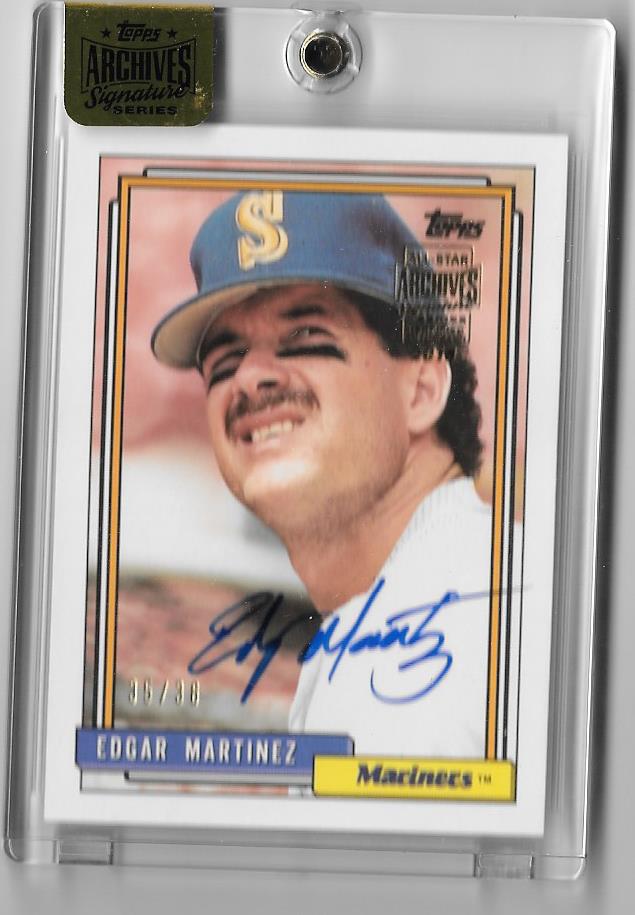
> Edgar Martinez, YES – The argument against the DH doesn’t hold any more credence than the one against relief pitchers did ten years ago. The best at every position belong in the Hall. His lifetime OPS of .933 is better than Mike Piazza and the WAR of 68 seals the deal. Last year’s vote tally was 58.6% but of the 47 ballots made public at this point, he’s on 39 of them. This is his next to last opportunity.


> Roger Clemens, NO – Yes, he was probably a Hall of Fame player without steroids and yes, he will get in someday, but sometimes you must make a stand. If Robby Alomar had to wait a year for spitting on an umpire, this arrogant jerk should have to wait a few years for each needle-marked cheek. Received 54.1% in 2017.


> Barry Bonds, NO – Same comment as Clemens. Was at 53.8% last year.


> Mike Mussina, YES – This is one of the tougher choices, but the overall numbers are very impressive…270 Wins and a WAR of 83 are both better than Curt Schilling. Now that Jack Morris is in, maybe his body of work will improve last year’s 51.8%.


> Curt Schilling, NO – One of those marginal guys with 216 Wins, his lifetime WAR of 76 is very impressive and higher than many Pitchers already enshrined. While it isn’t fair, his political comments will probably impact the voting. He was behind Mussina last time at 45%.


> Fred McGriff, NO – As time goes on and voters have a chance to digest his numbers prior to the PED era, more consideration will come his way…was at 21.7% in 2017


> Jeff Kent, NO – His credibility has more to do with his position (2B) than his performance. Only got 16.7% last time.


> Larry Walker, NO – Another player who may be more appreciated as the years roll on, but the Colorado factor makes it difficult to determine his real credentials…last year’s number was 21.9%


> Gary Sheffield, NO – His cumulative totals of 509 HR’s and a 60.3 WAR are impressive but they’re watered down by the era in which he played. Also impacted by a lack of fan loyalty because he played for eight different franchises. The 2017 number of 13.3% tells you where he stands.


> Billy Wagner, NO – Had an outstanding career but overshadowed by Rivera, Hoffman and others…received 10.2% last year.


> Sammy Sosa, NO – Got 8.6% of the vote last year…everyone feels he had help. He will, however get more votes than Chico Esquela.


> Manny Ramirez, NO – Surprisingly garnered 23.8% in his first year of eligibility, as he was caught cheating on multiple occasions. Maybe his use of female hormones can get him into the “League of Their Own” wing.


Only three of my ten spots are filled but that seems reasonable. For the record, I’ve never understood writers who make players wait for their vote because they seem to think there’s a difference in “First-Ballot” Hall of Famers. So, two first-timers will also get my vote…


> Chipper Jones, YES – From a personal perspective, I always felt he was slightly over-rated, but the numbers are overwhelming. 2,700+ Hits, 468 HR’s, a .930 lifetime OPS and a WAR of 85.


> Jim Thome, YES – A great power hitter who excelled into his mid-30’s long after PED testing was in place. Clobbered 612 HR’s with a lifetime OPS of .956 and a WAR of 72.9. To clarify how respected he was as an opponent, he had 100+ walks in nine separate seasons. That’s how a power hitter achieves a .402 lifetime OBP.


There’s my ballot…Hoffman, Martinez, Mussina, Jones & Thome. A great class…with great class.


Busts Of The 90’s

'92 Taylor

Sorry boys, this isn’t going to be about Carmen Electra, Jennifer Tilly, Yasmine Bleeth & Denise Richards. Our topic today is, however, about a word that will cause excitement for Fantasy players and baseball card collectors everywhere and that word is PROSPECTS!


By definition, a prospect is a possibility or a chance, but baseball fans seem to cling to the expectation that most prospects will become stars. After all, we’ve scouted these guys, watched their progress, analyzed the numbers and we’re sure that all our choices will equal the success of Aaron Judge or Cody Bellinger. That will put us over the top in our Fantasy league or make us a fortune on eBay when mere mortals are bidding on our stash of rookie cards. The truth is that the odds of that happening are very small and we don’t always factor in the reality when assessing young players. In fact, sometimes, our worst outcomes emanate from our actual success. Doesn’t every Fantasy league have at least one owner who picked up an end-gamer in a draft who became a star? The problem is that he’ll always remember that success and it could adversely impact his strategy for the next decade as he chases the next Mike Trout and it turns out to be Bubba Starling.


For card collectors, it can be even more harsh. Looking at collections over the years, the Old Duck can’t begin to calculate how many times he’s seen stacks of rookie cards from the 1990’s representing a significant investment. Do the names Jeff Jackson, Jeff Juden, Kyle Abbott, Eric Anthony, Tyler Houston, Ben McDonald & Kevin Maas sound familiar? If you collected Topps baseball cards in 1990, they certainly would. And, they’d be sitting in a box in your garage collecting dust. Right next to them would be a box from 1991 that included the rookie cards of Shane Andrews, Greg Colbrunn, Tim Costo, Carl Everett, Brian McRae, Mike Lieberthal, Marc Newfield & Dan Wilson. In 1992, it was Scott Ruffcorn, Brad Ausmus, Shawn Green, Greg Anthony, Eddie Taubensee, Mike Magnante, Pat Mahomes, Pokey Reese & Scott Hatteberg.


So, with the calendar turning and Fantasy thoughts starting to percolate in our brain, let’s help keep prospects in perspective by looking at some the top players for each year of the 90’s. To keep us from getting too carried away with the value of our “can’t miss” players, we’ll only look at ones in Baseball America’s top twenty who never made an impact along with some who never even played a game in the major leagues.


1990 > #6 Kiki Jones, Dodgers Pitcher – Went 8-0 with a 1.58 ERA at age 19 in 1989 at Great Falls in the Pioneer League…stayed in professional ball until 2001 and never made it to AAA.


1991 > #5 Roger Salkeld, Mariners Pitcher – The third player picked in the 1989 Draft, his lifetime record was 10-10 with a 5.61 ERA.


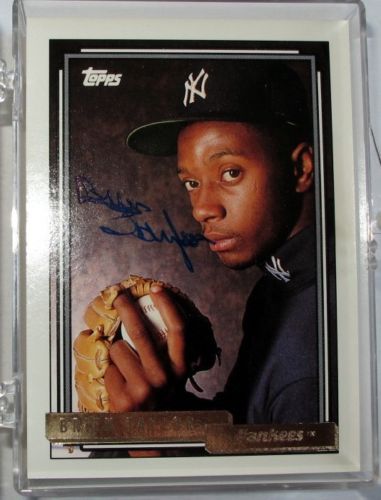
1992 > #1 Brien Taylor, Yankees Pitcher – This youngster was the first pick in the 1991 Draft…he was so hyped as a future star, Topps produced a limited edition “Gold” factory baseball card set in 1992 that included an autograph card of this phenom before he ever threw a pitch in pro ball. Arm problems and personal issues prevented him from ever pitching above AA and his lifetime ERA as a minor-leaguer was 5.12.


1993 > #10 Tyrone Hill, Brewers Pitcher – The 15th player chosen in the 1991 Draft, he never pitched above AA…was out of baseball by age 26 with a lifetime minor-league record of 14-14.


1994 > #10 Jose Silva, Blue Jays Pitcher – In ’93 at Hagerstown in the Sally League, he posted a 12-5 record with a 2.52 ERA at age 19…lifetime major league record was 25-28 with a 5.41 ERA.


1995 > #2 Ruben Rivera, Yankees OF – He was just ahead of Chipper Jones & Derek Jeter on the prospect list…as a major-leaguer, he hit .216 in 662 games and was waived by the Yankees in 2002 when they discovered he had stolen a bat & glove from Jeter’s locker and sold them for $2,500.


1996 > #12 Matt Drews, Yankees Pitcher – Taken in the 1st round of the ’93 Draft, this right-hander was 15-7 with a 2.27 ERA for Tampa of the Florida League in 1995…the following five years in the minors produced a record of 23-64.


1997 > #4 Matt White, Devil Rays Pitcher – the 7th player selected in the 1996 Draft, he never got to the “show”…labored in the minors until 2003 with a lifetime record of 35-47.


1998 > #13 Chad Hermansen, Pirates 2B – The 10th pick in the 1995 Draft, he was in the majors by age 21…accumulated 492 lifetime major league at-bats and hit .195.


1999 > #11 Alex Escobar, Mets OF – Signed out of Venezuela, he hit 27 HR’s and swiped 49 bases in the Sally League at age 19 in ’98…final MLB totals were 388 AB’s and a .258 BA…he was out of baseball by age 27.


While I’d like to spend more time convincing you to temper your excitement about prospects, it’s time for me to head for the garage and sort out the rookie cards of future Hall-of-Famers Gregg Jeffries, Pete Incaviglia, Candy Maldonado, Jerome Walton & Oddibe McDowell. You see, some of us were even around in the 80’s.


The Little Black Book

1930 World Series

Baseball fans of today probably can’t even imagine sitting next to a radio in their home and listening to a ball game. There may be some debate as to whether it was Marconi or Tesla who really invented the amazing contraption, but there is no argument about its connection to the history of baseball.


The kids of the 1950’s were thrilled to have a $25 transistor radio that brought them baseball broadcasts. Today, a youngster can read tweets from their favorite ballplayer on an $800 Smartphone and check the results of a game in real time. But what about the generation of fans between the two World Wars?


In a recent SABR (Society for American Baseball Research) publication, a fascinating article by Donna Halper gives us a glimpse into the background of radio’s impact on the game. Did you know that major league baseball games weren’t even available on radio until the mid-1920’s? That was five years after Babe Ruth joined the Yankees. Prior to that time, fans of the home team could go down to the part of town where the newspaper offices were located and scores would be posted on boards after the results came through by teletype. Starbucks would have built a store on the closest corner.


Fictional Police Detective Harry Bosch (from the Michael Connelly novels) feels that every murder case has a “Crossing”. That’s when the investigation comes together with some separate facts or incidents that brings clarity to the puzzle. Reading the SABR piece gave me a “Crossing” moment with regard to baseball.


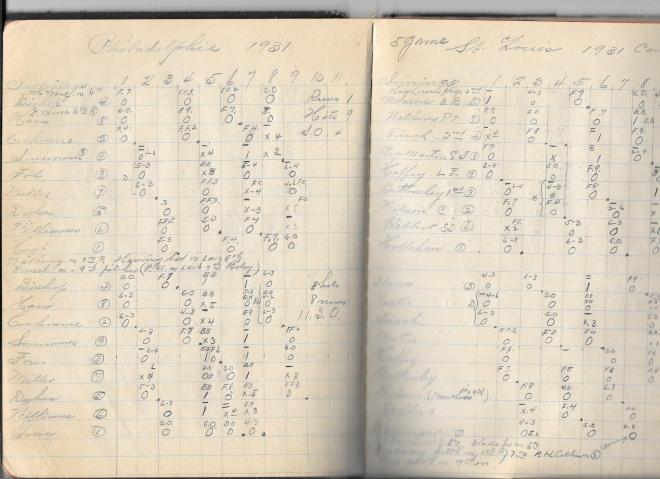
Numerous sports memorabilia collections come across my desk and not everything is easily categorized. One such collection had a small, well-worn black notebook and, at first, it didn’t seem to be sports related. On the inside cover was the name “Arlene” from Modesto, California and a date of 1910. Looking through a few dozen pages, it seemed to have been used for schoolwork, as there were references to geography, history and math. However, as the pages turned, an amazing piece of history came to light. Here, in pencil on two facing pages, was a box score from the first game of the 1930 World Series between the Philadelphia Athletics and the St. Louis Cardinals. After a few more pages of school notes, there was Game 2! Evidently, Arlene was obviously a big baseball fan and whenever she wasn’t burdened with schoolwork, she sat next to the radio writing down detailed information about the Fall Classic.


Thanks to Arlene and baseball-reference.com, we can tell you all about the outcome of these games. The A’s won that first game 5-2 behind the pitching of Hall of Famer Lefty Grove (he was 28-5 during the regular season). The Philadelphia line-up included 3 other HOF members in Mickey Cochrane, Al Simmons & Jimmie Foxx. Cooperstown is also well represented in the Cardinals line-up with Frankie Frisch, Jim Bottomley and losing Pitcher Burleigh Grimes. The Athletics (managed by Connie Mack) eventually won the title in 6 games with Grove hurling 2 complete game victories.


The remainder of the little black book was never used for homework again. The rest of the pages include box scores of every World Series through 1940. During that span, she listened to (and chronicled) the exploits of Hall of Famers called The Sultan Of Swat, Kiki, Gabby, Laruppin’ Lou, King Carl, Master Melvin, Goose, Dizzy, Ducky, Hammerin’ Hank & Joltin’ Joe.


It is an incredible artifact with history on every page and even though Arlene & I have never met, we’ve become great friends.


Baseball Quotes From The Movies

Bang Drum

Baseball fans love baseball movies and can immediately recognize a great line from one of their favorite films. Let’s not forget, however, that there are hundreds of celluloid moments where baseball is referenced by characters in motion pictures that don’t have the national pastime involved in the story at all. Examples include…


> “I love baseball. You know it doesn’t have to mean anything, it’s just beautiful to watch.” – Woody Allen in Zelig (1983)


> “Baseball should be the only thing on an eight year old boy’s mind.” – Aidan Quinn in Stolen Summer (2002)


> Jane: “I’ve heard police work is dangerous.”


Frank: “It is. That’s why I carry a big gun.”


Jane: “Aren’t you afraid it might go off accidently?”


Frank: “I used to have that problem.”


Jane: “What did you do about it?”


Frank: “I just think about baseball.” – Priscilla Presley & Leslie Nielsen in The Naked Gun (1988)


> “I loved baseball ever since Arnold Rothstein fixed the World Series in 1919.” – Lee Strasburg (as Hyman Roth) in The Godfather II (1974)


> “What’s the matter with you? Don’t you want to watch the World Series?” – Jack Nicholson in One Flew Over the Cuckoo’s Nest (1975)


> “You’re a tragic hero. You’re Lou Gehrig.” – Billy Crystal in Father’s Day (1997)


> Q: “Yogi?…why it’s some sort of religion, isn’t it?”


A: “You bet it is – a belief in the New York Yankees.” – Kirk Douglas in Ace in the Hole (1951)


> “I’m an escaped car thief. I broke out of prison to see the Cubs in the World Series.” – James Belushi in Taking Care of Business (1990)


> “Hey, batter-batter-batter, hey batter-batter-batter- swing batter.” – Mathew Broderick in Ferris Bueller’s Day Off (1986)


> “I like baseball. I just never understood how you guys can spend so much time discussing it…I’ve been to games, but I don’t memorize who played third base for Pittsburgh in 1960.” —- “Don Hoak!” Helen Slater, Billy Crystal & others in City Slickers (1991)


When it comes to movies about baseball, the memorable lines are endless. Here are some you might remember…


> “There’s no crying in baseball!” – Tom Hanks in A League of Their Own (1992)


> “When the ball meets the bat and you feel that ball just give, you know it’s going to go a long way. Damn, if you don’t feel like you’re going to live forever.” – John Cusack (as Buck Weaver) in Eight Men Out (1988)


> “Listen, Lupas, you didn’t come into this life just to sit around on a dugout bench, did ya? Now get your ass out there and do the best you can.” – Walter Matthau in Bad News Bears (1976)


> “Ahh, Jesus, I like him very much, but he no help with the curveball.” – Dennis Haysbert (as Pedro Cerrano) in Major League (1989)


> “People all say that I’ve had a bad break. But today, I consider myself the luckiest man on the face of the earth.” – Gary Cooper (as Lou Gehrig) in The Pride of the Yankees (1942)


> “Hey, Dad? You wanna have a catch?” – Kevin Costner in Field of Dreams (1989)


> “God, I just love baseball.” – Robert Redford (as Roy Hobbs) in The Natural (1984)


> “Tonight, he will make the fateful walk to the loneliest spot in the world, the pitching mound at Yankee Stadium, to push the sun back into the sky and give us one more day of Summer.” – Vin Scully in For the Love of the Game (1999)


> “We’re not athletes, we’re baseball players” – Tom Selleck (as Jack Eliot) in Mr. Baseball (1992)


> “I’m your new Catcher and you just got lesson number one: don’t think, it can only hurt the ball club.” – Kevin Costner (as Crash Davis) in Bull Durham (1988)


> “If you build it, he will come.” – Ray Liotta (as Shoeless Joe Jackson) in Field of Dreams (1989)


> “You gotta stop thinking. Just have fun. I mean, if you were having fun you would’ve caught that ball.” – Benny in The Sandlot (1993)


> “The key to being a big league pitcher is the 3 R’s: readiness, recuperation and conditioning” – Daniel Stern in Rookie of the Year (1993)


> “Do you know what we get to do today Brooks? We get to play baseball.” – Dennis Quaid (as Jim Morris) in The Rookie (2002)


> “This is how we do business in Cleveland.” – Reed Diamond (as Mark Shapiro) in Moneyball (2011)


> “Pick me out a winner, Bobby.” – Redford again in The Natural (1984)


> “I’d sell my soul for one long-ball hitter” – Robert Shafer in Damn Yankees (1958)


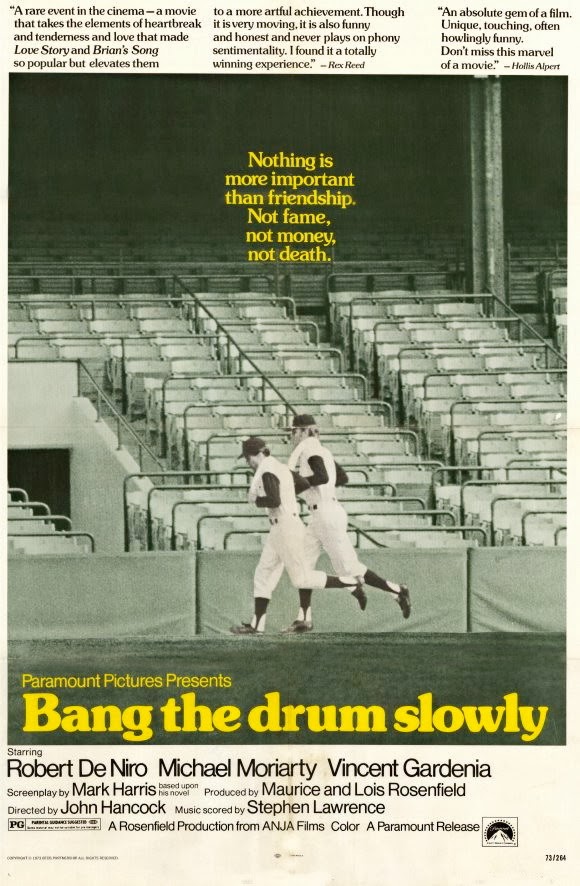
> “From here on in, I rag nobody.” – Michael Moriarty in Bang the Drum Slowly (1973)


> “Juuuuussssst a bit outside” – Bob Uecker in Major League (1989)


If the Old Duck wasn’t such a “Lollygagger”, another entire column could be filled with more great lines from Major League, Bull Durham, A League of Their Own and a few others. And let’s not forget the soliloquies offered up by Burt Lancaster (as Moonlight Graham) and James Earl Jones (as Terrance Mann) in Field of Dreams.


Hope your favorite was mentioned. If you think coming up with a new topic each week to keep you entertained is easy, remember the words of Jimmy Dugan, “It’s supposed to be hard. If it wasn’t hard, everyone would do it. The hard…is what makes it great.”


Sharing The Wins

Altuve Heritage

With the Winter Meetings on the horizon, let’s take a look at the relative value of the players in the game. In a sport awash with money, old-school fans often have difficulty wrapping their heads around the new levels of salaries and budgetary guidelines. With the average MLB salary now above $4 Million, how do we really know what a player’s contribution is worth? And do these contributions really make a difference in the standings?


In other words, what is their contribution to winning games? We’ve discussed WAR (Wins Above Replacement) numerous times in this space and that statistical outcome does impact decisions made by writers voting on awards and General Managers making deals. It has become a mainstream analysis over the last decade and can help clarify and justify some contract amounts. For example, if you believe in the WAR calculations, it confirms that Jose Altuve was the best player in the AL (8.3 WAR) and Giancarlo Stanton was tops in the NL (7.6 WAR). The fact that they each won the MVP adds to the credibility of the statistic. Cy Young Award winners Corey Kluber (8.1 WAR) & Max Scherzer (7.6 WAR) were also the best in their respective leagues.


Most baseball stat-heads believe a player is worth about $6-8M per win to his team and free agent signings give us a window into that formula. So, when you digest the upcoming free agent contracts of J.D. Martinez (2.6), Eric Hosmer (4.0), Yu Darvish (4.0), Jake Arrieta (1.9), Mike Moustakas (1.8) & Lorenzo Cain (5.3), see how close the formula comes out compared to the real world.


Each year at this time, we turn to another statistical measure in an attempt to gauge player value. The other stat that is team-result based is WS (Win Shares) as developed by the godfather of modern statistical analysis, Bill James. While trying to describe the formula is impossible (James wrote an entire book on the topic in 2002), it comes down to a system where each game a team wins during the season is meticulously analyzed and the three players most responsible for that win get a “win share”. So, if a team wins 80 games, there will be 240 win shares distributed on the roster. Position players will have a tendency to accumulate higher totals than pitchers, but it’s all about comparisons between players among positions. Only twelve position players had a number of 28 or better in 2017 and it’s difficult to take exception with the results – both MVP’s are on the list with Altuve at 35 and Stanton at 29.


Let’s see who made the Win Shares All-Star team in ’17…


1B – Joey Votto at 33 followed closely by Eric Hosmer at 30 and Paul Goldschmidt at 29.


3B – Anthony Rendon with 29 while last year’s MVP Kris Bryant & Nolan Arenado had 26 each.


2B – Jose Altuve was the best in the game at 35 while two others had amazing campaigns…Jose Ramirez with 28 and Daniel Murphy at 27.


SS – Corey Seager led for the 2nd straight season at 31 while World Series rival Carlos Correa accumulated 26.


C – Buster Posey topped the backstops with 22 and veteran Yadier Molina had 19.


OF – A crowded field found Charlie Blackmon on top with 33 Win Shares while two Marlins, MVP Giancarlo Stanton & Marcell Ozuna both contributed 29. Also at 29 were AL ROY Aaron Judge and Mike Trout (who only played 114 games).


SP – Win Shares agrees with the Cy Young voting as Corey Kluber led the group with 23 followed by Max Scherzer at 21. Chris Sale’s 20 and Clayton Kershaw’s 19 were close behind.


CL – Kenley Jansen’s outstanding season was the best at 19.


As always, there are some hidden tidbits in the rankings that impact both fantasy and reality baseball…


> Jose Abreu has had 100 Win Shares in his first four MLB seasons.


> Going into free agency, Jake Arrieta’s numbers the last three campaigns…27, 16 & 11.


> Cody Bellinger has 23 shares in his ROY season.


> Brian Dozier had his best season with 26.


> To show the value of a super-utility player, Marwin Gonzalez of the Astros also had 26…for $20 Million, Carlos Gonzalez had 8.


> Ian Kinsler dropped from 29 in ’16 to 12 in ’17.


> Albert Pujols dropped from 17 to 7.


> Mark Trumbo went from 22 to 5.


Don’t forget, it’s the season for sharing…All Holidays Matter!

Hanging Around The Hot Stove With Bill James

Bill James 2018

Many baseball fans from the “Baby Boomer” generation haven’t really bought into the immense change in how statistics are viewed. They still look at the game with their eyes and are only concerned with the numbers on the back of the baseball card. For those of us more immersed in the details of the game, the man who guided us through the wilderness is Bill James. Starting in the late 70’s, he published an annual “Baseball Abstract” that began the task of analyzing data in new and different ways. By 1985, he wrote the first “Historical Baseball Abstract” and that 700+ page volume still sits on the bookshelf in my office.


For baseball fans in general and Fantasy Baseball players who can’t wait for the upcoming season, Bill also helps us get through the winter while we’re longing for box scores. Each November, The Bill James Handbook gives us a review of the season, lifetime stats of every major league player and numerous articles and lists to make the “hot stove” season tolerable. The 2018 version is available now and at 606 pages, offers just about something for everyone. The Old Duck has an annual exercise, where I take my initial cursory glance at the book and begin discovering information that surprises and enlightens me.


So, here are some random observations from my first time through the pages…


> In golf and tennis, fans can easily find current rankings on each player. The systems are set up so that the rankings move up and down based on performance and are not just for the current season. James has developed a similar idea for ranking starting pitchers. The current top five are Corey Kluber, Max Scherzer, Clayton Kershaw, Chris Sale and Justin Verlander.  Sale & Verlander were in the top ten last year and moved up, replacing Jon Lester & Madison Bumgarner. Lester dropped to #18 while Bumgarner stayed in the top ten at #9. The biggest drops since a year ago were Johnny Cueto (from #9 to #34), Rick Porcello (#12 to #32) and Marco Estrada (#13 to #33).


> Most spectators are much more aware of pitch velocity than they were 10, 20 or 30 years ago. With radar guns in stadiums and in every scout’s hands, we focus on that statistic and assume a pitcher’s performance will deteriorate with diminished velocity. This year’s handbook charts average fastball velocity by age and actually shows how little difference there is for most pitchers. For example, Kershaw’s average velocity for the last eight years has been either 93 or 94 mph. Looking for outliers, however, shows that from 2010 to 2017, Felix Hernandez has dropped from 94 to 90, Andrew Cashner from 96 to 93, Ubaldo Jimenez from 96 to 90, Matt Cain from 92 to 89 and Clay Buchholz from 94 to 91. On the flip side, Ian Kennedy has upped his velocity from 89 to 92 during the same timeframe. Even when you look at a disastrous performance like Jordan Zimmerman’s 2016 campaign, the obvious assumption of diminished velocity doesn’t hold up…his 92 mph velocity is the same as it was in 2010. Verlander might be the most interesting case study as his velocity was 95 in 2010, then dropped as low as 92 in ’14, but is now back to 95 at age 35.


> Fielding metrics are relatively new and not yet accepted by fans or even by many statisticians. The handbook’s “Defensive Runs Saved” chart does help us verify what we think we’re told by our eyes. The Red Sox defense was a major part of their winning formula in 2017, as their three OF’s were superb. Mookie Beets was the 2nd best defensive player in all of baseball with 31 runs saved while Jackie Bradley Jr. & Andrew Benintendi saved 10 & 9 respectively. The BoSox also got a 10-runs saved contribution from 1B Mitch Moreland. Angels SS Andrelton Simmons was the #1 fielder with 32 while the other leading infielders were Reds 1B Joey Votto with 11 and two Rockies…3B Nolan Arenado (20) & 2B D.J. Lemahieu (8). The Yankees Brett Gardner led the LF’s with 17 and the Twins Byron Buxton topped the CF’s by saving 24 runs…not surprisingly, Kevin Kiermaier and Kevin Pillar were close behind. If you’re wondering why Martin Maldonado is penciled in as the Angels starting Catcher, look no further than his 22 runs saved defensively. For all the cynical fans out there, we can’t leave out the worst fielders in the game and how many runs they cost their teams…


1B) Tommy Joseph -10

2B) Daniel Murphy -15

3B) Cory Spangenberg -14

3B) Nick Castellanos -14

  1. SS) Jose Reyes -15
  2. LF) Matt Kemp -17
  3. CF) Denard Span -27
  4. RF) Melky Cabrera -10
  5. C) Jonathan Lucroy -15


> A consistently debated topic among fans and media is the dramatic increase in defense shifts. In 2014, shifts were utilized over 13,000 times, in 2015 the number increased to over 17,000 and in 2016, it grew tremendously (+58%) to over 28,000. This year’s numbers seem to show that the optimum advantage has been reached, as the 2017 figure dropped slightly to 26,700. To the naysayer, the question becomes, would teams be shifting if it didn’t work? According to the “Runs Saved” statistic, shifting saved 196 runs in 2014, 267 runs in 2015, 359 in 2016 and 346 in 2017. About half of MLB teams reduced their shifting in 2017 with the Rockies & Cardinals actually going down by over 50%. On the flip side, the White Sox & Marlins almost doubled their numbers. With much more detailed data available, we know that the shift impacted Mitch Moreland & Anthony Rizzo more than any other batters…they both had a net loss of 22 hits.


> In the past, players were judged as good baserunners if they swiped a lot of bases. Not only were their other baserunning skills not considered, even their caught stealing stats were ignored. However, as Tom Boswell pointed out over 20 years ago, a caught stealing is equivalent to two outs because it not only removes a baserunner, it also causes an out. Now we have information that tells us how often a player goes from 1st to 3rd or 2nd to home plate on a single. The handbook grades baserunning on the net amount of bases a player gains in a given season. Only one team managed to have a net gain of over 100 bases in 2017 and it was the D’Backs at +106…the worst number belonged to the Tigers at -61.  Only three MLB players gained over 50 bases for their team in 2017…Byron Buxton (+55), Mookie Betts (+54) and Dee Gordon (+51). The worst baserunners were Joey Votto & Matt Kemp (-34 each).


> Were there any successful major league pitchers who threw their fastball over 90% of the time? The “Pitchers’ Repertoires” section will answer that question by telling you that three relievers fit the bill…Kenley Jansen, Zach Britton & Jake McGee.


That’s just a taste of the information in this year’s edition and we haven’t even looked at the individual player stats. No wonder that “stathead” is now an accepted baseball term.


Getting My Dux In A Row

xfllogo

In 30+ years of playing auction-style Fantasy Baseball, winning over 25 championships can make you feel like an “expert”. The real test, however, is when you compete in a league full of experts. That has been a yearly challenge for The Old Duck and it presented itself once again as the 15 owners in the Xperts Fantasy League (XFL) gathered in Phoenix last week for their 16th annual draft.


As a quick refresher, the XFL is the only experts keeper league within the fantasy industry and many of the owner’s names are familiar to those who have viewed the landscape of fantasy sports over the years. These brilliant guys produce websites, magazines, newsletters and blogs that help guide you in becoming a better player in your league. The league is a 5 X 5 format (with on-base percentage replacing batting average), a 23-player live auction draft in early November with a $260 budget and a supplemental snake draft in late March to round out the 40-man rosters (23 players are active each week during the season). Donald’s Dux (my squad) has captured four championships and holds the best overall performance record encompassing all 15 seasons of the league.


After finishing 1st, 1st, 2nd & 2nd from 2011-14, the Dux  struggled with 7th place finishes in 2015-16 and then a more respectable 5th place spot this year. The 2017 season was decent but the squad never really had the stats to be in the top three spots. Strong performances from Jose Abreu, Jonathan Schoop, Didi Gregorius, Domingo Santana, Yasiel Puig, Nelson Cruz, Willson Contreras, Anthony Rizzo, Gio Gonzalez & Zack Greinke couldn’t offset the disappointing campaigns from Odubel Herrera, Jayson Werth, Brandon Crawford, Leonys Martin, Matt Moore & John Lackey. Throw in the injuries to Julio Urias, Tyler Thornburg & Jerad Eickhoff along with the role-changing trade involving David Robertson and the Dux were like the Red Queen in “Alice In Wonderland”…running as fast you can to stay right where you are.


So, as we approached the November Draft for the 2018 season, the strategy seemed simple…take advantage of a strong keeper list and do a better job at the auction. As always, money management would be factored into the equation with a budget mix of 2/3 for hitting and 1/3 for pitching.


Here’s the keeper list for the Dux that was frozen on October 20th –


C – Wilson Contreras $7

C –

1B – Jose Abreu $13

3B –

1/3 – Anthony Rizzo $33

2B – Jonathan Schoop $11

SS – Didi Gregorius $11

2/S – Yoan Moncada $4

OF – Yasiel Puig $16

OF – Domingo Santana $16

OF –

OF –

OF –

U –

P – Gio Gonzalez $12

P – Kelvin Herrera $6

P – Brad Hand $6

P –

P –

P –

P –

P –

P –

P –

Farm – Willy Adames

Farm – Gleyber Torres

Farm – Kolby Allard

Farm – Alex Verdugo


The eight hitters had a salary total of $106, while the three pitchers equaled $24 leaving $130 to buy 12 players at the draft table. The basic allocation would be $68 for the six hitters and $62 for the seven pitchers. So, the draft strategy was as follows…


>  Find three OF’s in the $15 range prioritizing at least one SB contributor because speed is becoming more and more scarce. This will not an easy task, as most of the speed guys left in the pool are suspect. Players like Rajai Davis, Ben Revere, Jacoby Ellsbury, Jarod Dyson and Delino DeShields all have the skill but will they have the playing time? Secondarily, pay $15 for an everyday 3B and then take end-game shots at C & Utility. One other factor imbedded in this approach is to not overpay for HR-only players. With the likelihood that the juiced ball is here to stay, power will be the easiest commodity to find in March or during the season.


> On the pitching side, allocate $50 for four starting pitchers, $10 for a second-tier Closer and one end-gamer for the final pitching spot.


> Not much research needed to be done on the offensive side, as I could bid on any position player and was only concerned about getting regular playing time and some SB’s. On the pitching side, the plan needed to be a little more precise. My advice to players has always been to not “chase” any particular player. Find a group of players that fit your need and focus on getting one of them. This was the biggest challenge because at least 80% of the top twenty SP’s were already rostered. Here’s what the tiers looked like a few days prior to the draft…


Tier 1 – Greinke, Jake Arrieta, Johnny Cueto & Jon Lester

Tier 2 – Jose Qunitero, Jeff Samardzija, Rich Hill, Lance Lynn & Ervin Santana

Tier 3 – Taijuan Walker, Kenta Maeda, Chase Anderson, Ivan Nova, Drew Pomeranz, Trevor Bauer, Alex Cobb & others.


The Dux needed to get at least three of the pitchers on that list and then try to find some hidden skills guys like Zach Davies, Patrick Corbin, Michael Wacha and Tanner Roark.


The need for an additional Closer comes from role uncertainty. Hand could end up being the 2018 version of Robertson…traded to a contender and becoming a set-up man. A few potential additions would be Archie Bradley, Hector Neris, Juan Nicasio, Sean Doolittle and Alex Colome.


Before reviewing the results of the draft, there’s one other important league rule for readers to understand. Even though the word “list” is being used in this discussion, the really unique aspect of the XFL is that team owners can bring nothing to the table…no lists, no projections, no research, no draft software, no laptops, no tablets and no smart phones. When you sit at the table, major league depth charts are handed out with the names of keepers crossed off and that is your only reference material during the auction. Even the depth charts are as neutral as possible with players listed by position and alphabetically. You don’t get any help as the typical MLB team could have 12 relief pitchers on the sheet and you need to know which one might get (or be next in line for) Saves.


The actual approach at the draft table needed to be somewhat passive-aggressive. Passive in the sense of being patient, as eight other teams had a similar (or higher) amount of money to spend and aggressive in the sense of acquiring solid starting pitchers. And, of course, never forget the words of a world-class poker player who once told me, “If you sit down at the table and don’t spot the pigeon, it just might be you”.


It became apparent early on that the available dollars at the table were going to impact pitching prices dramatically. Greinke came out early and went for the inflated price of $50. It also became clear that the group was going to go all-in for offensive stars when Paul Goldschmidt cost $65 and J.D. Martinez $55 in the first round. The highest priced SP last year was Cueto at $30 and the top hitter was Miguel Cabrera at $45 (he went for $17 this time).


When I digested those prices, my thought process changed. The sense was that the best available players at each position were going to be more than just overpriced and I needed to be aggressive in filling roster spots. The initial switch in strategy came when Kenley Jansen was brought up. Elite Closers usually go for around $20 in this format (Zack Britton was the highest priced last year at $22), so the Dux acquired Jansen for $23. He earned $25 in this league for 2017 and has the type of consistency that you look for at the back-end of your bullpen. Later in the draft, Corey Knebel went for $21 while both Aroldis Chapman & Wade Davis cost $17. While this somewhat altered my pitching budget, I felt that based on the Greinke valuation, top-tier SP’s were going to be out of my range. That proved correct later in the proceedings when Quintana went for $31, Arrieta for $30, Lester for $22, Bauer for $20 and Cueto for $19.


The next two players rostered were Wacha at $10 & Samardzija at $17. The Dux had now spent $50 on three hurlers and would have to wait until much later in the draft to fill the remaining spots on the staff.

Turning to offense, the Dux next acquisition was Eduardo Nunez for $18. Although his late-season leg injury is troubling and his destination for ’18 in unknown, he qualifies at both 3B & OF and had 64 SB’s the last two seasons.


Now it was time for OF’s. Michael Taylor joined the squad for a surprisingly low $9. Yes, plate discipline has always been an issue, but he’s the Nats CF at the moment and produced 19 HR’s & 17 SB’s in 399 AB’s. Next up was Shin-Soo Choo for $12 and despite his age (35), he’s a five category asset in this format. The third flyhawk (a 1950’s term) was Odubal Herrera for $16 with the hope that he’ll return to his 2016 form at age  26.


Getting four offense players for only $57 left the budget with $25 for the final five players. Shifting some dollars from hitting to pitching allowed the Dux to acquire two SP’s from the Braves…Luis Gohara for $8 and Julio Teheran for $10. Then, in the end game, it was Randal Grichuk for $3 in the Utility spot, Corbin for $3 as the 6th SP and Jason Castro for $1 as the 2nd Catcher.


An obvious criticism could be that the allocation of money didn’t fit the 67/33 goal. Spending $95 on pitching made the split closer to 63/37 but there are two factors in play here…1) the four offensive players came in under budget by at least $6 and 2) hitting is much easier to find in the March Supplemental Draft than pitching.


Just to keep your mind percolating during the off-season, here are some random thoughts from the Draft…


> When it comes to Saves, sometimes guys who aren’t yet the Closer (Bradley, $11) go for more than guys who have the job (Sean Doolittle, $7)


> November is much too early to evaluate injured players…Mark Melancon went for $1, as did Matt Shoemaker & Troy Tulowitzki


> Reputations don’t matter as Felix Hernandez was rostered for $4, Carlos Gonzalez for $7, Chris Davis for $9, Rick Porcello for $4 & Cole Hamels for $8


> Never ask the question, “why did someone pay $18 for Aaron Sanchez” without clearly understanding that someone else bid $17


> Other big contract players included Daniel Murphy for $40, Michael Conforto for $33, Andrew McCutchen for $32 & Buster Posey for $31.


> $1 players the Dux would love to have included Reynaldo Lopez, Josh Reddick, Andrelton Simmons, Yonder Alonso, Carl Edwards Jr., Brandon Woodruff, Jose Reyes, Maikel Franco, Kyle Barraclough & Nova.


> And, of course, the annual exercise of listing players who were not even drafted…Fernando Rodney (worth $10 in ’17), Kurt Suzuki (19 HR’s), Nick Markakis ($8 in ’17), Ben Zobrist (multiple positions), Scooter Gennett (27 HR’s), Mark Reynolds, Logan Forsythe, Jonathan Villar, Neil Walker, Asdrubal Cabrera, Matt Harvey, Tommy Joseph, Francisco Cervelli, David Freese, Josh Harrison, Jordy Mercer, Jedd Gyorko, Joe Panik, Brandon Crawford, Hunter Pence, Jayson Werth, Mitch Moreland, Dustin Pedroia, Jackie Bradley Jr., Alex Gordon, Joe Mauer, Todd Frazier, Chase Headley, Jacoby Ellsbury, Carlos Gomez, Kevin Pillar & Albert Pujols.


You can peruse additional league information at fantasyxperts.com