Staying Too Long

Billy Chapel

Branch Rickey has an esteemed place in the history of baseball and his quotes are intelligent and insightful. One of the most famous is a microcosm of his General Manager philosophy…”Trade a player a year too early rather than a year too late”. That may seem somewhat cold and heartless but the GM’s job is to win games, not make friends. Athletes in general and baseball players in particular, usually have to be dragged away from the game kicking and screaming. It is easy to say that the primary factor is money, but that would be much too simple an answer. In the days before free agency and guaranteed long-term contracts, players almost always played well past their prime and in numerous cases, embarrassed themselves and tarnished their reputations. The reasons are varied, but it comes down to just wanting to be a ballplayer. It is what they’ve always done and leaving the lifestyle is never easy. Very few players went out “on top” and many of those didn’t really do it voluntarily.


Some of the best final seasons that weren’t actually by choice include…


> Joe Jackson, 1920 White Sox – “Shoeless Joe” hit .382 with 121 RBI’s and led the AL in Triples with 20. For you stat geeks, his OPS was 1.033. Even at age 32, he was at an elite skill level before being banned from baseball due to his involvement with scandal of the 1919 World Series.


> Roberto Clemente, 1972 Pirates – At age 37, the Bucs legend still hit .312 and won a Gold Glove despite being limited to 102 games. It seems clear that he could have made a positive contribution for a few more years if not for the tragic plane crash on December 31st.


> Jackie Robinson, 1956 Dodgers – After 50+ years, the perception seems to be that this pioneer was washed up at age 37. A closer look, however, shows that his .275 BA with a .382 OBP included double digit HR’s & SB’s. Not bad for a player who also appeared at four different defensive positions during the season. The Dodgers did win the pennant and took the Yankees to seven games, so in retrospect, his retirement may have had more to do with being traded to the Giants after the season.


> Sandy Koufax, 1966 Dodgers – The premiere example of a player going out on top, this Hall of Fame Lefthander completed a season that included 27 Wins, 27 Complete Games, 323 IP, 317 K’s and a 1.73 ERA. Imagine what might have happened if more modern methods were available to fix his elbow. He was only 30 when he retired.


>  Kirby Puckett, 1995 Twins – Another player impacted by injury, his final season at age 35 showed very little regression. The All-Star appearance was his 11th in a row and he hit .314 with 23 HR’s & 99 RBI’s.


> Lyman Bostock, 1978 Angels – Not really remembered by fans under the age of 40, this budding star was shot and killed at age 27 in September of ’78. He had just completed his first season with the Angels after hitting .323 & .336 for the Twins the previous two years. In over 2,000 major league AB’s, his BA was .311, but the prime of his career never materialized.


David Ortiz is an exception to the rule, as he had an excellent season (127 RBI’s) at age 40 before hanging it up. Many players have tried to accomplish this feat, but more often than not, the attempt was futile. Not everyone can be like Ortiz or Ted Williams, who after hitting .254 in an injury-plagued 1959 campaign, came back at age 42 to hit .316 with 29 HR’s in his final year.


This season’s baseball landscape has Francisco Rodriguez signing with an independent league team at age 36 despite the fact that he’s made over $83 Million in his career. Jose Bautista hit .203 last season at age 36 and was just released by the Braves after hitting .143…he’s made $103 Million. Albert Pujols has an OPS under .700 for the last two seasons and is still owed over $80 Million.


Too often, we painfully watch great players hang on to the dream as their performance deteriorates…


> Mickey Mantle – His last two seasons (’67 & ’68) produced batting averages of .245 & .237, which dropped his lifetime figure under .300. That statistic scarred him emotionally and he once said, “My biggest regret was letting my lifetime average drop below .300. I always felt I was a .300 hitter, and if I could change one thing that would be it.”


> Willie Mays – Hit .211 for the 1973 Mets.


> Hank Aaron – Played his final two seasons with the Brewers (’75 & ’76) compiling BA’s of .234 & .229.


> Pete Rose – Even the “Hit King” wasn’t immune, hitting .219 with the Reds in 1986.


> Duke Snider – His last two years (’63 & ’64), he hit .243 & .210.


> Steve Carlton – Pitching for a succession of teams in his 40’s, he had ERA’s of 5.10 & 5.74 in ’86 & ’87.


> Ernie Banks – Hit .193 in his age 40 season…he didn’t have the energy to “play two”.


> Reggie Jackson – Went back to Oakland at age 41…and hit .220.


> Harmon Killebrew – Played his final season in Kansas City as their DH and hit .199.


Of course, Billy Chapel pitched a perfect game to end his career…oh, wait, that was a fictional story. Even on that magical night, Billy said, “I don’t know if I have anything left”.

Speculation : June # 1’s

'09 Harper

With the convergence of multiple baseball card manufacturers and the Internet in the 90s’, many collectors turned into speculators and, therefore, investors. Major League Baseball’s Amateur Draft has taken place every June since 1965, but the attention on the players has intensified ten-fold during that time. If you were a baseball fan in 1966, you probably didn’t know that Steve Chilcott, a High School Catcher from Lancaster, California was the first overall pick in the country (by the Mets). And, even if you did, it wasn’t anticipated that he would have a baseball card until he (someday) reached the Majors. The end result was that he had a seven-year minor league career, never had a baseball card and the Mets could have had Reggie Jackson instead.


Bryce Harper, the #1 pick in 2010, was the hottest card in the industry in 2011 and he’s proved his worth ever since with a career that includes a MVP award. The same phenomenon took place in 2010 with Stephen Strasburg but he ended up on the operating table before the 2011 season was over.


Let’s look at the top picks over a 20 year span and see how the hype turned out…


> 1997 – Matt Anderson, Tigers P…a tall pitcher with a triple digit fastball, he never had any real success at the major league level.


> 1998 – Pat Burrell, Phillies OF…got to the majors in 2000 and had a fairly productive career that included over 300 HR’s, but never a star.


> 1999 – Josh Hamilton, Devil Rays OF…lost his way to drugs and personal issues and was actually out of baseball before resurrecting his career with the Reds in ’07…eventually established himself as a  star with the Rangers and won the AL MVP in 2010…however, the last few years of his career are remembered mostly for injuries.


> 2000 – Adrian Gonzalez, Marlins 1B…two teams gave up on him before he established himself with the Padres in ’06…signed a huge free agent contract with the Red Sox in 2011 and has had a successful career that is winding down in 2018.


> 2001 – Joe Mauer, Twins C…the face of the Twins franchise since his debut in ’04, he has won three AL Batting Titles…despite 2000+ hits and the ’09 MVP, he’s never been a superstar.


> 2002 – Bryan Bullington, Pirates P…an example of why the Pirates weren’t relevant for so many years.


> 2003 – Delmon Young, Devil Rays OF…was a productive player for a few years including finishing 2nd in the ROY voting in 2007, but his career was over before he turned 30.


> 2004 – Matt Bush, Padres SS…a complete bust, he ended up in jail before resurrecting his career as a relief Pitcher with the Rangers…Justin Verlander was picked next in this draft.


> 2005 – Justin Upton, D’Backs OF…now on his 4th team, his 266 lifetime HR’s show the potential, but he’s good, not great…and inconsistent.


> 2006 – Luke Hochever, Royals P…out of baseball, his lifetime ERA in nine seasons was 4.98.


> 2007 – David Price, Devil Rays P…with 130 career Wins, a Cy Young award and a $200+ Million contract, you’d think he’d be thought of as an elite SP…not to collectors or Fantasy players.


> 2008 – Tim Beckham, Rays SS…didn’t have a decent major league season until 2017 at age 27…hitting .179 this season.


> 2009 – Strasburg


> 2010 – Harper


> 2011 – Gerrit Cole, Pirates P…finally realizing his full potential in his 6th big league campaign.


> 2012 – Carlos Correa, Astros SS…only 23 and already a star on a World Series championship team.


> 2013 – Mark Appel, Astros P…has given up the game at age 26 after five minor league seasons…his lifetime ERA is 5.06…Kris Bryant was the next pick.


> 2014 – Brady Aiken, Astros P…didn’t sign with Houston and was drafted as the 17th player by the Indians in 2015…in “A” ball last year, he was 5-13 with a 4.77 ERA.


> 2015 – Dansby Swanson, D’Backs SS…essentially given away by the D’Backs to the Braves in a trade prior to the ’16 season, he’s still trying to prove his worth with a lifetime .253 BA…Alex Bregman was the #2 pick.


> 2016 – Mickey Moniak, Phillies OF…still only 20 but his minor league BA of .244 in over 800 AB’s doesn’t look impressive…Nick Senzel was taken right behind him.


So, if you “invested” in the initial baseball cards of these 20 players, what kind of success would you have realized? Harper & Correa would be blue chips while some others might still be in your portfolio. The sage advice is to collect, not speculate.


April Showers & BABIP

Santana Phillies

As the calendar turned to May last week, there were at least two types of Fantasy Baseball team owners in the audience. There was the one with a sore elbow from throwing Cheetos at the TV screen while the MLB highlights were being shown. And then there was the one with a partial tear of the rotator cuff from patting himself on the back. April can be a cruel month for Fantasy aficionados, as your players are either in the penthouse or the outhouse with 1/6 of the season in the books.


In the 1927 version of “The Jazz Singer”, Al Jolson told us that April showers bring the flowers that bloom in May. For the position players on your Fantasy team, April success or failure will probably bring regression to the mean in May…or June…or July. If you’d like to have a sneak preview of what the immediate future holds for these hitters, maybe studying BABIP would be of assistance.


Batting Average on Balls in Play (BABIP) measures how many of a batter’s balls in play go for hits. The formula is (Hits-Home Runs) / (At Bats – Strikeouts – Home Runs + Sac Flies) The average BABIP for hitters is in the range of .290 to .310. Players that deviate from that average to an extreme are usually due for a regression. Don’t be confused into thinking that “regression” is a negative term. When discussing statistics, a move from .400 to .300 is a regression but so is a move from .200 to .300. Another important factor is a player’s individual BABIP over a large statistical sample. Fast base runners who hit more groundballs will have a higher BABIP…Ichiro’s lifetime number is .338. Flyball hitters create the other end of the spectrum…Joey Gallo’s lifetime number is .257.


Obviously, BABIP can have a direct impact on a hitter’s batting average (BA). If a player has an extremely high or low BABIP early in the season, it means that whether it is good defense, bad luck, cold weather or a slight change in skills, there is high probability that the player will regress back to their career BABIP figure. With the help of charts from FanGraphs.com, let’s look at some of the early-season results (through May 4th) on both sides of the equation.


Top 12


1) J. D. Martinez, Red Sox OF/DH .434 – This has led to his .342 BA and lots of production, however, his lifetime BABIP over 7+ seasons is .344.


2) Dee Gordon, Mariners OF OF .415 – He’s doing just what Seattle hoped by batting lead-off and being a catalyst…this type of hitter usually has a high BAPIP but he may trend toward his lifetime number of .348.


3) Yoan Moncada, White Sox 2B .407 – This shouldn’t be a big surprise if you recall that his exit velocity is one of the highest in baseball…not enough of a track record at this point.


4) Jorge Soler, Royals OF .406 – If he’s on your Fantasy roster and you’re excited about his .309 BA, you might want to temper those expectations moving forward.


5) Jed Lowrie, A’s 2B .402 – If you’ve been wondering how a 34 year-old veteran can have the best month of his career, this is part of the answer…his lifetime figure in over 3,500 AB’s is .298.


6) Aaron Judge, Yankees OF .400 – This isn’t really that much of an outlier…his number as Rookie of the Year in ’17 was .357.


7) Mallex Smith, Rays OF .400 – With his speed, he’ll have a good number (maybe .340) but this stat isn’t sustainable.


8) Daniel Robertson, Rays 2B .396 – Who? Are we really sure which Daniel Robertson this is? Last season in 212 AB’s, his BAPIP was .282.


9) Tommy Pham, Cardinal’s OF .391 – In case you thought last year’s break-out was smoke & mirrors, think again…the 2017 number was .368.


10) Ryan Flahery, Braves 3B .391 – Every year, there’s a player like this early in the season. Even the Braves don’t believe it, as they’ve already handed his job to Jose Bautista.


11) Rhys Hoskins, Phillies OF .391 – This number is 150 points higher than his amazing 2017…maybe somewhere in the middle is reality.


12) Dansby Swanson, Braves SS .388 – His Fantasy owners have been encouraged, but don’t lose sight of last year’s figure that finished at .292.


Bottom 12


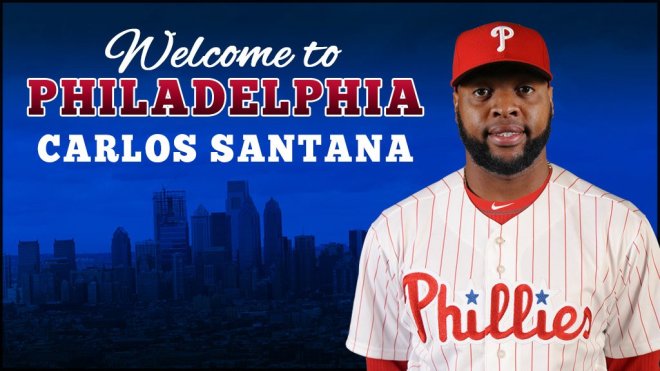
174) Carlos Santana, Phillies 1B .169 – If you’re wondering why a hitter might have a BA that is 80 points below his lifetime number, this could be part of the reason.


173) Aledmys Diaz, Blue Jays SS .173 – Batting .210 but has 6 HR’s in 100 AB’s…there might be some upside for 2018.


172) Adam Duvall, Reds OF .176 – The power is still there (5 HR’s) and last year’s BABIP was .290, so this should get better.


171) Dexter Fowler, Cardinals OF .176 – Too much of a track record for this to be real…his lifetime number in 11+ seasons is .334.


170) Anthony Rizzo, Cubs 1B .179 – A slow start and a DL stint has his Fantasy owners in a snit…this might be a reason not to panic.


169) Gary Sanchez, Yankees C .194 – 9 HR’s & 28 RBI’s with this number? Imagine the results when he starts tending toward 2017’s figure of .304.


168) Matt Carpenter, Cardinals IF .197 – Watch for significant improvement, as his lifetime number is .318.


167) Logan Morrison, Twins 1B .197 – Maybe some improvement but his lifetime number is only .270.


166) Yonder Alonso, Indians 1B .198 – The poster-child for launch angle, he’s off to his usual slow start…he has 8 HR’s & 21 RBI’s, so when he begins creeping back toward a .300 BABIP, the results will be worthwhile.


165) Ryan Zimmerman, Nationals 1B .203 – Still has top-rated exit velocity, so don’t write him off just yet…his BABIP last year was .335.


164) Ian Desmond, Rockies 1B/OF .208 – The good news is his .325 lifetime number…the bad news is that in today’s baseball environment, some age-32 players start to slip.


163) Edwin Encarnacion, Indians DH .208 – A smart Fantasy player would have traded for this slugger in April…he’s already started to come around with 9 HR’s.


What’s interesting are the results since these profiles were written on Sunday, May 6th.


> Santana has thirteen (13) RBI’s in four games.


> Duvall had a walk-off HR on Wednesday.


> Rizzo had three extra-base hits and 5 RBI’s on Wednesday.


> Desmond hit two (2) HR’s on Sunday.


The highest lifetime BABIP in the live-ball era? Ty Cobb & Rogers Hornsby both come in with a figure of .369.


He Hit The Ball Real Hard

'17 Moncada SP

Back in the days when ESPN was actually entertaining, Dan Patrick & Keith Olbermann seemed to have an endless amount of clichés that always fit even boring sports highlights. From “En Fuego” to “They’re Not Going To Get Him” to “The Whiff” to “You Can Try To Contain Him But You Can’t Stop Him” and so many more, the viewers were always in on the joke. When it came to baseball home runs, the go-to comments were “Gone” and “He Hit The Ball Real Hard”. With today’s analytical environment, you have to wonder how the boys would feel if they knew exactly how hard a player hit that ball?


My closest friend is a long-time baseball fan who goes all the way back to rooting for the Oakland Oaks of the Pacific Coast League in the 50’s. He was also a successful Fantasy Baseball player from 1984-2013, so his knowledge of the game and players had to be very detailed. Recently, we were talking baseball and I mentioned that “exit velocity” can help Fantasy players get a better read on the potential of a player. He looked at me and laughed because he thought I was messing with him and just making up a whimsical statistic. As a (now) casual baseball fan, he can’t be blamed for the skepticism because so much has changed since he stopped scouting players just a few years ago.


In 2015, Major League Baseball installed a state-of-art tracking technology in all 30 big league parks. It is called Statcast and allows for the analysis of a massive amount of baseball data. We’re talking Trackman Doppler radar and high definition Chyron Hego cameras. This allows all of us to quantify the raw skills of players in a way that was never even conceived when we first became fans of the game. This is where terms such as “spin rate”, “launch angle” and “pitch velocity” were born and they’re influencing our game every day.


“Exit Velocity” has a very simple definition…”How fast, in miles per hour, a ball was hit by a batter”. In the current era of baseball where records are being set for both Home Runs and Strikeouts, it tells teams the kind of damage a player can create when he hits the ball. The easiest example from 2017 is Joey Gallo of the Rangers who had a batting average of .209 and struck out 196 times in 449 At-Bats. In another time and place, he might have been sent to the minors but that’s no longer the case. Why? Because he had the 3rd highest exit velocity in baseball last year (93.1 mph) and that equated to him producing 41 HR’s, 80 RBI’s and a .867 OPS. His average Home Run traveled 421 feet! The best in the game was a rookie…Aaron Judge! He struck out over 200 times but finished with an OPS of over 1.000 while being 2nd in the MVP balloting. In case you might believe these are isolated examples, think about this…in April, Strikeouts exceeded Hits during a calendar month for the first time in baseball’s 150-year history. If Bob Dylan was a baseball fan, he’d say that “the times they are a changing”.


As the first month of the 2018 goes into the books, who are the players with the best exit velocity so far? Are they stars, phenoms or over-looked part-timers? Here are the top twelve (with a minimum of 30 batted ball events)…


1) Yoan Moncada, White Sox 2B (96.6 mph) – Formerly the #1 prospect in baseball, he’s lost his sheen after hitting .231 in 199 AB’s last season. Don’t give up on this 23 year-old just yet…a .922 OPS in 2018.


2) Aaron Judge, Yankees OF (96.2 mph) – Last season was no fluke.


3) Nelson Cruz, Mariners DH (96.1 mph) – He’s still good at age 37…led the AL in RBI’s last season.


4) Franchy Cordero, Padres OF (96.1 mph) – Didn’t even make the opening day roster, he has 5 HR’s in 54 AB’s…with 22 K’s


5) Teoscar Hernandez, Blue Jays OF (95.9 mph) – Another player who started the year in the minors, his .995 OPS in the early going is hard to ignore.


6) Christian Yelich, Brewers OF (95.7 mph) – Another thank you note to Derek Jeter.


7) J.D. Martinez, Red Sox DH (95.7 mph) – Will do lots of damage in that line-up.


8) Miguel Cabrera, Tigers 1B (95.5 mph) – Over the hill? Maybe not.


9) Ryan Zimmerman, Nationals 1B (95.5 mph) – Maybe we shouldn’t be fooled by that .188 BA.


10) Jose Abreu, White Sox 1B (95.4 mph) – One of the most consistent bats in the game.


11) Giancarlo Stanton, Yankees OF (95.0 mph) – 39 K’s in 101 AB’s just might be the pressure of New York.


12) Shohei Ohtani, Angels DH (94.9) – Here’s the trivia question for your baseball buddies…which is higher, Ohtani’s exit velocity as a hitter or his average fastball velocity as a pitcher? They’re actually very close, but his fastball wins at 97.4 mph.


The next time I talk baseball with my friend, maybe the subject will be “Barrels”.


Panicking In April

'16 Betts Trib

For Fantasy Baseball players, April can be an excruciating month. All that research you’ve done since last October is no longer just analysis, it is reality. As many pundits have reminded us, being impacted by a “small sample size” is a fool’s game but when players you counted on have already started to let you down, emotions often trump logic (my apologies for using the words “trump” and “logic” in the same sentence).


In November, the Old Duck wrote some “Picks n’ Pans” for The Fantasy Baseball Guide – Professional Edition that were published prior to the start of Spring Training. As I look at the standings in my three auction-style keeper leagues, how are my predictions doing in the early going? And, in some cases, was I smart or dumb to not take my own advice from four months earlier?


> Albert Almora, Cubs OF – In November, I was touting him as a youngster who might get more playing time in ’18. Then, when Ian Happ tore up Spring Training, Almora’s stock went down. Now that Happ has come back to earth, this prediction might not be so bad. He has a .831 OPS in April.


> Javier Baez, Cubs 2B – I panned him again this year due to the lack of plate discipline in his game. His 7 HR’s & 24 RBI’s in April are proving me wrong.


> Austin Barnes, Dodgers C – His significant playing time in last year’s playoffs led me to believe he’d get regular playing time behind the dish. Two (2) RBI’s in April says that isn’t the case.


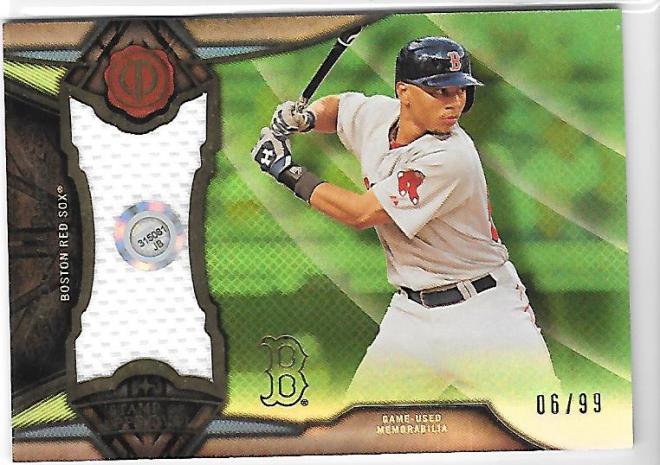
> Mookie Betts, Red Sox OF – My suggestion to draft him at almost any cost has worked out well for Fantasy owners.


> Ryan Braun, Brewers 1B/OF – I told readers to not pay for more than 350 AB’s…his production has been solid, but he’s missing lots of games.


> Jeimer Candelario, Tigers 3B  – A sleeper pick, I said he was worth watching….290 BA / .359 OBP with 4 HR’s & 11 RBI’s seems really solid.


> Wilmer Flores, Mets IF – My hope was that the Mets would consider giving him regular playing time in his age-26 season…hasn’t happened yet but a .819 OPS over the last three weeks can’t be ignored forever.


> Cesar Hernandez, Phillies 2B – Told everyone to grab him and despite the ascension of Scott Kingery, Hernandez is playing everyday with a .431 OBP from the lead-off spot.


> Odubal Herrera, Phillies OF – Thought he would bounce back from a disappointing 2017…his .839 OPS in April tells the story.


> Adam Jones, Orioles OF – A good player who has always been slightly over-rated, I didn’t see any upside at age 33…so far, he has 24 K’s & 2 BB.


> Amed Rosario, Mets SS – Felt that his ’17 debut showed he wasn’t ready…his .242 BA and 20/4 K-to-BB ratio in April says nothing has changed.


> Chase Anderson, Brewers P – Seemed to have turned the corner in ’17 and his 3.25 ERA & 1.05 WHIP in April agree.


> Zach Davies, Brewers P – Felt that his ’17 season was somewhat lucky…his April ERA of 4.45 appears to make the case.


> Arodys Vizcaino, Braves P – Thought he would be a solid choice as the Closer…not many Save opportunities so far, but the numbers look good.


Let’s hope your predictions were just as good…or better. As for me, I also drafted Dee Gordon (cheer!), Chris Archer (boo!), Nick Pivetta (cheer!) and Adam Wainwright (boo!)


Whoever you chose, don’t forget that it’s just a small sample size.


The Color Of Baseball

'55 Robinson 5.5

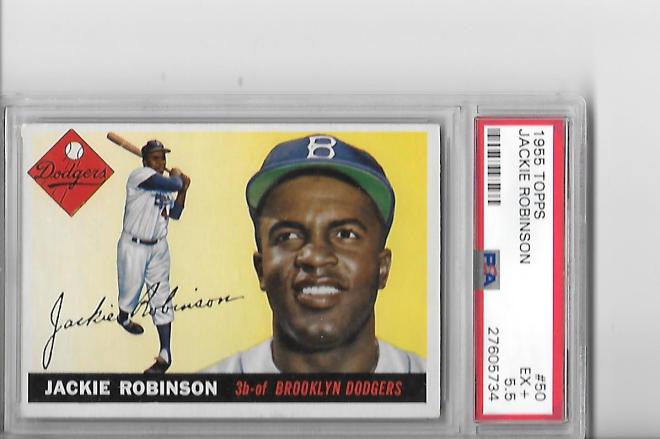
Earlier this week, Major League Baseball celebrated the anniversary of Jackie Robinson breaking the color barrier. Each year, that remembrance takes me back to my youth and thoughts about prejudice, intolerance and the innocence of childhood.


As a kid growing up in Boston, the Red Sox and Ted Williams were my passion. I knew every player, their stats and their uniform numbers. One of the things I didn’t really notice was that all the members of the team were white. Once my parents gifted me with a transistor radio and I was able to pick up the Dodger broadcasts from Brooklyn, it was easy for the “Bums” to become my favorite National League team. It also opened my thoughts to the society around me because the Dodgers had numerous players of color who had followed Robinson to Brooklyn. The Red Sox were the last team to roster a Black player (Elijah Jerry “Pumpsie” Green) and it happened in 1959, a full 12 years after Robinson’s debut. Tom Yawkey owned the team from 1933 until his passing in 1976 and even today, his legacy is tainted by this lack of inclusion by the franchise.


It was my first real understanding of bigotry and Jackie Robinson’s #42 being worn by all Major Leaguers every April 15th sparks my love of that Dodger team.


In the late 1950’s, a Brooklyn Dodger fan was asked, “If you were in a room with Hitler, Stalin and Walter O’Malley and there were only two bullets in your gun, who would you shoot”? He replied, “I’d shoot O’Malley twice”. Such was the passion of the post-World War II Dodger faithful and the hatred they felt for the man who took their team away.


As immortalized in Roger Kahn’s 1972 book, “The Boys of Summer” and chronicled in the 2007 HBO documentary, “The Ghosts of Flatbush”, the Brooklyn Dodgers of 1947-57 created the modern template of how fans feel about their team. Joy, disappointment, loyalty, reverence, sorrow and elation are just some of the emotions that a true fan feels about baseball and we can never quite explain it properly to someone who has never had the experience.


This visit will combine baseball cards and SABRmetrics, as we’ll find the rookie cards of the legendary members of the Dodgers and also review each one’s contribution to the team through the use of “Wins Above Replacement” (WAR), the statistic developed to determine the true value of a player. The card values are based on cardboard in “Excellent” (EX 5) condition.


> 1B Gil Hodges, 1949 Bowman #100 ($110) – Played his first full season in 1948 and was an All-Star every year from 1949-1955…even had a couple of productive seasons in the late 50’s after the team moved to Los Angeles…his lifetime WAR of 45 isn’t quite Hall of Famer caliber, but he was one of the most beloved players on the team.


> 2B Jackie Robinson, 1948 Leaf #79 ($5,000) – He was already 28 years old by the time he joined the Dodgers and still played ten magical seasons at Ebbets Field, which included six NL pennants. Accumulated an impressive WAR of 61.4 in his relatively short career. As a side note, he was already retired when Pumpsie Green was first in the Red Sox line-up.


> 3B Billy Cox, 1949 Bowman #73 ($25) – The interesting back-story is that Cox was traded to the Dodgers from the Pirates after the ’47 season in a deal that sent Dixie Walker to the Bucs…Walker was one of the players from the South who made no secret of the fact that he wasn’t happy about having a Black teammate…Cox played with the club for eight seasons and retired after the ’55 Championship campaign with a lifetime WAR of 10.


> SS Harold “Pee Wee’ Reese, 1941 Play Ball #54 ($375) – Played for the Dodgers in the early 1940’s before spending three years in the military during the war…came back to be the Captain of the legendary team and was an All-Star for nine consecutive seasons beginning in ’46…inducted into the Hall of Fame in 1984, he had an impressive lifetime WAR of 66.2.


> OF Jim “Junior” Gilliam, 1953 Topps #258 ($135) – Primarily a 2B, Robinson moved to the OF to accommodate Gilliam’s Rookie of the Year arrival…at Dodger Stadium, his number 19 is retired along with numerous Hall of Famers…a fixture in the line-up for 14 seasons, his lifetime WAR is 40.9.


> OF Duke Snider, 1949 Bowman #226 ($425) – Patrolled centerfield and was invariably compared to his contemporaries Mickey Mantle & Willie Mays…was on every All-Star team for the first 7 years of the 50’s and played for 18 seasons…inducted into the Hall of Fame in 1980, his lifetime WAR is 66.5.


> OF Carl Furillo, 1949 Bowman #70 ($55) – While not considered a star compared to some teammates, he was an integral part of the team during the 50’s and led the NL in ’53 with a batting average of .344…has a lifetime WAR of 35.


> C Roy Campanella, 1949 Bowman #84 ($300) – “Campy” was the child of an Italian Father and Black Mother, who arrived in the majors the year after Robinson…played only ten seasons before being paralyzed in an off-season automobile accident in 1958, he  won 3 NL MVP awards in the 50’s…elected to the Hall of Fame in 1969, he accumulated a WAR of 34.2 in his relatively short career.


> P Don Newcombe, 1950 Bowman #23 ($90) – Another star of the Negro Leagues, he broke in with the Dodgers in 1949 and proceeded to win 56 games in his first three seasons…after two years in the military during the Korean War, he came back to win 56 more the next three campaigns and won the MVP & Cy Young awards in ’56…his WAR was 29.5 in ten seasons.


> P Preacher Roe, 1949 Bowman #162 ($65) – Also acquired in the 1948 Dixie Walker trade, he was a mainstay of the Brooklyn rotation from 1948-53 and made four All-Star teams…his 12 seasons produced a lifetime WAR of 35.1.


> P Carl Erskine, 1951 Bowman #260 ($50) – Helped the “Bums” to five pennants during his eight seasons in the rotation including a 20-6 record in ’53…his lifetime WAR is 16.6.


Those 11 cards would sure look nice on a shelf in your den, wouldn’t they? Of course, we’ve saved you some money because even though Sandy Koufax and Don Drysdale joined the team while it was still in Brooklyn, their stardom materialized after the move to L.A. Was one of your favorites left off the list? Maybe Andy Pafko, Sandy Amoros, Don Zimmer, Clem Labine, Don Hoak or Ralph Branca? In that case, you’re a real fan.


One of my favorite stops for lunch is salad/soup/sandwich place where you order at the counter, take a spot at a numbered table and wait for a member of the staff to bring your food. I always choose table number 42.


The Littlefield Effect – 2018

Littlefield

John Littlefield is now 64 years of age, but his name still resonates with baseball card collectors and Rotisserie League Baseball team owners. He only spent two seasons in the major leagues but what wouldn’t the rest of us give to always be known as “a former big league Pitcher”?


The baseball card connection is easy to explain, as Littlefield played in the early 80’s when the card industry exploded with new manufacturers. The Topps company had a virtual monopoly on baseball cards from 1956 – 1980 but in 1981, licenses were given to both Donruss & Fleer and despite the competition, all three companies were guilty of less-than acceptable quality control of their products. There were numerous examples all through the 1980’s of mistakes, misprints, corrections and embarrassments. The most infamous incident involved the now legendary 1989 Fleer Bill Ripken card that was distributed with a picture of the player holding a bat that had an obscenity written on the bottom of the barrel. Fleer tried to correct the card quickly but never really got it right, producing a total of five different variations.


Littlefield’s card legacy was early in the cycle, as his 1982 Fleer card was originally distributed with a reverse negative of the picture, turning the 27 year-old right-hander into a southpaw. Fleer corrected the card, thus making the original a very scarce item. Even today, the corrected version is a “common” card worth about a nickel, while the difficult-to-find “error” card will set you back about $30.


Littlefield’s enduring legacy to Fantasy Baseball comes from the original 1984 “Rotisserie League Baseball” book that started this amazing hobby played by millions of fans. As the founding fathers of the game had actually started playing a form of the game in 1981, they shared many stories of the fun, camaraderie and strategy they had experienced in those early years. A segment of the book talked about “The Littlefield Effect”, an interesting factor that impacted the value of players at their first few Drafts. While the early 80’s isn’t really that long ago, it was long before the digital age of affordable PC’s, the Internet and instant information. The Roto inventors decided that the best time to have the player Draft was on the weekend following opening day in order to have reasonably valid information about the official MLB 25-man rosters. After all, stats were only published weekly in the USA Today and league standings were always at least a week behind the actual games.


The timing of the Draft, however, led to 4-5 games being played prior to the auction / player selection and box scores were readily available in daily newspapers. Could a few games really have a major impact on the value of a player in a 162 game season? John Littlefield answered that question in 1981. In 1980, he had a very productive rookie campaign with the Cardinals, appearing in 52 games with a 3.14 ERA, 5 Wins & 9 Saves. In December, the Cards made an 11-player trade with the Padres and Littlefield headed west. To say that the ’81 Padres were terrible would be a compliment. In the strike-interrupted 110 game season, they went 41-69 and the entire team only hit 32 home runs. Ozzie Smith was the Shortstop and despite leading the NL in At-Bats, he hit .222 with 0 HR’s & 22 RBI’s.


The Padres opened the year in San Francisco and Littlefield saved the 4-1, 12-inning win. The next day, he registered another Save in a 4-2 victory. So, by the time the Rotisserie owners showed up for the Draft, it seemed logical that the Padres had anointed him as their Closer. With Saves being one of only four statistical pitching categories in the standings, his auction price ended up being $34, equal to 13% of the total 23-player budget of the winning bidder. As you might guess, the remainder of the 1981 season was very forgettable for Littlefield, as he suffered 2 losses and a blown Save later in April and was replaced as the Closer by a Pitcher named Gary Lucas. He pitched in 14 games at AAA Syracuse in 1982 with an ERA of 7.49 and his career was over at age 28.


For those of us who still play “old-school” Rotisserie Baseball and draft our teams on the Saturday following opening day, we also have memorable “effects” of our own. One of the classics was in 1994, when a Cubs outfielder named Karl “Tuffy” Rhodes hit 3 Home Runs on opening day. Even though he had never played more than 50 games in any major-league season, his price on Draft day was $22. He ended up with 8 HR’s for the season and never hit another one in his MLB career.


This past weekend, we gathered for the 35th annual Draft of our original Rotisserie league from 1984 and the Littlefield effect was still floating around the room with even more influence than normal. Why? With MLB changing their opening day schedule, we actually had nine days of box scores influencing our bids. Using projections from a highly-respected Fantasy site, let’s see how things played out at the table. As this is a keeper league, we’ll assume that there could be an inflation factor of 20% added to the 4 x 4 projections.


> The most obvious example for 2018 was starting pitching. Despite the fact that most of the top-tier SP’s were available, there were no bargains. One or two outings from these guys don’t change the prices but with inflation a definite factor, they all went for big bucks…Clayton Kershaw $38, Max Scherzer $38, Jacob DeGrom $34 & Stephen Strasburg $33. None of these were unexpected and within a reasonable range of their projections. The best of the next tier was Hendricks and his $23 price was close to projection while right behind him you’ll find Madison Bumgarner at a $17 price on the DL (right at projection). The next group of SP’s were overpriced and in some cases it was due to early season performance. The most blatant example was Patrick Corbin of the D’Backs whose two stellar outings raised his price from a projection of $8-$10 to an actual auction price of $25! Carlos Martinez also went for $25 even though his projection was around $17 and a number of others came in higher than expected such as Jon Lester & Johnny Cueto ($19), Jose Quintana & Kenta Maeda ($18) and Tanner Roark ($17).


> Closers are always inflated in a 4×4 format, but early-season results created even higher prices. The prime example is Brad Boxberger, who was named Closer late in the Spring and then picked up three Saves before the Draft. The result? He went for $27. Kenley Jensen’s early struggles brought his price down to $31 (well below projected value), less than Rasiel Iglesias at $33.


> Injuries also factor into this equation, as the sore back that caused JT Realmoto to miss the start of the season lowered his price to $11 instead of the $17 projection. Another example is Daniel Murphy going for $16 instead of $20+.


> Hot starts are always the key to this phenomenon costing teams more money. Examples include Colin Moran’s 4-hit, 3-RBI game the night before the Draft essentially doubling his price from around $10 to $20, Michael Conforto’s good health ramping him up to $26 instead of $19-$20 and Scott Kingery’s new contract resulting in a $23 Roto price.


> The Littlefield effect also rears its ugly head in the end game as owners are looking for bargains and stats. Would Nick Pivetta have been a $3 player if he hadn’t recorded 9 K’s and a Win two days before the Draft? How about Trevor Williams and his 2 Wins costing $7?  Or Tyler Mahle’s debut bringing up his value to $9?


> While “newbies” to the Roto game might think that we are dinosaurs, don’t forget that the timing also allows us to know who has the job on opening day. And the teams that were influenced by box scores may have to deal with the consequences as the seasons rolls on. However, if MLB keeps the same schedule for 2019, we’ll have the auction two days after opening day and John Littlefield may become even more obscure.


The good news for all of us is that whenever you hold your Draft, it’s your favorite day of the year.

The Heritage Of Topps – 2018

'18 McMahon

Everyone you know probably considers themselves an expert at something, but Fantasy Baseball players are at the top of the food chain. Even though we play the game for money and bragging rights, the real truth is that we actually think we’re smarter than MLB GM’s & Managers. After all, would Derek Holland be in your rotation? Or would Fernando Rodney be your Closer? Or would you take on $8 Million in salary to have Carlos Gonzalez take away AB’s from your top prospects? Or would you pay Yasmany Tomas over $10 Million to play in Reno? Or would you wait until opening day to decide that Luke Gregerson & Dominic Leone weren’t the answer in your bullpen? The Old Duck participates in a 15-team Fantasy Baseball “experts” league where it is abundantly clear that each owner considers himself to be smarter than the other 14, but none of them would make those moves. It isn’t arrogance, only knowledge gained from experience.


Avid baseball card collectors are no different in their approach to the hobby. After watching card manufacturers flail away at each other in the 80’s and overproduce products in the 90’s to the detriment of the industry, it’s easy to criticize almost any product offering. Card enthusiasts are quick to complain about too few autograph cards, but also aren’t happy when the autographs are on stickers applied to the cards because they want the authenticity of “on-card” signatures. They also don’t like redemption cards (when players have not yet had the opportunity to sign), but also whine when the better players aren’t included in a product. It is the nature of the consumer to always want more for less and consider themselves smarter than the folks in charge.


In an attempt to remove myself from this category (even temporarily), I’m willing to admit that the people at The Topps Company are brilliant!


In 2001, Topps was celebrating the 50th anniversary of their entry into the baseball card business. They utilized the framework of their historical 1952 set to develop a new product. Topps Heritage came into the marketplace with current players pictured on cards that had the format of the iconic 1952 set. The detail of the set and the photography took collectors back to the time when packs were a nickel and included a stick of gum. The set was designed for card enthusiasts to build it completely by opening packs and sorting through the cards. It even had some of the quirks of the original like short-printed cards, checklist cards and even bubble gum…even though the gum was enclosed in a plastic wrapper. To all of this, Topps also added some autograph & relic cards to make the set even more attractive. The real draw, however, was the 1952 look and the opportunity for kids of the 50’s to build a new set of cards for the 2000’s.


Topps Heritage has been a consistent top-selling product at a mid-range price (around $3+ per pack) ever since. Each year, the cards mirror the old design of the appropriate Topps set with new players and this year’s release (which just hit stores last month), uses the 1969 card as its platform. If you collected cards in the 50’s & 60’s, this is the product for you.


In the last few years, Topps has added a few more twists with short printed cards that have variations of throwback uniforms or an action image. They even tugged at old-timers’ heartstrings by randomly adding a section of white on some of the card backs emulating how they would have looked had a dusty piece of gum been sitting against the card…very cool!


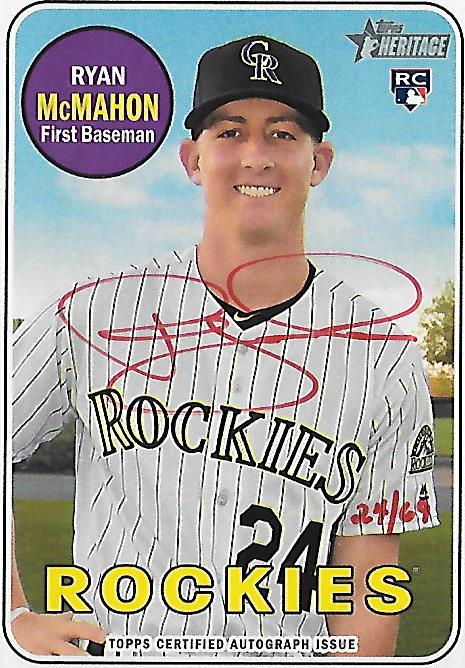
The Old Duck purchases a few boxes each year and builds the set from scratch. Of course, you never really know what might appear inside the packs and the first couple of boxes this year yielded Chrome insert cards of George Springer & Zack Greinke, a Chrome Rookie Card of Victor Robles and Deckle Edge replica cards of Mike Trout, Clayton Kershaw & Giancarlo Stanton. And, the best hit of all, a beautiful red ink autograph card of Ryan McMahon with a print run limited to only 69.


In honor of this year’s release, let’s look back at that beautiful 1969 set of 664 cards, which includes over 25 Hall of Famers. The card values are based on “Near Mint” (NM 7) condition.


> #50 Roberto Clemente, $65 – Even late in his career, there is still a high demand for this legendary player.


> #95 Johnny Bench, $95 – Even though his RC was from the ’68 set, this is his first card with an individual image.


> #100 Hank Aaron, $65 – Hit 44 HR’s and led the NL in Total Bases…at age 35!


> #190 Willie Mays, $80 – He won the Gold Glove in ’68…at age 37!


> #260 Reggie Jackson, $400 – The Rookie Card of “Mr. October” on his way to 563 career HR’s.


> #480 Tom Seaver, $65 – Won the first of his three Cy Young Awards in 69 with a 25-7 record.


> #500 Mickey Mantle, $350 – The final card of “The Mick”, as he retired after the ’68 season with three MVP’s and 536 career HR’s.


> #533 Nolan Ryan, $200 – The 2nd year card of “The Express”, he was still finding his way as a 22 year-old coming off a record of 6-9 in ’68.


In addition to these big tickets items, you’ll also find Rookie Cards of Rollie Fingers, Bobby Bonds, Graig Nettles & Al Oliver. Thinking about a complete set in NM condition? Set aside about $10,000.


The “Heritage” will continue next year with memories of the 1970 set…


Same Time Next Year

Brad Ballpark 17

In 1978, there was a movie titled “Same Time Next Year” starring Alan Alda & Ellen Burstyn. It wasn’t a classic film but was certainly entertaining, which is confirmed by its 7.2 rating on imdb.com. The plot was about two people, both married to others, who meet by chance at a romantic inn and end up sharing a night together. The next morning, they are wondering how this could have happened but decide to an agreement. They will meet each year on the same weekend at the same place and renew their relationship. Originally a stage play, the story takes the audience through the years with the same couple in the same room. The episodes take us from the early 1950’s to the mid 1970’s, as the changes in the world and their lives impact their relationship.


As I sat behind home plate at Surprise Stadium for 30+ games this February & March, the title of that movie popped out of my aging grey matter and wrapped itself around this wonderful annual experience. The girl I love each year is named Spring…it just so happens that her last name is Training. With apologies to Elizabeth Barrett Browning, “How do I love thee? Let me count the ways.” Of course, it was Sonnet 43, so she probably had a Dennis Eckersley jersey.


> The weather in Arizona this time of year is absolutely beautiful. Azure blue skies and emerald green grass greet you everyday at the ballpark.


> The ballpark is the most comfortable and fan-friendly of all the Cactus League facilities. Even though it opened in 2003, the newer parks with all the whistles and bells can’t compare with the sightlines and intimacy of this gem. It has a single concourse, allowing easy access for all fans. The concessions are on the concourse, so you don’t miss any game action while feeding your appetite or quenching your thirst. There are small upper-decks above 1B & 3B that hang out over the lower seats and add another viewing  perspective to the game. And, a local group of over 500 volunteers called the Sundancers are always there to assist you with everything from parking to charity raffles to wheelchair access for disabled fans to being at the top of every aisle helping fans find their seat.


> What isn’t apparent to most fans is that the ballpark has a second name…Billy Parker Field. When Billy Parker made his major league debut with a game-winning home run for the Angels on September 8, 1971, you probably could have completed the census of Surprise by yourself over a weekend. After his baseball career ended, Billy worked with youth programs for the city and was much beloved for his volunteerism before he passed away in 2003. Today, he would be proud to see the thousands of Little League players who attended youth day at the ballpark last Saturday. The city’s current population is over 115,000.


> One of the first things you see when entering the leftfield gate for a game is a small tent hosted by Hall of Famer Ferguson Jenkins and his charity foundation. Almost everyday, you will find great ballplayers from the past signing autographs in exchange for a donation to the foundation. This Spring, you would have seen Rollie Fingers, Gaylord Perry, Bert Campanaris, Willie Wilson, George Foster and many others greeting fans and talking baseball with them.


> Speaking of autographs, these games obviously offer fans greater access to ballplayers and many hope to get signatures from their heroes. Some players sign a limited amount, some don’t sign at all but the nicest memory is the generosity of Josh Hamilton during his first go-round with the Rangers (2008-12). Typically, the regulars come out of a Spring Training game around the 5th inning and head down the foul line toward the clubhouse. Fans congregate in the area hoping that players might stop and sign, but most just take a circuitous route to avoid the inconvenience. For those five years he spent with the club, Josh stopped every day and signed autographs for as long as he could, even standing in foul territory while the game proceeded just to accommodate the fans. We’ve all had someone in our life who has battled addiction and can clearly understand how difficult it can be to overcome. This is a guy we should all admire because he understands what the game is all about.


> The National Anthem is a traditional moment at every baseball game and we’re privileged to have talented people perform at the Stadium each day during February & March. From a retired Naval officer with a booming voice to young girls hitting high notes we could never even dream about to an older gentleman doing a saxophone solo, it is sure to give you chills.  Then, as the home team takes the field, John Fogerty’s “Centerfield” pipes in over the loudspeakers and we’re ready to “Play Ball”.


> The other people in the ballpark also make the experience memorable. For me, it never gets old to engage long-time friends and new acquaintances in baseball conversation. My closest friend and his beautiful wife have had seats in the first row behind the 3rd base dugout since the ballpark opened. Sometimes I go down and join them for a couple of innings but even when we’re at a distance we’re still close. Each day, when he arrives at the park, we catch each other’s eye and say “hi” by flashing baseball signs to each other. My season seats are right behind home plate and even though they are about eight rows up from the field, they are on the railing above the tunnel used by visiting teams. The result is that there is no one in front of me to block the view…the best seats in the house! “Duke” is my wingman for about 2/3 of the games and we talk baseball for hours each day before reaching our pitch count and heading home for a nap (me) or “honey do’s” (him). For the other 10 games, the adjacent seat is occupied by golfing buddies, out-of-town guests or an occasional pretty girl who hasn’t figured out how old I am. The last three years have been even more special, as my Son has made the trek from SoCal to join me for a game. Right across the aisle is a dear friend who makes an 11,000 mile round trip from the south coast of England each March to watch baseball. After many years of making the journey, the Customs agents at the Phoenix airport refer to him as the “British Baseball Guy”. This same section is also where the scouts sit with their notepads and radar guns. This allows me the opportunity to visit and talk baseball with really smart guys like Deric McKamey, Kimball Crossley, Jason Grey & John Cox .


> As most of the seats around mine are not season tickets, each day also brings new opportunities to talk baseball. Of course, there are always lots of Royals & Rangers fans in for a long weekend or extended visit.  We talk baseball for the whole game, agree that people who are bored by baseball just aren’t very intelligent and pledge to see each other again next year. And naturally, each visiting team is also represented by folks with jerseys from the Giants, Dodgers, Angels and others. Unlike pro football, there is never any animosity regarding loyalty. Everyone in the park is there for a good time enjoying the national pastime.


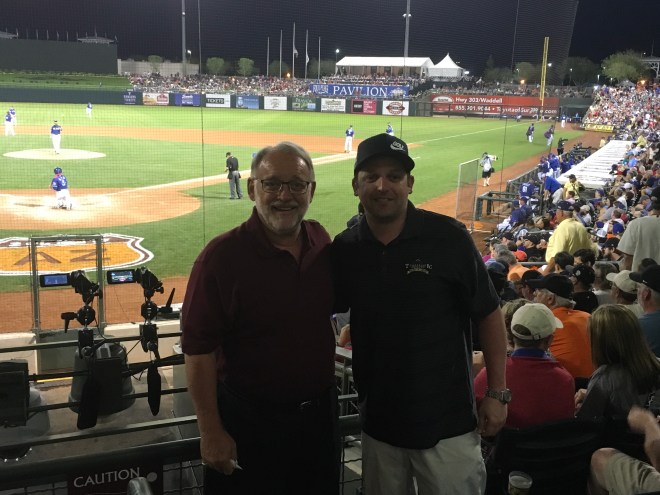
> Encounters also bring about numerous “small world” stories. While having lunch at a local eatery before a game, a conversation took place with a gentleman and his Son who were also attending the game that day. The usual baseball conversation got around to favorite teams and I said, “Red Sox”, the Father responded, “Me too”. It turns out that he lived north of Boston as a kid at the same time I lived west of the city. We are both huge fans of Ted Williams and remember taking that nickel street-car ride to Fenway Park in the 50’s. Think of it…he and I were certainly in the ballpark on the same day many times as youngsters and now, 60 years later, we’re sitting in Arizona reminiscing about those days.


> Cactus League facilities have standard food menus and a few more upscale items, but this ballpark has two choices worth trying. There are two kiosks on the concourse called the Diamond Grill that serve a freshly grilled Italian Sausage on a soft bun with grilled onions & peppers. And, on the 3rd base concourse is a food truck that arrives every year direct from Iowa and offers both a pork tenderloin sandwich and chicken tenders. If you’re not already salivating, both items come with waffle fries.  When the e-mail invitations are sent in February to my once-a-year guests, they seem more excited about the prospect of consuming one of these culinary delicacies than they are about the ballgame itself.


> As a Fantasy player, the games themselves are always exciting, interesting and informational. You can read all the scouting reports you want on the Internet, but the personal stories make the game a joy. Two years ago, a former #1 pick from 2004 was attempting a comeback after battling alcoholism and serving a jail sentence for drunk driving. He hadn’t played since 2011 and was originally a Shortstop, but now he’s a Pitcher and over the last two seasons, 31 year-old Matt Bush had a 10-6 record with 11 Saves and a 3.08 ERA for the Rangers. You can’t make this stuff up.


> There is also the occasional sad moment. Just last weekend, Rangers coach and former All-Star player Howard Johnson was hit in the face by a check-swing foul ball while he was in the dugout. The game was delayed and he was eventually carted off the field and taken to a local hospital. The initial report is that there are facial fractures involved but surgery will not be necessary.


> And, of course, there are always a few enthusiastic fans applauding for an unknown prospect wearing #87 with no name on the uniform. You realize quickly that they’re members of his family and just hope he doesn’t strike out or give up a 3-run homer.


> Even the most ardent fans can’t know about every player, so Spring surprises like Daniel Vogelbach, Jose Pirela & Cheslor Cuthbert remind us that we’re not quite as smart as we think we are.


The Old Duck has only been in love a few times over the years, but the relationship with this girl I call Spring is the most enduring. She is beautiful, loyal, consistent and always in a good mood. I will miss her very much over the next 11 months, but knowing that she’ll be there “same time next year” makes it easier to bear.


Charming The Snake Once A Year

Donald Duck Snake

If you’re even an occasional reader of this column, you know that the Old Duck is a 30+ year veteran of Rotisserie Style Auction Keeper Leagues. With about 30 championships in 80 Drafts, it is what I relish and look forward to each year. However, once a year, the dreaded Snake Draft enters my life for one very good reason. The young man who hosts the league (on ESPN.com) is like a son to me and if he asked me to join a Camel Race Fantasy League hosted by Al Jazeera, I’d probably say yes.


Even though I know a beautiful girl who once had a pet Boa Constrictor named “Julius Squeezer”, I hate snakes…both in person and of the Fantasy variety. To me, having 10 or 15 or 20 players go off the board without the opportunity to bid, just penalizes me for doing solid research. And, if one of the Roto combatants forgets to show up on-line, you can bet the “auto-draft” spot will be right in front of me.


This time of year, if you follow Fantasy Baseball at all, it is impossible to avoid Snake Draft advice. It comes at you from everywhere…newspapers, websites, magazines, Satellite Radio and friends. The number of strategies are mind-boggling and include…


> Memorizing the average draft position (ADP) of every player in the universe.


> The “Don’t Take Pitchers early” philosophy.


> The “Take Clayton Kershaw now” philosophy.


> The “Don’t Take Closers Until Later” philosophy.


> Prioritizing position scarcity


> Getting 50 HR’s & 50 SB’s from your first two picks (50/50 Plan).


> Getting 75 HR’s & 75 SB’s from your first three picks (75/75 Plan).


> Picking two stud starting pitchers early, also known as the “Dual Aces” plan.


> Drafting players for their future instead of their past, also known as the “Upside” plan.


> And this year’s favorite, “Get One Of The Big Four”…meaning Kershaw, Scherzer, Sale or Kluber.


In order to avoid having my brain explode, I’ve used none of those strategies and still managed a championship, one 2nd place finish and one 3rd place finish in the seven year history of the league. In 2017, the Ducks finished a disappointing 9th and injuries could be blamed to some extent with 1st round pick Bryce Harper going down and Dustin Pedroira being hobbled. In addition, Jonathan Villar became a shell of his 2016 self, so solid seasons from Eric Hosmer, Ryon Healy & Jose Ramirez couldn’t make up the difference while pitching choices like Johnny Cueto, Tanner Roark & Jameson Taillon delivered mediocre results.


Part of my occasional past success is from a fairly good knowledge of the player pool, as I’m boning up for NL & AL only Drafts that take place in late March and early April. Logically, however, it seems that the overall approach of the last 30 years still works and it is a mind-set of “balance”. So, while the Long Island Ducks (we all incorporate the name of a minor league team) do have a tendency to wait on pitching, it is more about balancing the roster to leave flexibility as the Draft progresses. I also pay little or no attention to ADP (Average Draft Position) because I’m more concerned about my opinion of players than that of the “crowd”. This will be quite obvious when you see how many of my choices seem to be a “reach” compared to ADP.  Ideally, after ten rounds, the roster should include at least one player at each position (C, 1B, 3B, 2B, SS, OF, SP & Closer) along with a 2nd OF & 2nd SP. After that foundation is established, looking for value is the priority. If you’ve already read columns from multiple sources about the players they drafted, this might be a cure for insomnia. With that disclaimer, my hope is that the strategies and player choices will be of value to you in your upcoming draft.


This is a 15-team mixed league with 22-man rosters (1 Catcher) and three reserve picks. On the day of the Draft, I sat at a Spring Training game and told my seat-mate that for 2018, the worst spot in a snake would be 3rd because Mike Trout & Jose Altuve would go first and then it would be a crapshoot. A spot near the end of the 1st round would be more advantageous, as there wee 23 players worth over $30 in this format and you would be guaranteed to roster two of them. Naturally, the random order one hour prior to the Draft gave the Ducks the 3rd pick, which is why I didn’t buy a lottery ticket on the way home from the ballpark. As we work our way through the results, you’ll see the ADP for each player as a point of reference. The ADP rankings are as of the date of the Draft (3/18).


Fantasy players are always interested in the first round, so here’s how this league shook out…1) Mike Trout…2) Nolan Arenado…3) Jose Altuve…4) Mookie Betts…5) Trea Turner…6) Bryce Harper…7) Charlie Blackmon…8) Paul Goldschmidt…9) Carlos Correa…10) Manny Machado…11) Giancarlo Stanton…12) Gary Sanchez…13) Clayton Kershaw…14) Max Scherzer…15) Chris Sale


Here’s the Ducks roster for 2018…


Round 1, Pick 3 – Jose Altuve, 2B (ADP 2)


I had already queued up Trea Turner’s name when the team ahead of me chose Arenado, so Jose became the choice. Arenado is a great player but Altuve’s projected value is higher.


Round 2, Pick 28 – Cody Bellinger, 1B/OF (ADP 25)


Power was the priority here and all the other “boppers’ were taken earlier in the round…including Aaron Judge right

in front of me at #27.


Round 3, Pick 33 – Jacob deGrom, P (ADP 35)


As expected, the SP run started early…Kershaw, Scherzer & Sale in Round1 –  James Paxton, Kluber & Stephen Strasburg in Round 2. In Round 3, when Noah Syndergaard went two spots ahead of me at #31,  I couldn’t wait any longer for an ace. Carlos Carrasco & Justin Verlander were gone in the next eight picks.


Round 4, Pick 58 – Willson Contreras, C (ADP 51)


Sanchez went in Round 1 and this was the next best Catcher on the board, just ahead of Buster Posey (who went in Round 5).


Round 5, Pick 63 – Kris Davis, OF (ADP 68)


My first OF, he’s a 40 HR player.


Round 6, Pick 88 – Ender Inciarte, OF (ADP121)


The team’s first significant “reach” compared to ADP, but a top-of-the- lineup guy with speed was a good fit.


Round 7, Pick 93 – Brad Hand, P (ADP 108)


The Closer run had begun early with Kenley Jansen & Craig Kimbrel going in Round 3, then Aroldis Chapman in Round 5. At the start of Round 6, Roberto Osuna, Corey Knebel & Felipe Rivero went back-to-back-to-back. Hand has the job and a contract, so we’ll root for lots of close games at Petco Park.


Round 8, Pick 118 – Kyle Hendricks, P (ADP 116)


Another SP was added in this spot. He had a good second half in ’17 and the Cubs will lend lots of offense support.


Round 9, Pick 123 – Kyle Seager, 3B (ADP 140)


The hot corner was the next priority and I liked Seager better than Beltre, Lamb, Healy or Longoria.


Round 10, Pick 148 – Addison Russell, SS (ADP 264)


An over-the-top reach but he’s only 24 and the potential is still there. Another factor was the timing, as we needed a SS and Didi Gregorious & Tim Beckham went in Round 9, while Jose Peraza, Marwin Gonzalez & Javier Baez went earlier in Round 10.


At this point, the original strategy was in place…the Ducks had a 1B, 3B, 2B, SS, C, 2 OF, 2 SP & 1 Closer.


Round 11, Pick 153 – Ronald Acuna, OF (ADP 112)


I saw this kid play in the Arizona Fall League and he was spectacular. Even if the Braves send him down for a few weeks to delay the arbitration clock, he’ll be the LF soon.


Round 12, Pick 178 – Taijuan Walker, P (ADP 206)


Has a great arm and a first NL season under his belt.


Round 13, Pick 183 – Hector Neris, P (ADP 143)


A second Closer at a good value.


Round 14, Pick 208 – Cesar Hernandez, 2B (ADP 259)


Drafters must be scared of Scott Kingery in the wings, but this guy will have a regular job somewhere.


Round 15, Pick 213 – Brandon Belt (ADP 303)


If healthy, he’ll be in the middle of a much-improved line-up.


Round 16, Pick 238 – Randall Grichuk, OF (ADP 291)


A hunch that he’ll like Toronto.


Round 17, Pick 243 – Patrick Corbin, P  (ADP 231)


Two D’Back SP’s…I’m going to add a humidor to my house.


Round 18, Pick 268 – Dustin Fowler, OF (ADP 365)


Told you that I didn’t look at ADP’s.


Round 19, Pick 273 – Tyler Chatwood, P  (ADP 263)

5th Starters are what you get at this point.


Round 20, Pick 298 – Ivan Nova, P (ADP 350)


Innings and some Wins


Round 21, Pick 303 – Lewis Brinson, OF (ADP 296)


The Marlins have nothing to lose by putting him in the line-up


Round 22, Pick 328 – Chad Kuhl, P (ADP 389)


Another Pirate SP…better find out what Ray Searage drinks.


Round 23, Pick 333 – Russell Martin, C (ADP 315)


The first of three reserve spots, it’s good to have an everyday Catcher on your bench.


Round 24, Pick 358 – Jack Flaherty (ADP 358)


That’s not a typo, as almost every year I manage to pick a player at the exact spot determined by thousands of other leagues…the crowd bows down to the Duck.


Round 25, Pick 363 – Nick Senzel, 3B (ADP 352)


Playing SS in the Spring and Suarez just got an extension…maybe he’s in Cincinnati by May 1st.


Starting next week, our squads get to play on the field instead of on paper. The really good news is that I don’t have to do this for another year. Best of luck in your Draft.