Remembering Dad

48-berra

Buying and appraising baseball card collections for the last ten years has been great fun for a number of reasons. Obviously, making a little income is nice but the truth is that it is more of a hobby than a business. Just looking at the cards, especially the vintage variety, is always interesting for this life-long baseball fan, as every card tells a story. However, what really makes the moments shine are the nice people you meet. For every collection, there’s a unique story. Whether it’s a gentleman in his mid-70’s who still had 100 year-old tobacco cards that were originally purchased by his Uncle, to the lady who was selling her ex-husband’s cards because she no longer wanted to think about him when she saw the boxes in the garage, to the guy selling his childhood cards for cash to do some remodeling of his house.


This past weekend, I went to visit a very nice lady who had finally decided to sell her Dad’s baseball cards. He passed away 13 years ago and she could never bring herself to part with the memory. It wasn’t a particularly large or valuable group of cards, but to her, the emotional connection was priceless. She told me that her Dad had graduated High School in 1951 and these were the cards he bought during his teenage years. When she opened the little cigar box, the 125 cards from the 1948 & 1949 Bowman sets told me that her recollection was spot-on. For me, every card from this era has its own story, so let’s look at some of the players that were found in the box just from the ’48 set alone.

> ’48 Bowman


* Ralph Kiner, Pirates OF – This Hall of Fame slugger was only in his 3rd season and had hit 51 HR’s in ’47.


* Bob Feller, Indians P – After leading the AL in Wins in 1939, ’40 & ’41, he came back from 3+ years serving in World War II and led the AL in Wins again for ’46 & ’47.


* Yogi Berra, Yankees C – This is the “rookie card” of one of baseball’s most famous characters.


* Phil Rizzuto, Yankees SS – “Scooter” followed up his great career by spending decades in the broadcast booth.


* Warren Spahn, Braves P – Won 21 games in ’47 on his way to a lifetime record of 363-245.


* Stan Musial, Cardinals OF – Won the NL MVP in 1943, ’46 & ’48.


* Bobby Thomson, Giants OF – This was years prior to the famous “shot heard round the world” in the ’51 playoff game.


Almost every player in this era had a nickname…have you heard of these?


* Ewell “The Whip” Blackwell, Reds P


* “Pistol” Pete Reiser, Dodgers OF


* Allie “Superchief” Reynolds, Yankees P


* Enos “Country” Slaughter, Cardinals OF


* Tommy “The Clutch” Henrich, Yankees OF


* Emil “Dutch” Leonard, Phillies P


* “Whitey” Lockman, Giants OF


* Billy “The Bull” Johnson, Yankees 3B


* Al “Red” Schoendienst, Cardinals 2B


All this from a set that only had 48 cards!


I did buy the collection and will treat it with the proper respect but as I was leaving, it became clear that she was still very emotional about the decision. At that point, it was important that she was able to put it all in perspective. I told her that instead of being sad, she should be happy. These cards gave great satisfaction to her Dad and kept him in her heart for the last 13 years. Now, after 65+ years, they will bring joy to dozens of collectors who cherish the history of the game. She is now sharing her Dad with all those people.


Resurrecting The Dux

xfllogo

In 30+ years of playing auction-style Fantasy Baseball, winning over 25 championships can be good news and bad news. The good news is that you’ve proven your skills by establishing strategies and methods for success. The bad news could be that you’re hesitant to adjust and make significant changes because you’re afraid to mess with the baseline that has achieved positive results. That was the quandary that presented itself as the 15 owners in the Xperts Fantasy League (XFL) gathered in Phoenix last week for their 15th annual draft.


As a quick refresher, the XFL is the only experts keeper league within the fantasy industry and many of the owner’s names are familiar to those who have viewed the landscape of fantasy sports over the years. These brilliant guys produce websites, magazines, newsletters and blogs that help guide you in becoming a better player in your league. The league is a 5 X 5 format (with on-base percentage replacing batting average), a 23-player live auction draft in early November with a $260 budget and a supplemental snake draft in late March to round out the 40-man rosters (23 players are active each week during the season). Donald’s Dux (my squad) has captured four championships and holds the best overall performance record encompassing all 14 seasons of the league.


After finishing 1st, 1st, 2nd & 2nd from 2011-14, the Dux have struggled with 7th place finishes the last two seasons. In 2015, injuries to Yasiel Puig, Devin Mesoraco and Carlos Gomez somewhat derailed the offense. On the pitching side, Tanner Roark lost his rotation spot during the off-season, Kyle Lohse imploded, Ervin Santana got suspended and Addison Reed & Steve Cishek lost their Closer gigs early in the season. In 2016, similar collapses happened with an outfield that included Puig, Andrew McCutchen, Michael Brantley, Ben Revere & Colby Rasmus.


So, as we approached the November Draft for the 2017 season, the first question was whether the strategy was flawed or was it just the player choices. Objectively, it seems like the answer is the players because the attempt to balance the roster by spending 38% of the team’s draft budget on pitching yielded a respectable 49 points while the hitters failed miserably. What to do now? The 62/38 idea has failed for two seasons, so is time to go back to the old 70/30 guideline?


Here’s the keeper list for the Dux that was frozen on October 21st –


C – Wilson Contreras $4

C –

1B – Jose Abreu $10

3B –

1/3 – Anthony Rizzo $28

2B – Jonathan Schoop $6

SS – Brandon Crawford $11

2/S – Cesar Hernandez $7

OF – Yasiel Puig $13

OF – Odubel Herrera $16

OF –

OF –

OF –

U –

P – Jerad Eickhoff $6

P – Julio Urias $4

P –

P –

P –

P –

P –

P –

P –

P –

F – Willy Adames

F – Gleyber Torres

F – Yoan Moncada

F – Alex Verdugo


The 8 hitters had a salary total of $95, while the two pitchers equaled $10 leaving $155 to buy 13 players at the draft table. Historically, under the 70/30 strategy, the allocation would have been $87 for the six hitters and $68 for the seven pitchers. Realistically however, the hitters on the keeper list really only provide about $25 more than their salary, so shifting a similarly large percentage as the past two years to pitching didn’t really make sense. The initial strategy was to think in terms of a “halfway” point equaling a 65/35 split. That would shift about $13 from hitting to pitching at the Draft leaving approximately $74 for the six hitters and $81 for the seven pitchers. So, the draft strategy was as follows…


>  Find three OF’s in the $20 range prioritizing at least one SB contributor. Pay $15-$20 for a second Catcher, the most scarce commodity at this draft. Then take end-game shots at 3B & Utility


> On the pitching side, allocate $45 for four starting pitchers, $25 for two closers and one end-gamer for the final pitching spot.


Not much research needed to be done on the offensive side, as I could bid on any position player and was only concerned about getting regular playing time and some SB’s. On the pitching side, the plan needed to be a little more precise. My advice to players has always been to not “chase” any particular player. Find a group of players that fit your need and focus on getting one of them. This was the biggest challenge because at least 80% of the top twenty SP’s were already rostered. Here’s what the tiers looked like a few days prior to the draft…


Tier 1 – Johnny Cueto, Zack Greinke, Felix Hernandez, Cole Hamels, Jacob Degrom

Tier 2 – John Lackey, Jeff Samardzija, Marco Estrada

Tier 3 – Dan Straily, Matt Moore, Junior Guerra, Ervin Santana, Ivan Nova, Hisashi Iwakuma, Gio Gonzalez & others.


The Dux needed to get at least three of the pitchers on that list and then try to find some hidden skills guys like Robbie Ray, Zach Davies, Jason Hammel and the like.


For the $25 allocation on the two closers, the list included David Robertson, Kenley Jansen, Craig Kimbrel, Zach Britton, Roberto Osuna, Cody Allen, Wade Davis & A.J. Ramos. If getting one of those proved expensive, the next tier had Francisco Rodriguez, Jim Johnson, Tyler Thornburg, Ken Giles & Tony Watson.


Before reviewing the results of the draft, there’s one other important league rule for readers to understand. Even though the word “list” is being used in this discussion, the really unique aspect of the XFL is that team owners can bring nothing to the table…no lists, no projections, no research, no draft software, no laptops, no tablets and no smart phones. When you sit at the table, major league depth charts are handed out with the names of keepers crossed off and that is your only reference material during the auction. Even the depth charts are as neutral as possible with players listed by position and alphabetically. You don’t get any help as the typical MLB team could have 12 relief pitchers on the sheet and you need to know which one might get (or be next in line for) Saves.


The actual approach at the draft table needed to be somewhat passive-aggressive. Passive in the sense of being patient, as six other teams had a similar amount of money to spend and aggressive in the sense of acquiring solid starting pitchers. It became apparent early on that the available dollars at the table were going to impact pitching prices dramatically. Cueto came out early and I stayed in the bidding up to the mid-20’s…he went for $30. It also became clear that the table was going to pay dearly for offensive stars when Miguel Cabrera brought a $45 sale price in the first round.


After not rostering anyone in the first round and a half, it was time to start spending money. While I’m not a huge Nelson Cruz fan, he was the highest-earning available OF in the pool with a 2016 value of $25 in this format. Paying $35 for him didn’t make me happy but my displeasure dissipated later in the proceedings when J.D. Martinez & often-injured Carlos Gonzalez both went off the board at $39. Andrew McCutchen (who I threw back at $25) sold for $37 and Jose Bautista brought $34.


After the acquisition of a slugger, it was now time to focus on Pitching. David Robertson doesn’t have the allure of Jansen or Britton, but the $15 price was reasonable…he contributed 5 Wins & 37 Saves in ’16. One of the toughest challenges in Fantasy Baseball is finding the Closers and it’s even tougher in November. To emphasize the volatility of bullpens, five major league rosters didn’t have a relief Pitcher kept or drafted when we finished…Angels, Twins, D’Backs, Phillies & Giants.


Starting pitching now had to be prioritized and the Dux went to $19 to get Zack Greinke. He won’t be as good as he was in ’15 but can’t be as bad as he was in ’16. DeGrom & Hamels went for the exact same price later in the Draft.


It became obvious very quickly that my plan of getting a top-rated second Catcher is the $15-$20 range wasn’t viable. The inflation factor for this position creates bidding excess. The early run of backstops included Yasmani Grandal at $27, J.T. Realmuto at $24, Russell Martin at $20 and the injured Wilson Ramos for $16. I shifted the money to other offensive positions.


Back to pitching for the 4th pick, we rostered Matt Moore for $14. Apparently healthy, a full season in S.F. could bring decent numbers…his FIP (Fielding Independent Pitching) was a full run lower in the NL.


The 5th pick brought another OF in Domingo Santana for $11. Injuries impacted his ’16 campaign but he’s still only 24 and had 11 HR’s in half a season.


In every auction, there is a “sticky” moment when your strategy gets impacted and you have to change priorities in mid-stream. The 6th pick was the spot for me this time around as I was looking for speed in the 3rd OF spot. Of the available players, Hernan Perez & Leonys Martin had the most SB’s in ’16 ( 34 & 24). They both have drawbacks as Perez isn’t guaranteed everyday playing time and Martin struggles with OBP. Going in, I was willing to pay $10-12 for either one, so I decided to test the SB market by putting Perez on the table. Moments later, I’d acquired him for $5 and wasn’t sure if I was really smart or really stupid. In either case, the Dux had some additional dollars for other players.


Back to SP’s for pick #7, Jeff Samardzija was added for $9. A good arm in a good ballpark, he doesn’t have to be an ace as our 5th starter.


The 8th pick was one of those moments when you immediately say to yourself “why did I do that”? Gio Gonzalez at $7 isn’t a disaster, but the money could have been used elsewhere. The little bit of good news is that the Nats have picked up his 2017 option and his FIP might indicate that he pitched in some bad luck in ’16.


It was now time to get a 2nd Closer and we met our spending goal by drafting Tyler Thornburg for $9. The Brewers are re-building and won’t go out to sign another Closer. Thornburg had 90 K’s in 67 IP with a ratio of under 1.00…he should have the job.


With only four spots left (C, 3B, OF & P) and $31 in the budget, the Dux appeared to have so many dollars that waiting for the end-game was probably not a good idea. It became even more problematic when I put the aforementioned Martin (who had 15 HR’s in addition to his steals in ’16) on the table. To my surprise (or consternation), the result was the famous Roto sound of crickets and he was rostered for $1. Now we really had too much money!


Adding Derek Norris for $5 as our 2nd Catcher didn’t change the dynamic and we were left with $25 for one hitter and one pitcher. Scanning the roster sheets, it appeared that the only real power left belonged to Jay Bruce. I stayed in the bidding into the 20’s but one team with slightly more cash had the same idea…he went for $23!


Eventually, Jayson Werth was drafted for $10 (Perez being shifted to 3B). Interestingly, even though Bruce hit 12 more HR’s (33-to-21), Werth’s better OBP (.335-to-.309) made them worth about the same value in ’16. The downside is that Bruce is eight years younger.


$15 for a Pitcher at the end of the draft is overkill, so we took more of a known commodity (rather than taking a risk) by paying $6 for John Lackey. Not a sexy pick, but a duplication of ’16’s numbers will make him a bargain.


Leaving $9 on the table is never a good thing, but knowing that I would have paid significantly more for the two speed guys makes it palatable. In the end, the expenditures were 65% for offense and 35% for pitching. The positives are that SB’s won’t have to be chased in March and the roster has seven established SP’s. The downside is that HR’s must be added and too many of the Dux are “long in the tooth”.


It was disappointing to not be in the end game finding bargains. That approach had helped my team tremendously in the past as players like Josh Willingham, Michael Brantley & Anthony Rizzo were all drafted for a dollar or two.


Just to keep your mind percolating during the off-season, here are some random thoughts from the Draft…


> The timing at the table impacts pricing dramatically…Roberto Osuna went for $11 early and Francisco Rodriguez went for $14 late


> Cody Allen was $13 and Andrew Miller was $9


> Last year, Felix Hernandez was a keeper at $34…this year, he was drafted for $13


> Never ask the question, “why did someone pay $20 for Danny Salazar” without clearly understanding that someone else bid $19


> Reputations occasionally supersede recent performance…examples are Sonny Gray (5.69 ERA) for $11, Michael Conforto (.220 BA) for $18 & Alex Gordon (.220 BA) for $16


> $1 players included Melky Cabrera, Mike Napoli, Ian Kennedy, Ervin Santana, Logan Forsythe, Mike Montgomery, Zach Davies, Denard Span & Jhonny Peralta.


You can peruse additional league information at fantasyxperts.com


The Clutch Chronicles

clutch

The Urban Dictionary defines Clutch as, “To perform under pressure”. For decades, baseball pundits and fans have extolled the virtues of players who supposedly had this trait. Their evidence, however, was only visual and anecdotal. Back in the 1970’s, most people considered Tony Perez of the “Big Red Machine” one of baseball’s best clutch hitters. After all, he had over 100 RBI’s in six seasons between 1967 & 1975. In fact, some would argue that his election to the Hall of Fame was based on this reputation.


Now that baseball is in the age of statistical analysis, our old observations may be called into question. Even a math-challenged fan understands that you can’t get a plethora of RBI’s without baserunners. And, boy, did those Reds teams have baserunners!


Statistics on RBI Percentage (RBI-HR/Runners On) now go back to 1974, so let’s see how our legendary clutch hitter fared in a season where he was an All-Star. Perez had 101 RBI’s, 28 HR’s & 489 runners on base for a RBI percentage of 14.93%. That didn’t even crack the top 50 for the major leagues in ’74! He finished behind household names such as Reggie Smith, Richie Zisk, Jimmy Wynn, Cesar Cedeno & Ted Simmons. The leaders were Jeff Burroughs at 21.18% and Sal Bando at 21.15%.


Our Hall-of-Famer improved considerably in 1975 as he accumulated 109 RBI’s with 20 HR’s and 489 runners on base (again). His percentage improved to 18.20% and he just snuck into the top ten for that season. The only hitters at 20% or higher were Willie Stargell at 20.48% and Thurman Munson at 20.00%.


As a fan, you certainly have an opinion on today’s clutch hitters but do the stats back you up? In 2016, there were 12 hitters who exceeded the 18.20% that Perez posted in ’75. We’ll only include players who had at least 200 baserunners during the season to eliminate the “small sample size” outliers.  These are “Quacker’s Clutch All-Stars” and we’ll see how well their performance aligns with their reputation.


1) Daniel Murphy, Nationals 2B, 21.7% – Proved that his post-season performance in ’15 was no fluke.


2) David Ortiz, Red Sox DH, 20.8% – This is of the few examples of a player going out on top.


3) Yangervis Solarte, Padres 3B, 20.8% – Under the radar on a lousy team in the Pacific time zone


4 Nolan Arenado, Rockies 3B, 20.6% – He was at the top of this list last season and he’ll only be 26 in 2017.


5) Mookie Betts, Red Sox OF, 20.1% – If you won’t give the MVP to Mike Trout due to his team’s record, this is the guy who should get your vote.


6) Coco Crisp, Indians OF, 19.7% – Limited playing time but still productive with runners on base.


7) Eric Hosmer, Royals 1B, 18.9% – KC had a disappointing season, but he wasn’t the reason.


8) Nick Hundley, Rockies C, 18.9% – Another part-time player who came through in the right spots.


9) Ryan Schimpf, Padres 2B, 18.8% – Not sure what to make of this when he had 276 AB’s, 20 HR’s, 105 K’s and a .217 BA.


10) Adam Duvall, Reds OF, 18.6% – As a fan, you’ve got to love it when a AAAA, 27 year-old gets a chance to shine.


11) Hanley Ramirez, Red Sox 1B, 18.2% – Turned things around after last year’s poor debut in Beantown.


12) Lonnie Chisenhall, Indians OF, 18.2% – Tempered slightly by his platoon status.


Trout posted a decent number of 17% while probable NL ROY Corey Seager only came in at 12.6%. Historically, Miguel Cabrera has been near the top of this category, but was only at 16.4% this year.


The  three worst clutch hitters in baseball were Kolten Wong at 8%, Jace Peterson at 8.6% and Ender Inciarte at 9.1%.


Hope all your fantasy players come through in the clutch. For more information on RBI Percentage, go to baseballmusings.com.


Jeepers Creepers Where’d You Get Those Keepers


jeepers

Don’t lie to me! At some point, you’ve been a relationship where you thought of the other person as a “keeper”. What exactly did you mean by that? Could the objective definition be someone whose value is worth the cost…both emotionally and financially? For those of us who are fortunate enough to play keeper-league Fantasy Baseball, the definition is even more telling. As with Ross Atkins & Jose Bautista or Dan Duquette & Mark Trumbo, we must make those tough calls when it comes to our roster. Of course, our decisions don’t involve a $17.2 million qualifying offer, but they are nonetheless difficult and heart-wrenching.


Every keeper league has its unique characteristics, but 99% of the time, keeper decisions are being made within a few weeks of opening day, when information and advice is plentiful. For the owners in the Xperts Fantasy League (XFL), their keeper list is due in late-October for an auction draft that takes place just as the World Series is ending. The XFL is a 15-team mixed keeper league with a $260 auction draft for a roster of 23 players (14 hitters + 9 pitchers). It has a fairly standard 5×5 format with On-Base Percentage (OBP) replacing Batting Average (BA) and each team can keep up to 15 players, including minor league prospects. So, for example, if three of your 15 keepers are Farm players (less than 50 AB’s or 20 IP in the Majors), you still need to draft 11 players at the table. To give you some understanding of the challenges involved, here’s a quick review of the salary structure –


> November Draft – Player salaries are determined by the winning bid at the table and increase $5 each season. So, unless a team finds a break-out player in the end-game, there’s a reasonable chance that expensive veterans will only be on your team for one season.


> March Supplemental Draft – A 17-round snake draft gets all the squads up to a 40-man roster from which you determine 23 active players each week. All players chosen in this phase have a $1 salary. For current major-leaguers, the increase each season is $5 so the annual keeper lists have a smattering of $6 players that were great choices the previous year. Examples this time around could include Jonathan Schoop, Rajah Davis, Rick Porcello, Marcell Ozuna, Jonathan Villar & Chris Carter. Minor-leaguers taken in this phase also have a $1 starting salary, but once they get to “the show”, their salary only goes up $3 per year. This is what might be described as the “dynasty” component in this particular league. An example would be Jose Abreu, who was taken as a free agent by Donald’s Dux (my squad) in March of 2014 and now enters his 4th season on the roster at a salary of $10.


> In-Season Monthly Free Agent Selections – Teams can choose free agents once a month and drop someone on their roster in a corresponding move. The salary is $5 with a $5 increase in subsequent seasons, so you’ll see a few of these players scattered on keeper rosters at $10 each year. Current examples include Adam Duvall, Asdrubal Cabrera, Ryan Schimpf, & Aledmys Diaz.


As with all keeper leagues, draft inflation is an important factor and some of the bargain salaries put the percentage beyond the scope of my abacus. This creates an atmosphere where one of the difficult decisions regarding keepers is not just their value versus cost, but what the estimated price will be at the draft to get them back. This makes those marginal keepers even more valuable as you pare your roster down to 15. As an instructive exercise for keeper-league aficionados, we’ll look at each roster and choose a “no-brainer” keeper (the team’s MVP) and a marginal keeper in the classic “bubble” category. That way, you can drool over the former and see if you agree with the latter.


> Jeff Winick


* MVP – Nolan Arenado $13 – Lots of choices from this championship squad, but this Rockie slugger is the man.


* Bubble – Chris Davis $25 – With HR’s more plentiful, is this a reasonable salary?


> Steve Moyer


* MVP – Kris Bryant $7 – Always ahead of the curve on young players, this roster also has Carlos Correa at the same price.


* Bubble – Johnny Cueto $24 – Good pitching is always expensive in this environment, so deciding on the salary threshold is difficult.


> Ron Shandler


* MVP – Manny Machado $16 – Won’t even be 25 until next Summer.


* Bubble – Jon Lester $27 – Same comment as Cueto.


> Todd Zola


* MVP – Francisco Lindor $7 – Has the SS position ever been this strong?


* Bubble – Dexter Fowler $21 – Where will he be in ’17?


> Trace Wood


* MVP – Giancarlo Stanton $22 – Injuries aside, every AB is must-watch TV.


* Bubble – Brandon Belt $19 – Will he take the next step or does the ballpark hold down his numbers?


> Gene McCaffrey


* MVP – Corey Seager $7 – ROY and another great young SS.


* Bubble – Aroldis Chapman $22 – Has never been on another roster in this league, but reaching the top-end for Closer salaries.


> Don Drooker


* MVP – Wilson Contreras $4 – In a two-Catcher format, having a young one like this at an inexpensive price is golden.


* Bubble – Andrew McCutchen $25 – Has been on this roster for all of his career, but at age 30 he only earned about $15 in this format. Was it a fact or a fluke?


> Peter Kreutzer & Alex Patton


* MVP – Mike Trout $19 – Another of those dynasty players, he’ll be on this roster when Congress votes to give themselves term limits.


* Bubble – Salvador Perez $20 – How much less could he be at the table?


> Perry Van Hook


* MVP – Mark Trumbo $6 – The leading home run hitter in baseball wasn’t even drafted last November


* Bubble – Adrian Beltre $28 – Another productive season on a career path to Cooperstown.


> Greg Ambrosius


* MVP – Rougned Odor $10 – 33 HR’s from a 22 year-old MI.


* Bubble – J.T. Realmuto $21 – Do you throw back the only Catcher who provides SB’s?


> Jeff Erickson


* MVP – Nomar Mazara $4 – This why you take prospects every March.


* Bubble – Nick Markasis $10 – Earned more than that number in ’16.


> Brian Feldman


* MVP – George Springer $10 – A healthy season was all he needed.


* Bubble – Lance McCullers $7 – Speaking of health?


> Brian Walton


* MVP – Addison Russell $7 – Yet another great young SS


* Bubble – Matt Harvey $16 – Too much of a question mark at this price?


> Lawr Michaels


* MVP – Yoenis Cespedes $16 – Will rake in New York…or somewhere else.


* Bubble – Jacoby Ellsbury $15 – Branch Rickey always thought you’d be better off getting rid of player a year too soon rather that a year too late.


> Doug Dennis


* MVP – Eduardo Nunez $10 – Earned double that number with his 40 SB’s


* Bubble – Ryan Schimpf $10 – 20 HR’s in less than 300 AB’s but he hit .217


While you’re sorting out all the Halloween candy in early November, these 15 (or 16 if Alex makes an appearance) hearty fellows will be bidding in Arizona and enjoying the camaraderie of the XFL’s 14th annual draft. More information and the league history can be found at fantasyxperts.com


MVP’s Go To WAR


trout-auto

“Wins Above Replacement” (WAR) has been discussed in this space on multiple occasions and the complete definition & calculation formulas can be found at baseball-reference.com as well as fangraphs.com. In essence, it is an attempt by baseball analysts to come up with a player’s overall contribution to their team in one statistic. The key question is, “if this player got injured and was replaced by an available minor-leaguer or AAAA bench player, how much value would the team be losing?” The answer is shown as the number of wins a player is worth to his team over the course of a season. If you’re an “old school” fan, this type of stat might not be your cup of tea but over the years it has become much more mainstream and is certainly taken into consideration by writers who vote on post-season awards.


With that background, let’s look at the real MVP’s of each major league team for 2016.


AL East


> Red Sox – Mookie Betts’ WAR rating of 9.6 is league MVP caliber…Dustin Pedroia, Jackie Bradley Jr., David Ortiz & Rick Porcello were all at 5+.


> Orioles – Manny Machado led the way with a 6.7 while All-Star Closer Zach Britton added 4.3.


> Blue Jays – Josh Donaldson followed up his MVP season with a strong 7.4 WAR and the best hurlers were J.A. Happ & Aaron Sanchez with 4.7 each. Interestingly, their two big-salary free agents (Encarnacion & Bautista) weren’t worth 5 Wins combined.


> Yankees – Good results for a transition year as they finished 6 games over .500. Their best player was Masahiro Tanaka at 5.4 WAR.


> Rays – A dismal season for the franchise, but CF Kevin Kiermaier was worth his weight in Gold (Glove) with a 5.5 rating.


AL Central


> Indians – Corey Kluber’s 18 Wins and 215 IP’s equaled a huge season at 6.5…Francisco Lindor was the best position player at 5.7


> Tigers – Justin Verlander’s comeback seems complete with a 6.6 rating while Ian Kinsler produced one of his best campaigns with 6.1.


> Royals – WAR tells you why last year’s champs finished at .500…not one player added 5 Wins, Danny Duffy was best at 4.2.


> White Sox – Another disappointing season on the Southside, but Adam Eaton did his part by posting a number of 6.2…Pitchers Jose Quintana & Chris Sale were both right around 5.


> Twins – 2015 was “smoke & mirrors” as the Twinkies only won 59 games this year. Brian Dozier was far and away their best player with a WAR of 6.5.


AL West


> Rangers – Adrian Beltre produced a 6.5 WAR season at age 37…he’s now over 90 for his career and that’s Cooperstown territory.


> Mariners – 10 games over .500 wasn’t enough, but you can’t blame Robinson Cano…he had a 7.3 WAR number and Kyle Seager wasn’t far behind at 6.9.


> Astros – Think about the future with a middle infield of Jose Altuve (7.7) & Carlos Correa (6.0).


> Angels – A dismal year, but they still had the best player in baseball with Mike Trout…his 10.6 WAR was MLB’s top number.


> Athletics – Have won only 68 & 69 games the last two seasons and the WAR stat tells the tale…Kendall Graveman was their best player at 3.2.


NL East


> Nationals – Max Scherzer is one of the few high-dollar investments who has paid off, with a 6.3 WAR this season…the best position player was Daniel Murphy at 4.6.


> Mets – Noah Syndergaard had the burden of being the only “young gun” left and he delivered with a 6.0 WAR. For Met fans hoping Yoenis Cespedes doesn’t opt for free agency, his rating was only 2.9 which really isn’t worth $25 Million.


> Marlins – Suspensions, injuries and tragedy was the story of their season…Christian Yelich was the best contributor at 5.3.


> Phillies – Won 71 games and actually overachieved…Odubel Herrera is their best young player with a 4.3 WAR.


> Braves – Rebuilding around Freddie Freeman isn’t a bad idea…he added 6.5 Wins to a lousy team.


NL Central


> Cubs – 100+ Wins equals many contributions…Kris Bryant was at the top of the list with 7.7 followed by Anthony Rizzo at 5.7


> Cardinals – A good season, but not good enough. Pitcher Carlos Martinez was the best player at 5.9…16 Wins and 195 IP shows how good he was.


> Pirates – A disappointing season from the Buccos…Starling Marte contributed 4.9 Wins and missed much of September. The most amazing stat is that former MVP Andrew McCutchen had a negative WAR number (-0.7) for 2016.


> Brewers – The fact that Ryan Braun at 4.4 WAR was their best player tells you everything you need to know about this team’s 89-loss campaign.


> Reds – A last-place finish doesn’t bode well for the future…even Joey Votto’s 4.0 WAR season wasn’t up to his usual standards.


NL West


> Dodgers – Won the West with the help of rookie SS Corey Seager, who had a 6.1 WAR season…Clayton Kershaw added 5.9 Wins despite missing about 1/3 of his potential starts.


> Giants – Two starting pitchers were the key to their success as Madison Bumgarner & Johnny Cueto had 5.9 & 5.3 numbers respectively. Buster Posey was his usual solid self with 4.7.


> Rockies – Not sure they’ll ever find the answer to winning with Coors Field haunting their Pitchers. 3B Nolan Arenado is All-Star caliber with a 6.5 WAR.


> Diamondbacks – An ugly campaign and now they get to hit the reset button with new leadership. Here’s some advice…hold onto Jean Segura (5.7) & Paul Goldschmidt (4.8).


> Padres – How bad would they have been if they hadn’t cheated? Their best player was Drew Pomeranz and he’s been traded.


Overall, the five best position players were…


1) Mike Trout 10.6

2) Mookie Betts 9.8

3) Kris Bryant 7.7

4) Jose Altuve 7.6

5) Josh Donaldson 7.4


And the top five Pitchers…


1) Justin Verlander 6.6

2) Corey Kluber 6.5

3) Max Scherzer 6.3

4) Noah Syndergaard 6.0

5) Madison Bumgarner 5.9


As the developers of this gauge point out, you shouldn’t get too bogged down in decimal points. Over the course of a  season, one player with a 6.4 WAR and another player with a 6.1 WAR cannot really be distinguished from each other. However, a 6.4 WAR player and a 4.1 WAR player are significantly different when calculating their value to a team in any given season. If you had no other information available and had been in solitary confinement since March, your MVP ballot with Trout or Betts in the AL and Bryant in the NL along with a Cy Young ballot listing Verlander or Kluber in the AL and Scherzer in the NL certainly wouldn’t put your BWAA membership card in jeopardy.


Fantasy Baseball Daily Double – Part Deux

ramirez-heritage

How could the players chosen by the Old Duck possibly have performed well enough to win both of the Rotisserie auction-style home leagues in which I compete? As Topper Harley said in Hot Shots Part Deux, “These men have taken a supreme vow of celibacy, like their fathers, and their fathers before them.”


On our last visit, we detailed the roster and strategy for the NL-only team (Donald’s Ducks) and now we’ll review the AL-only  format to help you get the grey matter working during hot-stove season. That noted Rotisserie Geek Plato reminded us that, “If you are wise, all men will be your friends and kindred, for you will be useful”.


> Fusco Brothers…12 Team, AL only, 4×4, 23-man rosters (14 hitters, 9 pitchers), $260 budget, maximum of 15 keepers and 3 Farm players, established 1987


* Smart Keeper Decisions (March 27th)


1) Jose Abreu $30 – In the third and final season on the roster, he underperformed early in the year, but still ended up posting 25 HR’s, 100 RBI’s and a .293 BA. 1B in this high-inflation environment are always expensive…Cabrera was kept at $39 and Fielder was drafted for $29.


2) Kole Calhoun $15 – Not a flashy player but plays everyday (594 AB’s) and produced 18 HR’s & 75 RBI’s.


3) Kevin Pillar $1 – Taken in the end game two years ago when he didn’t have a full-time job. His defensive skills keep him in the line-up and 7-52-13 isn’t bad for a buck.


4) Dellin Betances – Another player in the last year of his Roto contract, he provided 3 Wins & 12 Saves.


5) Roberto Osuna $10 – A great pick-up in ’15, he provided 36 Saves.


6) Danny Salazar $10 – The Fuscos (named after the inept characters in the comic strip) finished 9th last year, so most of 2015 was a lesson in finding possible bargains for this year…Salazar had 11 Wins and solid peripherals before getting injured.


7) Ervin Santana $1 – Drafted in the end game last year when he was suspended, 7 Wins and 180+ IP with a 3.37 ERA was productive


* Dumb Keeper Decisions


1) Josh Phegley $3 – Thought he would provide some power even as a back-up Catcher, but he was never healthy (only 78 AB’s)


2) Aaron Hicks $10 – Really thought his power / speed combination would find playing time in the Bronx, but it never happened.


3) Derek Holland $1 – Broke my heart for the third straight year with a 5.15 ERA.


* Good Draft Day Decisions (April 2nd)


1) Kyle Seager $29 – The price seemed high, especially when he slumped early in the year. The final numbers, however, were impressive…30 HR’s & 99 RBI’s.


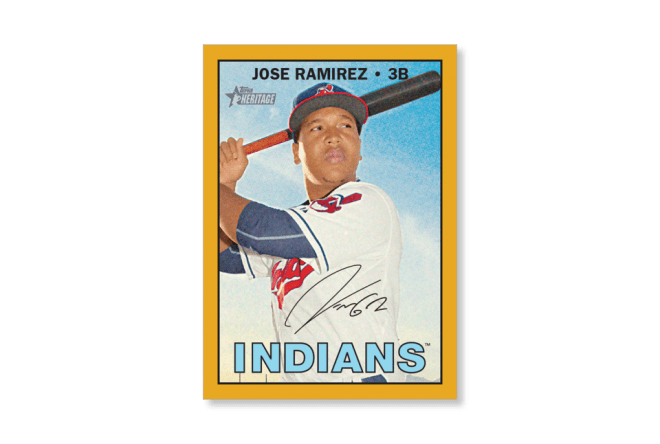
2) Jose Ramirez $5 – Was on our roster part of ’15 but was back in the pool as he looked like a utility player at best. I liked his skills and versatility, so took a flyer at this price. The outcome was what Fantasy players dream of….312 11-76-22.


3) Ian Desmond $26 – After his dismal 2015 performance and seeing him struggle during Spring Training, he wasn’t on my priority list at the table. At a certain point, however, he was the last speed guy left and I paid the price. This was just dumb luck….285 22-86-21


4) Josh Tomlin $2 – The last player we drafted, he provided 13 Wins.


* Dumb Draft Day Decisions


1) Caleb Joseph $2 – This was certainly the first championship Fantasy team to have a player with over 100 AB’s who didn’t have an RBI! Yes, you read that correctly…23-for-132 (.174 BA) with ZERO RBI’s.


2) Tyler White $7 – Had the 1B job in Houston and came out of the gate impressively, but ended up back in AAA after hitting only .211


3) Justin Upton $30 – The most disappointing player on the team as we wallowed near the bottom of the standings early in the season. Came alive in September and ended up with 31 HR’s but never looked like a $130 Million player.


4) Chris Archer $27 – Another expensive addition who didn’t really deliver until the second half…9 Wins and a 4.02 ERA aren’t the numbers of an Ace.


* In-Season Roster Moves


1) Activated Max Kepler from the Farm portion of the roster in late April…became the Twins regular RF and added 17-63-6


2) Waited the requisite 30 days for the suspension of Aroldis Chapman to end before adding him in early May…gave us 20 Saves before departing for the Cubs.


3) Replaced Phegley in early July with Mike Zunino…he added 10 important HR’s.


4) Won a FAAB bid on Ken Giles in early August just before he got the Closer’s job back in Houston…14 saves down the stretch was a boost.


5) Added Tyler Clippard in mid-August once he became the set-up guy for Betances…got a Win & 2 Saves with a 2.79 ERA.


6) Just to balance the scales, the Brothers also took fliers on Raul Mondesi, Chad Pinder & Matt Duffy.


The Fuscos held off the defending Champs , whose roster included Manny  Machado, Kris Davis & Cole Hamels. It was a very close race until mid-September, but the final tally was 69.5 points (of  a possible 96), 7 points ahead of the 2nd place finisher.


Does winning these two titles make me an expert? What’s an expert? According to Niels Bohr, “An expert is a person who has made all the mistakes that can be made in a very narrow field.” Oh yeah, I qualify for that.


And just to help you face the end of the baseball season, remember this quote from A. Bartlett Giamatti – “It breaks your heart. It is designed to break your heart. The game begins in the Spring when everything else begins. It blossoms in the Summer, filing the afternoons and evenings. And then, as soon as the chill rains come it stops. It leaves you to face the Fall alone”.


Hitting The Fantasy Baseball Daily Double

roto-duck

As Summer turns to Autumn and the calendar turns to October, many of you will head for the coat closet. As an Arizona resident, that isn’t really necessary, so for this visit, we’ll find a few appropriate remarks in the “quote closet”. They’ll be used to help commemorate the Old Duck hitting the Fantasy Baseball Daily Double…winning both of the Rotisserie auction-style home leagues in which I compete.


As Dizzy Dean once said, “It ain’t bragging if you can do it” but my comments will also be tempered by the advice of Fantasy Hall of Famer Ron Shandler, who reminds league winners to “Revel in your success because fame is fleeting, but also exercise excruciating humility”.


For all of us who play this wonderful game, the next few months gives us the opportunity to look back at our player decisions and wonder what we were thinking. In “The Magnificent Seven”, Bandito Eli Wallach asks Gunslinger Steve McQueen, “Why You Gringos Come Down Here”?  and he answers, “Seemed Like A Good Idea At The Time”. That could also be the answer for keeping Ben Paulsen or drafting Juan Lagares. Maybe by reviewing some of the positive and negative roster moves in two different winning scenarios, your brain cells will begin to focus on 2017. If your friends, family and colleagues don’t understand your passion for the game, remind them that Dr. Seuss suggested, “Fantasy is a necessary ingredient in living, it’s a way of looking at life through the wrong end of the telescope…and that enables us to laugh at life’s realities”.


> Donald’s Ducks…12 Team, NL only, 4×4, 23 man rosters (14 hitters, 9 pitchers), $260 budget, maximum of 15 keepers and 3 Farm players, established 1984


* Smart Keeper Decisions (April 3rd)…


1) Kris Bryant $10 – No comment necessary, he was the #1 Farm Pick last year.


2) Eugenio Suarez $10 – It seemed like his bat would make the Reds find a spot for him. It turned out to be 3B and he contributed 20+ HR’s & 10+ SB’s.


3) J.T. Realmuto $10 – A Catcher with a good BA and a few SB’s is like gold.


4) Jason Hammel $1 – Always under-rated at Draft tables, this was his 3rd season on my roster…returned 33 Wins for $3.


5) Kyle Hendricks $10 – Also overlooked for his lack of “stuff”, but in a format without K’s, he’s even more valuable…won 31 games over three seasons and could be the Cy Young Award winner this year.


6) Carlos Martinez $7 – Acquired in a trade prior to the 2015 season, he added 30 Wins and great peripheral stats in two years.


7) Jeremy Jeffress $6 – Produced 27 Saves before being traded to the AL at the deadline.


* Dumb Keeper Decisions


1) Ben Paulsen $10 – Thought he’d win the 1B job in Colorado but he lost out to Mark Reynolds…’nuff said.


2) Devin Mesoraco $11 – Guess he now qualifies as “injury prone”.


* Good Draft Day Decisions ( April 9th)


1) Ben Zobrist $22 – Not flashy but a solid player in a great line-up and good ballpark…and he qualifies at multiple positions.


2) Brandon Belt $29 – In an NL-only league with draft inflation, the quality 1B are all going to be around $30…AGon & Votto went for $34 and Freeman for $32.


3) Jon Jay $4 – Provided solid numbers for an end-gamer before getting injured.


4) Derek Dietrich $4 – Another good end-gamer with position flexibility, he hit about .280 in over 400 AB’s.


* Dumb Draft Day Decisions


1) Domingo Santana $27 – Even if he played well, this was an over-payment, but it all had to do with the timing at the table. Didn’t play well and then got hurt.


2) Francisco Liriano $17 – The magic of the Pirates pitching guru finally wore off…had an ERA over 5.00 before heading to Toronto.


3) Adam Warren $3 – Seemed to make sense, as he was the Cubs 6th starter and the Ducks owned #4 & #5…had a 5.91 ERA before going back to the Bronx.


* In-Season Roster Moves


1)  Activated Corey Seager from the Farm portion of my roster on opening day…two consecutive ROY’s is a nice foundation.


2) Replaced Mesoraco with Chris Herrmann in early May…he provided good numbers and position flexibility before the Ducks traded him for Wellington Castillo (on an expiring contract) later in the season.


3) Replaced Paulsen with Michael Bourn in mid-May and he added a much-needed 12 SB’s while on the roster.


4) Activated Jose Peraza from the Farm (also in mid-May) but the Reds sent him back down quickly. Eventually traded him for Martin Prado (another expiring contract) and his new owner will reap the benefit of a shipload of SB’s in 2017.


5) Replaced Peraza with Tommy Joseph just before Memorial Day and eventually traded him for Starling Marte in mid-July. Marte was another expiring contract and his owner was leading the league in SB’s. Joseph will potentially give him 40-50 HR’s in the next two seasons


6) Activated Trea Turner from the Farm just after the All-Star break and waited for Dusty Baker to wake up from his Summer nap to realize what the word “catalyst” means.


7) Won a FAAB bid on Maurico Cabrera in mid-July to hopefully cover the loss of Arodys Vizcaino to injury…he added five Wins and four Saves.


8) Won a FAAB bid on Tyler Thornburg (by $1) in late-July just before he was given the Closer job in Milwaukee…the 11 Saves he added made a big difference


9) After the trade deadline, FAAB’ed three starting pitchers in Matt Moore, Jake Thompson & Ivan Nova. This was essential after losing Jeffress, Liriano & Aaron Nola. The three acquisitions combined for 13 Wins down the stretch.


If nothing else, this summary shows two strategic points…1) if you have a chance to win, go all-in and 2) even seemingly insignificant moves can make a big difference in the final outcome of a Fantasy league.


The Ducks emerged victorious with 78 points ( of a possible 96) and didn’t really have a weak category…led in BA & RBI’s to accumulate 43 points in offense…had 98 Wins to lead the league and added a 4th place finish in ERA.  It was a four-team race until early September, but the 2nd place team ended up 7 points back.


Until next time, when we’ll review the winning squad in the AL-only format, remember the words of Groucho Marx, “Those are my principles, and if you don’t like them…well, I have others”.


Bacon-Wrapped Hall of Famers

bacon-phillies

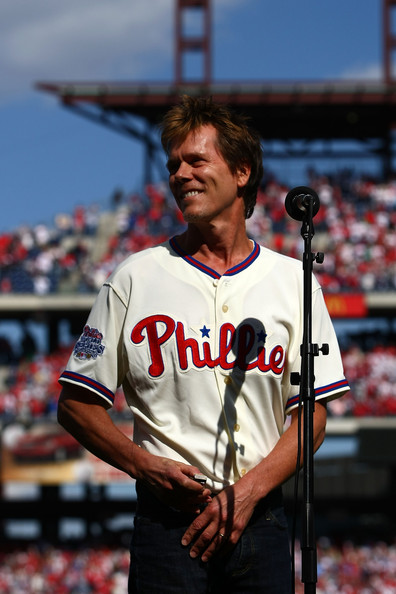
The “Six Degrees of Kevin Bacon” is a game based on the theory that everyone is six or fewer steps away from any other person in the world. The game was created to link any Hollywood actor or actress (living or dead) to Kevin Bacon in six degrees or less.


To test the theory, you need only to link up with the website called oracleofbacon.org. Let’s say, for example, that your favorite entertainer is Al Jolson. A quick click will tell you that Jolson appeared in the 1936 movie “The Singing Kid”. In that cast was an actor named Emmett Vogan and he was in “City That Never Sleeps” (1953). In that cast was James Andelin who later appeared in “Stir of  Echoes” (1999) with none other than Kevin Bacon. That means Jolson has a “Bacon Number” of 3. So, every time you have a experience that causes you to say, “What a small world”, it gives credence to the theory. To Bacon’s credit, he’s piggybacked (yes, I really said that) onto the phenomenon and created a charitable foundation called Six Degrees, in partnership with Network for Good. You can find more information at SixDegrees.org.


A few years ago, the Old Duck penned a column linking Bryce Harper to Babe Ruth in only seven degrees. It was a fun exercise, but took an enormous amount of research and guesswork with the help of the massive database at baseball-reference.com. Now, someone has made the sports exercise of “six degrees” much easier. A fellow named Ben Blatt has built a tool to find the shortest possible connections between 50,000 + professional baseball, football, basketball and hockey players. Two athletes are considered “connected” if they played for the same team during the same season. Just under 18,000 baseball players qualify since the 1870’s.


With our new toy, let’s have some fun and connect each of the three inductees of the  Hall of Fame class in 1939 (the first time in Cooperstown) to a current major league star. We’ve chosen players who play the same position as the legends.


George Sisler received 86% of the vote in ’39 and was a 1B in the big leagues from 1915-1930. He had a lifetime BA of .340, won the 1922 AL MVP and hit over .400 twice.


> Sisler played on the 1928 Washington Senators with…

Ossie Bluege, who played on the 1939 Washington Senators with…

Early Wynn, who played on the 1963 Cleveland Indians with…

Tommy John, who played on the 1988 New York Yankees with…

Al Leiter, who played on the 2005 Florida Marlins with…


MIGUEL CABRERA


Eddie Collins played 2B in the American League from 1906-1930. He hit .333 for his career, won the 1914 MVP and accumulated 3,315 hits.


> Collins played on the 1923 Chicago White Sox with…

Ted Lyons, who played on the 1938 Chicago White Sox with…

Mike Tresh, who played on the 1949 Cleveland Indians with…

Minnie Minoso, who played on the 1980 Chicago White Sox with…

Harold Baines, who played on the 2001 Chicago White Sox with…

Carlos Lee, who played on the 2011 Houston Astros with…


JOSE ALTUVE


“Wee” Willie Keeler was a 5′ 4″ OF who drove opposing Pitchers crazy from 1892-1910. A lifetime BA of .341 and over 2,900 hits tell the story.


> Keeler played on the 1910 New York Giants with…

Red Ames, who played on the 1918 St. Louis Cardinals with…

Charlie Grimm, who played on the 1936 Chicago Cubs with…

Phil Cavarretta, who played on the 1955 Chicago White Sox with…

Minnie Minoso, who played on the 1980 Chicago White Sox with…

Harold Baines, who played on the 1999 Cleveland Indians with…

Russell Branyan, who played on the 2011 L.A. Angels with…


MIKE TROUT


Needless to say, Minnie Minoso’s two-game appearance for the White Sox in 1980 was essentially ceremonial in nature, but the link exists nonetheless. Interestingly, Baines shows up twice but the connection is to two different teams.


How about connecting a major league ballplayer to Kevin Bacon himself? That’s so easy, it only requires two degrees. Chuck Connors is remembered as “The Rifleman” from TV, but he played two seasons in the National League and two additional seasons with the Boston Celtics prior to his acting career. He appeared in “The Silver Whip” (1953) with Robert Wagner who co-starred with Bacon in “Wild Things” (1998).


It’s a small world, after all.


Help – Save Me!

radatz-63

How can a Pitcher get credited with a Save when he never shook the Catcher’s hand after the final out of the inning and the game wasn’t actually over? In August of 2013, the Tigers Bruce Rondon came on in relief against the Indians in the top of the 7th inning protecting a 5-2 Tigers lead. After allowing one hit and then getting the final out of the inning, he calmly walked to the dugout. The Tigers proceeded to score two additional runs in the bottom of the 7th and eventually, the game was called after seven innings due to rain. Opening up the newspaper the following morning, the box score of the game shows Rondon getting his first Save of the season! How would you like to lose your Fantasy Baseball League by one point in the Saves category?


When the founding fathers of Rotisserie baseball included a “Saves” category back in the early 80’s, they probably didn’t anticipate the type of angst that would be cascading down on the owners of Fantasy teams. In the original 4×4 format, an established closer could cost more than 10% of your roster’s budget at the Draft table. Maybe even more challenging, however, is the changing landscape that is part of the quest for Saves. Lets see a show of hands for all the experts who were spending late-March targeting Jonathan Papelbon, Trevor Rosenthal, Jake McGee, Steve Cishek, Glen Perkins and Huston Street.


Saves didn’t become an official stat until 1969 and now, in the age of specialization, it isn’t uncommon to see Closers save 30, 40 or even 50 games. It certainly wasn’t like that in the 1950’s & 60’s, but thanks to baseball-reference.com and other baseball researchers, the history of Saves can now be tracked back over the last hundred years of baseball. For today’s baseball card collecting adventure, we’ll find the rookie cards of the Saves leader for each of the 20 seasons prior to the stats birth in 1969. As always, the card values are based on “Near Mint” (NM 7) condition.


> 1949 – Joe Page, Yankees, 27 Saves – This tall lefthander was a starting pitcher when he first joined New York in the mid-40’s but became the last guy in the bullpen in 1947. To illustrate how the role has changed, he appeared in 60 games, finishing 48, with 135 IP and 13 Wins. Not an unsung hero, he also finished 3rd in the AL MVP balloting. This workload, however, took a heavy toll and his career was essentially over after 1950. His rookie card is from 1948 Bowman (#29) and books for $70.


> 1950 – Jim Konstanty, Phillies, 22 Saves – Philadelphia won the NL Pennant and Casimir James Konstanty was a major contributor. When you digest his stats, it is clear to see why he won the NL MVP…appeared in 74 games, finishing 62 of them!! Pitched 152 innings and had 16 Wins to go along with his Save total. You can find his rookie card in the 1950 Bowman set (#226) with a value of $30.


> 1951 – Ellis Kinder, Red Sox, 14 Saves – Nicknamed “Old Folks”, he was an excellent starting pitcher for four seasons prior to moving to the bullpen in ’51. In 1949, for example, he went 23-6 and led the AL with 6 shutouts. His performance in this season was amazing and included an 11-2 record in 127 IP while finishing 41 games. The 1950 Bowman set is also home to Kinder’s rookie card (#152) and it books for $30.


> 1952 – Al Brazle, Cardinals, 16 Saves – “Cotton” was another starting pitcher from the late 40’s who transitioned to the bullpen. He even started 6 games in this season and went 12-5 for the year. The 1949 Bowman set has his rookie card (#126) and $30 will add it to your collection.


> 1953 – Ellis Kinder, Red Sox, 27 Saves – Still effective at age 38, this tied Page’s record for the most Saves in a season. He also led the AL with 69 games pitched and 51 games finished. Oh, and his ERA was 1.85!


> 1954 – Jim Hughes, Dodgers, 24 Saves – A journeyman who didn’t get to the majors until age 29, he also led the NL with 60 appearances. His 1953 Topps card (#216) books for $40.


> 1955 – Ray Narleski, Indians, 19 Saves – The starting rotation was Early Wynn, Herb Score, Bob Lemon & Mike Garcia with a spot starter named Bob Feller. This slender right-hander also led the league with 60 appearances and added a 9-1 record. His 1955 Topps card (#160) is worth $45.


> 1956 – Clem Labine, Dodgers, 19 Saves – The “Boys of Summer” had a great staff and this veteran closed the door by finishing 47 games. His rookie card is the jewel of this collection, as it comes from the high-numbered run of the famous 1952 Topps set (#342) and books for $525.


> 1957 – Bob Grim, Yankees, 19 Saves – The 1954 AL Rookie of the Year award winner when he went 20-6, Grim transitioned to the bullpen and added a 12-8 record to this All-Star season. The 1955 Bowman rookie card (#167) is worth $25.


> 1958 – Ryne Duren, Yankees , 20 Saves – Sort of a cross between Ricky Vaughn and Nuke Laloosh, this hard-thrower wore eyeglasses that looked like Coke bottles and always threw his first warm-up pitch all the way to the back-stop. He finished 2nd in the Rookie of the Year race and had 87 K’s in 75 IP. His 1958 Topps card (#296) can be found for about $20.


> 1959 – Turk Lown, White Sox, 15 Saves – Actually, a three-way tie with NL leaders Lindy McDaniel & Don McMahon, we’ll stick with Omar Joseph Lown. He led the NL in games finished for ’56 & ’57 with the Cubs and then went cross-town to the Pale Hose. He added 9 Wins in this stellar season for a 35 year-old. His 1952 Topps rookie card is also from the scarce series (#330) and books for $375.


> 1960 – Lindy McDaniel, Cardinals, 26 Saves – He and his Brother Von both pitched for the Redbirds in the 1950’s. This outstanding season included a 12-4 record and a 3rd place finish in the Cy Young voting. Led the NL in Saves again in 1963. His rookie card is from 1957 Topps (#79) and books for $20.


> 1961 – Luis Arroyo, Yankees, 29 Saves – Not the prototypical closer at 5″ 8″, he had one of the greatest bullpen seasons ever for the pennant winning Bronx Bombers. Led the league with 65 appearances and 54 games finished while adding 15 Wins in 119 IP. Two years later, his career was over. The 1956 Topps set has his rookie card (#64) and it is valued at $25.


> 1962 – Roy Face, Pirates, 28 Saves – Another diminutive relief pitcher, this was the 3rd time Elroy led the NL in Saves. And that’s in addition to his 18-1 record in 1959. His rookie card from the 1953 Topps set (#246) will set you back $155.


> 1963 – Stu Miller, Orioles, 27 Saves – A consistently good closer for both the Giants & O’s in the 1960’s, his stats for this year included league-leading totals of 71 appearances and 59 games finished. His 1953 Topps card (#183) is worth $40.


> 1964 – Dick Radatz, Red Sox, 29 Saves – Considered by some as the first of the modern closers, he was intimidating at 6″ 6″ and his nickname was “The Monster”. Groomed as a closer, he finished 3rd in the ROY balloting in ’62 when he accumulated 24 Saves & 9 Wins. If you ever want a relief pitcher season for your historical Rotisserie roster, this is it…in addition to the Saves, 16 Wins and 181 K’s in 157 IP. Not surprisingly, after pitching 538 innings in his first four campaigns, he was “toast”. The 1962 Topps rookie card (#591) can be yours for about $60.


> 1965 – Ted Abernathy, Cubs, 31 Saves – A “sidearm” hurler since hurting his arm in High School, he had 84 appearances and 62 games finished for the Cubbies. His 1957 Topps card (#293) books for $30.


> 1966 – Jack Aker, Athletics, 32 Saves – Nicknamed “Chief”, he pitched for 11 seasons but never matched this particular performance. 57 games finished and a 1.99 ERA in 113 IP tells the tale. His 1966 Topps card (#287) is worth $10.


> 1967 – Ted Abernathy, Reds, 28 Saves – Another great season, this time in Cincinnati. Led the league again with 70 appearances and 61 games finished.


> 1968 – Phil Regan, Cubs, 25 Saves – Actually started the season with the Dodgers but had all the Saves for the Cubbies. Acquired “The Vulture” as his nickname in Los Angeles when he went 14-1 out of the bullpen in ’66 behind Koufax, Drysdale, Osteen & Sutton. His 1961 Topps card (#439) is valued at $10.


There you have it…the 20 leaders of the unofficial category before Ron Perranoski of the Twins topped the leader board in 1969. Hope you enjoyed the history lesson.


Johnny Pesky & Tommy Bahama

fenway2

When Red Sox legend Johnny Pesky died at age 92 in the Summer of 2012, it brought back a flood of memories and mental snapshots to the young boy who grew up in the shadow of Fenway Park. While Pesky’s baseball career will never be confused with that of my boyhood idol Ted Williams, his story is one that could only happen in baseball. To understand what the game was like in the 40’s & 50’s, you only need to read David Halberstam’s wonderful book “The Teammates” published in 2004. It chronicles the story of four ballplayers from different places with different backgrounds who became lifelong friends…Pesky, Williams, Dom DiMaggio and Bobby Doerr. While the context of the story is about a journey to make a final visit to see Ted, it weaves the history of the players and their relationship through the years into the chapters. Funny and poignant, it is a must-read for both the die-hard and casual baseball fan.


Ted Williams was a larger-than-life figure who deserves the admiration of every baseball fan…young and old. It is a shame that the misguided decision-making of his children after his death has caused even a slight tarnishing of his legacy. The greatest hitter who ever lived should never be a mentioned as a joke or throw-away line by people who can’t really be baseball fans. If you aren’t old enough to have seen him play, here’s a summary of stats to contemplate…


> 1939 – Hit .327 with 145 RBI’s in his rookie season


> 1940 – Hit .344 and made his first All-Star team


> 1941 – .406 BA, 37 HR, 147 RBI’s but finished 2nd in the MVP voting (to Joe DiMaggio)


> 1942 – .356, 36 HR, 137 RBI’s winning the Triple Crown, but finished 2nd in the MVP voting again (this time to Joe Gordon)


> 1946 – .342 BA and won the MVP


> 1947 – .343 BA, 32 HR, 114 RBI’s winning the Triple Crown once more, but finished 2nd to Joe D. in the MVP voting


> 1948 – .369 BA, 3rd in MVP


> 1949 – .343 BA, 43 HR’s 159 RBI’s winning his 2nd MVP


> 1950 – Injured during the All-Star Game, he had 28 HR’s & 97 RBI’s in only 89 games played


> 1951 – .318, 144 Walks (the 6th time he led the league in base-on-balls)


> 1954 – 117 games, his .345 BA would have led the league but because he was walked 136 times, he didn’t have enough AB’s to qualify (they eventually changed the rule)


> 1955 – 98 games, .356 BA


> 1956 – .345 BA


> 1957 – .388 BA at age 38, 2nd in the MVP balloting to Mickey Mantle


> 1958 – .326 BA, won his 6th batting title


> 1959 – Limited to 103 games due to injuries and only hit .254


> 1960 – 113 games, .316 BA & 29 HR’s including the one off Jack Fisher in his last at bat

> Career Batting Average of .344…7th all-time


> Career On-Base Percentage of .4817…1st all-time


> Career On-Base & Slugging (OPS) of 1.1155…2nd only to Babe Ruth


> 2021 Walks, 709 Strikeouts


> The last player to hit .400 (.406 in ’41)…if today’s Sacrifice Fly rule was in effect, it would have been .411


While all these numbers might be impressive, consider three other elements of Ted’s life….


1) He missed five years in the prime of his career to serve in the military during two wars…one writer commenting on the fact that John Wayne never served during World War II said, “John Wayne played John Wayne, Ted Williams was John Wayne”.


2) Without any fanfare or publicity, he helped start the “Jimmy Fund” in Boston to help children with cancer. Today, that organization is the Red Sox official charity and supports the Dana-Farber Clinic, where kid’s lives are saved everyday…I’m proud to be a member of their society made up of people who have the charity in their estate plan..


3) At his Hall of Fame induction speech in 1966, he said, “I’ve been a very lucky guy to have worn a baseball uniform, and I hope some day the names of Satchel Paige and Josh Gibson in some way can be added as a symbol of the great Negro players who are not here only because they weren’t given a chance.” Many feel that this powerful and unprecedented statement from the podium was the first step in opening the doors of Cooperstown to these players. Paige was the first Negro League star inducted in 1971.


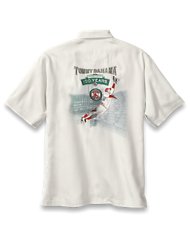
Back in 2012, in honor of Fenway Park’s 100th anniversary celebration, the Tommy Bahama  clothing company came out with a beautiful commemorative shirt for the occasion. At a price tag of $250, it was slightly out of the range for this Senior Citizen. They did, however, offer a contest on their website asking fans to share their personal memories of the ballpark with the opportunity to win one of the shirts. Here’s my entry…


” As a boy growing up in New England, I remember clearly how baseball fans would talk about Ted Williams. However, I never really understood the legend of the man until I happened to be in Fenway Park on an August night in 1953. Even though I was only seven years old, I could feel the electricity in the stands as Ted made his first appearance since his return from serving as a Jet Fighter Pilot in Korea. My recollection is that he popped-out as a pinch-hitter but what is crystal clear is that the fans gave him a standing ovation both before and after the at bat. A hero to his fans, a hero to his country and still a hero to that little seven-year old boy”


No, a package didn’t arrive on my door-step from Tommy Bahama but that didn’t dampen my enthusiasm for the rich history of the man, the ballpark and the game we love. I did share the entry with many baseball friends and my competitors in our national experts fantasy league (the XFL) got together and surprised me with a gift of the shirt that Fall at our annual draft. It was a treasured moment for this old baseball fan and I wear the shirt every November when we all gather in Phoenix. Here’s hoping the tradition will continue for years to come.