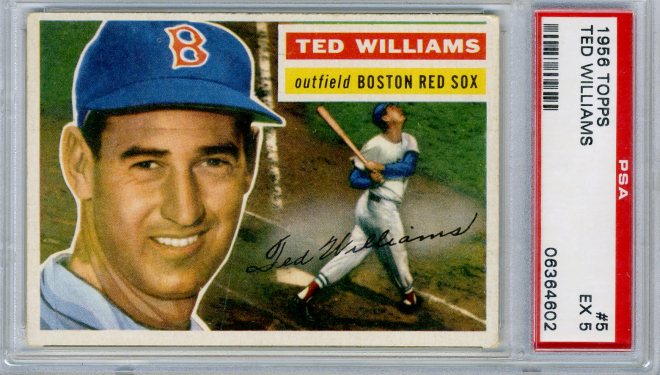
Teddy Ballgame

56-williams


A while back, I wrote a column called “70 Reasons Why I Love Baseball”. If I had to add a 71st reason, it would be the opportunity to be around real baseball fans.


In the 1991 film, “City Slickers”, Billy Crystal’s character is sitting around the cattle-drive campfire discussing baseball with the other guys. The one girl in the conversation says, “I like baseball. I just never understood how you guys can spend so much time discussing it. I mean I think the game is great but I don’t memorize who played 3B for Pittsburgh in 1960”. The guys then yell in unison, “Don Hoak!”


That is the atmosphere here today with this group of people. All I have to do is say “.406” and you immediately know who I’m talking about.


I was fortunate enough to grow up in Boston going to Fenway Park, watching and idolizing Ted Williams. So, today, we’ll spend a few minutes talking about my childhood hero. If you’re ever in Surprise, you have an open invitation to come to my home and see “The Williams Shrine” including autographs, memorabilia and baseball cards


BIO


  • Born 1918…San Diego
  • Signed 1936
  • ’37 San Diego (age 18) – .291, 23 HR
  • ’38 Minneapolis (age 19) – .366, 43 HR, 143 RBI’s, Triple Crown
  • MLB Debut 1939
  • 1939-1960
  • Hall of Fame 1966 (282/302 ballots)


STATS


  • ’39 – .327 & 145 RBI – 4th in MVP
  • ’40 – .344 – led AL in Runs & OBP
  • ’41 – .406, 37 HR, 147 BB – 2nd in MVP, as DiMaggio’s 56 game hitting streak swayed the voting…there was no Sacrifice Fly rule at the time or he would have hit.411…prior to 1888, when a walk counted as a hit, his BA would have been .540
  • ’42 – .356, 36 HR, 137 RBI, 145 BB – 2nd in MVP to Joe Gordon despite winning the Triple Crown…OPS+ was 217-to-155…WAR was 10.6-to-8.2
  • ’43-’45 Military
  • ’46 – .342, 1.164 OPS – MVP
  • ’47 – .343, 32 HR, 114 RBI – 2nd in MVP to DiMaggio despite winning Triple Crown…OPS+ was 205-to-154…WAR was 9.9-to-4.8
  • ’48 – .369, 1.112 OPS – 3rd in MVP behind Boudreau & DiMaggio
  • ’49 – .343, 43 HR, 159 RBI, MVP
  • ’50 – Injured, 28 HR in 89 Games
  • ’51 – .318, 144 BB, led AL IN OBP & Slugging
  • ’52 – Korea – John Glenn was his wingman


“He did a great job as a pilot. He wasn’t out there moaning all the time or trying to duck flights or anything like that. He was out there to do a job and he did a helluva job. Ted only batted .406 for the Red Sox…he batted a thousand for the Marine Corps and the United States”.


  • ’53 – Korea, August / September stats = .407, 13 HR’s in 110 AB’s at age 34
  • ’54 – 117 Games, .345 – Bobby Avila won the batting title at .341 because Ted was walked 136 times and didn’t have enough AB’s to qualify…the rule has since been changed
  • ’55 – 98 Games, .356
  • ’56 – .345 & .479 OBP
  • ’57 – .388 with a 1.257 OPS to finish 2nd in MVP to Mantle…Ted was 38
  • ’58 – .328 (6th Batting Title) & 1.042 OPS
  • ’59 – 103 Games, .254
  • ’60 – 113 Games, .316, 29 HR including #521 in his final AB against Jack Fisher


Lifetime Stats


  • BA .344 (7th)
  • OBP .4817 (1st)
  • Slugging .6338 (2nd to Ruth)
  • OPS 1.1155 (2nd to Ruth)
  • 2021 BB, 709 SO
  • WAR 123.1 (11th)
  • Runs Created 2382 (6th)
  • OW% .857 (Ruth .858)
  • Projection – 3,553 Hits, 701 HR


BASEBALL CARDS (Value in EX 5 condition)


  • 1939 PLAYBALL RC – $2,000
  • 1951 BOWMAN – $275
  • 1954 BOWMAN (replaced by Piersall) – $900
  • 1954 TOPPS (2) – $275 each
  • 1955 TOPPS – $220
  • 1956 TOPPS – $180
  • 1957 TOPPS – $185
  • 1958 TOPPS – $165
  • 1958 TOPPS ALL-STAR – $50
  • 1959 FLEER (80 CARD SET) – $800
  • MODERN CARDS


FISHERMAN – Sear’s spokesman, HOF in 2002


JIMMY FUND – Dana Farber Cancer Institute


ROBERT REDFORD – THE NATURAL – ROY HOBBS #9


1936 YANKEE SCOUTING REPORT – “Williams is a very slow lad, not a good OF and just an average arm. There is big doubt whether Williams will ever be fast enough to get by in the majors as an OF. His best feature now is that he shows promise as a hitter, but good pitching so far has stopped him cold”.


HALL OF FAME INDUCTION SPEECH (’66)


> “I’ve been a very lucky guy to have worn a baseball uniform, and I hope some day the names of Satchel Paige and Josh Gibson in some way can be added as a symbol of the great Negro League players who are not here only because they weren’t given a chance”.


QUOTES


  • I’ve seen six or eight guys in my life that I thought absolutely had as much ability as I did. Still, they didn’t do all that well. Why not? Intenseness. Those guys would see something 40 different times and not get anything out of it. The next guy sees it in his own mind and uses it…that’s the difference.
  • I have to rate Feller as one of the all-time greats. Fast, just deadly fast. Feller, Whitey Ford, Bob Lemon, Eddie Lopat & Hoyt Wilhelm – the five toughest pitchers I ever faced.
  • Mickey Mantle was the greatest single ballplayer of all the athletes I’ve ever met. He was as down to earth as anyone. Never had a braggadocios vein in his body. He could do everything…hit farther than any body, switch hitter. But he thought everybody in the world was better than him.
  • The bigger people are in life, the more big-league they are. That’s been my experience…you meet less shits the higher up you go.
  • Hitting is 50% above the shoulders.
  • If I was paid $30,000 a year, the least I could do was hit .400
  • Rogers Hornsby gave me the single greatest advice of hitting I ever got…wait for a good pitch to hit.
  • Baseball is the only field of endeavor where a man can succeed three times out of ten and be considered a good performer.
  • Ya gotta be ready for the fastball.
  • Pitchers are dumb. They don’t play but once every four days. They’re scratching their ass or pickin’ their nose or somethin’ the rest of the time. They’re pitchin’, most of them, because they can’t do anything else.
  • Sixty feet six inches…if it had been two feet either way, it would have changed the whole thing.
  • I’m a real smart son of a bitch. I’m an old dumb ballplayer and a real smart son of a bitch.
  • My goal was to have people say, “There goes Ted Williams, the greatest hitter who ever lived”.


A baseball writer once asked a blind fan why he came to the game instead of just listening to the radio at home and he replied, “I love the sounds of the game when Ted comes up”.


Watch Your P’s & Q’s And The MLE’s

14-healy

For Fantasy players, prospects are a passion and a plight. This time of year, we scour lists from Baseball America, MLB.com, magazine annuals and numerous websites that claim to have that crystal ball. The reality is that each season’s top 100 list includes a logjam of bums who will never make an impact on your team or their MLB employer. Do the names Rick Ankiel, Paul Wilson, Brandon Wood, Joba Chamberlain & Jesus Montero sound familiar? They should because, over the last 20 years, they’ve each been one of the top three prospects in baseball.


In our ongoing quest to find talent, we look at pedigree (in terms of draft position or contract), athleticism, roster opportunity, scouting reports and statistics. One of those statistics should be Major League Equivalents (MLE’s). Originally outlined in 1985 by Bill James, the concept is to evaluate minor league statistics and create a reasonable expectation of how they would correlate to major league performance. A number of analytic sites have formulas in place to determine these outcomes and while no one statistic is carved in granite, it’s another item for your Fantasy toolbox.


Looking back at some of the surprising players from 2016, it’s interesting to see what their MLE’s looked like from 2015. It’s a reasonable guess that these guys weren’t highly valued in your Draft last Spring, but they turned out to be the kind of bargains that help win leagues…


> Keon Broxton, Brewers OF – Not a top prospect and already in his age 26 season, the ’15 minor league numbers showed the potential for 30+ SB’s. He had 23 SB’s in 75 games last season.


> Adam Duvall, Reds OF – Another late bloomer, his 2015 MLE’s showed a poor batting average but the equivalent of 28 HR’s. In 150 games with Cincinnati, he hit .241 with 33 HR’s.


> Ryon Healy, A’s 3B – His projected 7 HR’s in AA from ’15 wasn’t that impressive on the surface, but a predicted 82% contact rate jumped off the page. After getting called up in ’16, he hit .305 in 269 AB’s with 13 HR’s.


> Travis Jankowski, Padres OF – His lower minors equivalents for ’15 included 23 SB’s, 82% contact rate and 9% walk rate. After 30 SB’s in San Diego last year, he may have earned a starting job.


> Tyler Naquin, Indians OF – The ’15 MLE’s showed 6 HR, 11 SB’s & a .272 BA. In 321 AB’s for the Tribe last season – 14 HR’s, 6 SB’s, .296 BA.


> Ryan Schimpf, Padres 2B – At A-Ball in ’15, he projected a lousy BA, but 20 HR’s and a 10% Walk rate. For the Friars in ’16 – .217 BA & 20 HR’s in 276 AB’s.


Wouldn’t you have loved these six guys at single-digit prices in an auction or late round picks in a snake? As we head toward the 2017 season, let’s look at some top prospects with solid MLE’s along with a few that might be flying under the radar. The number represents where they are on the current MLB.com top 100 prospect list.


> Cody Bellinger, Dodgers 1B (#32) – This is the guy they wouldn’t give up to get Brian Dozier. At age 21, his MLE’s showed 24 HR power.


> Lewis Brinson, Brewers OF (#14) – Only 22, he’s already displaying a nice power / speed combination (13/12).


> Willie Calhoun, Dodgers 2B (#87) – Built more like a fire hydrant than a middle infielder, he projected 26 HR’s at AA.


> Dylan Cozens, Phillies OF (NA) – A 235 lb. former football player, he projected 37 HR’s & 17 SB’s at AA.


> Dustin Fowler, Yankees OF (NA) – Not even in the top ten on the Bronx Bombers list of prospects, he still projected 13 HR’s, 25 SB’s and a .271 BA at AA.


> Manny Margot, Padres OF (#26) – Projected 21 SB’s and a 86% contact rate at AAA and should be the starting CF in 2017.


> Austin Meadows, Pirates OF (#9) – Intriguing power/speed (10/15) CF at age 21.


Last year at this time, this column touted two guys who were not in top 95 prospects…Trevor Story & Max Kepler. Hope they were on your team.


The Cincinnati Kid

votto-auto

No, not the 1965 movie where Steve McQueen loses that last poker hand to Edward G. Robinson after rolling around with both Ann-Margret and Tuesday Weld. This is the nickname for Reds 1B Joey Votto that should replace “Votto-matic”. The logic is the connection between the current star and the original “Kid”, Ted Williams.


In 1938, Williams honed his batting philosophy under the tutelage of Rogers Hornsby at the Spring camp for the Minneapolis Millers. The 19 year-old phenom soaked up everything “Raj” had to say, especially the idea to “get a good ball to hit”. That became Ted’s personal quest and he decided that a walk could be as a good as a hit and that getting on base helped your team in the long run. His SABRmetric approach at the plate also created the impression with both Pitchers and Umpires that if he didn’t swing at a pitch, it couldn’t be a strike. In his first two seasons in a Red Sox uniform, he would often be put in the position of defending his hitting to the members of the Boston press. There was even a profanity-laced tirade in the locker room toward one of the writers who criticized him taking a base-on-balls when there was a runner in scoring position. By 1941, when Ted hit .406, even the scribes came to realize that he was the best hitter in baseball and they moved on to find other topics of aggravation.


In the evolving debate between stats and scouting, Joey Votto seems to be a lightning rod at the center. A few years ago, Reds broadcaster Marty Brennaman took the old school position when he said, “Votto will take a 3-0 pitch an inch off the outside, when he could do some damage. I believe in expanding the strike zone when you have guys on base”. The fact that Votto had only 73 RBI’s in 581 AB’s for 2013 and 80 RBI’s in 545 AB’s in 2015 drives people like Brennaman crazy. in 2013, Reds 2B Brandon Phillips had 103 RBI’s in 606 AB’s, but many of those were accumulated because Votto was getting on base in front of him. In 2015, Todd Frazier was the recipient with 89 RBI’s in 609 AB’s. So, the scout half of the debate will criticize Phillips (and his .310 OBP) and Frazier (.309 OBP) for not being more like Votto after criticizing Votto for not being more like Phillips & Frazier. The other thing Brennaman has in common with those Boston newspapermen from 70+ years ago is that he’s never stepped into a big league batter’s box and tried to hit a 95-mph fastball.


Fortunately for the Reds organization and their fans, Votto doesn’t care about the negative comments. With a contract that extends until 2023, he isn’t focused on personal stats, only the team’s success. In 2016, the Reds won only 68 games, but Votto took his game to another level. In 556 AB’s, he hit .326 with a league-leading .434 OBP and a .985 OPS. Oh, and he added 97 RBI’s.


From a stat guy’s perspective, Joey Votto might be the most under-rated player in baseball. His performance over the first nine years of his career is on a secure historical path. In terms of old-school stats, it looks really good. A lifetime BA of .313, OBP of .425 and a slugging percentage of .536 with an average of 24 HR’s & 80 RBI’s despite missing parts of two seasons with injuries. When you start to break down the SABRmetrics, it looks even better.


OPS (On-Base & Slugging) is a relatively new stat that is widely accepted in the baseball community as a benchmark for offensive excellence. Votto’s career number is .961, which is 18th best of all-time, ahead of Mel Ott, Ralph Kiner, Willie Mays, Chipper Jones & Hank Aaron. An even newer stat is OPS+, which actually adjusts for the offense produced in the league each year and the ballparks. With the baseline being 100, Votto’s career OPS+ is 157, which also puts him in 18th place all-time, ahead of Frank Thomas, Joe DiMaggio, Mel Ott & Frank Robinson.


WAR (Wins Above Replacement) is a single number that presents the number of wins a player added to the team above a replacement level player. Since joining the Reds in 2007, Votto has accumulated a number of 47.3 at age 32. Four or five additional seasons at this level would put him ahead of Derek Jeter, Reggie Jackson, Johnny Bench and numerous other Hall-of-Famers on the all-time list.


“Win Shares” is another Bill James contribution that relates a player’s individual statistics to the number of wins he contributed to the team. Generally, 30 or more Win Shares indicates an MVP-caliber season. Votto’s average for his last six full seasons is 31.33.


“Runs Created” is an additional category now being examined by analysts and Votto’s number of 139 in 2016 was second only to Mike Trout.


As a Fantasy player, you may intuitively lean toward hitters who are aggressive at the plate. After all, in most leagues, walks don’t really help your stats. In 2016, the major league hitters who saw the most pitches per AB were 1) Jayson Werth…2) Mike Napoli…3) Mike Trout…4) Dexter Fowler and 5) Joey Votto. It seems as if most of those players would have been a fairly good fit on your team.


As for the “Old School” opinion versus the “Stat Guy” analysis, the debate will continue and it is always interesting. One school of thought from baseball writer Paul Daugherty is that if Votto batted second in the line-up, there would be no discussion because both sides would agree that he’s the best two-hole hitter in the game. However, as long as he’s batting third, the old school fan will say, “he’s not paid to walk”. Just for the record, Ted Williams hit third.


Clyde McPhatter & Barrett Strong

mcphatter

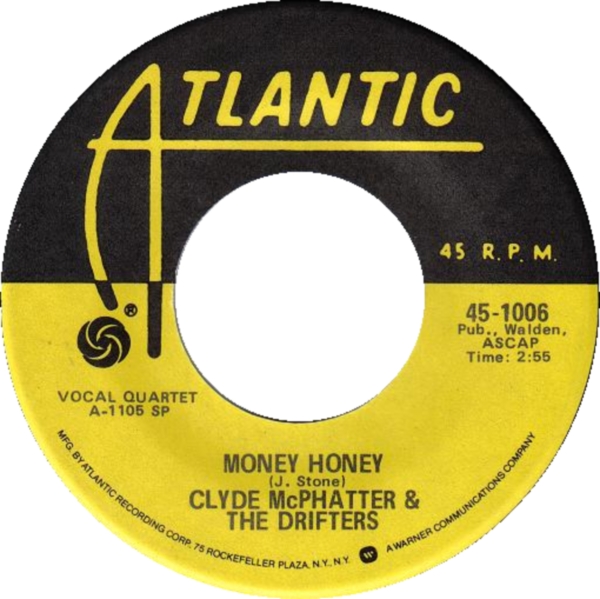
For those of you under a certain age, the answer is no, these aren’t two sleeper prospects for your 2017 Fantasy Baseball roster. In 1953, Clyde McPhatter was the lead singer of the Drifters when they recorded “Money Honey” (later covered by Elvis Presley). Not to be confused with the Lady Gaga song, it’s lyrics include…


Well, I learned my lesson and now I know–


The sun may shine and the wind may blow–


Women may come, and the women may go,


But before I say I love ’em so,


I want–money, honey!


Money, honey


Money, honey,


If you wanna get along with me.


The fledgling Motown Records was provided with important capital when Barrett Strong hit the charts in 1960 with “Money, That’s What I Want” (later covered by the Beatles).


The best things in life are free–


But you can keep ’em for the birds and bees,

Now give me money, (that’s what I want), that’s what I want.


As we continue to marvel at MLB’s endlessly deep wallets this off-season, let’s give you an opportunity to once again be a General Manager. Based on some minimal research, it appears that there are 25 current major league players who will make at least $20 Million for the 2020 season. Your mission, should you choose to accept it, is to determine which of these players you would really want on your roster in 2020 at these prices. Some figures represent the actual salary for ’20, while others are an average of a long-term deal. We won’t quibble over a million here or a million there. The player’s age for that season is listed to help with your analysis. As you read the names and think, “This guy is on the downside of his career”, remember that three more full seasons need to be played before these salaries come due.


> Max Scherzer, age 36, $35.9 Million


> Clayton Kershaw, age 32, $35.6 Million


> Zach Greinke, age 36, $35 Million


> Mike Trout, age 28, $34 Million


> David Price, age 34, $32 Million


> Miguel Cabrera, age 37, $30 Million


> Yoenis Cespedes, age 34, $29.5 Million


> Albert Pujols, age 40, $29 Million


> Giancarlo Stanton, age 30, $26 Million


> Joey Votto, age 36, $25 Million


> Stephen Strasburg, age 31, $25 Million


> Jordan Zimmermann, age 34, $25 Million


> Robinson Cano, age 37, $24 Million


> Masahiro Tanaka, age 31, $23 Million


> Freddie Freeman, age 30, $22.4 Million


> Justin Upton, age 32, $22.1 Million


> Wei-Yin Chen, age 34, $22 Million


> Buster Posey, age 33, $21.2 Million


> Jacoby Ellsbury, age 36, $21.1 Million


> Chris Davis, age 34, $21.1 Million


> Jayson Heyward, age 30, $21 Million


> Johnny Cueto, age 34, $21 Million


> Shin-Soo Choo, age 37, $21 Million


> Jon Lester, age 36, $20 Million


> Justin Turner, age 35, $20 Million


OK, GM…how many of these paupers are on your team in 2020? More than five? Of course, it’s an easier commitment when you don’t have to write the check.


A Duck On The Hot Stove

58-howard

Many people visiting this blog play some form of Fantasy Baseball. So, the question is, at what age did you determine that you were smarter than the average MLB General Manager? Don’t be modest, you know it’s true. In your heart, you’re sure that if Brian Cashman or Jon Daniels played in your league, you’d leave them in the dust. As for Billy Beane, that might be more of a challenge because for the first time ever, he’d have the same payroll as everyone else.


Some of you may have reached this obvious conclusion once you started playing the game. For others, it may have occurred earlier, when you first became a real fan and knew the line-ups of every team. For me, it was about age 12 as I watched my Red Sox get clobbered by the Yankees on a regular basis. Even in those long-ago days before free agency, it became clear that some teams just had a better sense of player performance. Certainly, money was an issue, but even the Yankees made bad decisions like spending $100,000 + in 1953 on a “Bonus Baby” from Holyoke, Massachusetts named Frank Leja. His major league career ended with one (1) hit in 23 AB’s.


As a youngster, two things became quite clear to me.. The first was that my team had no players of color. While I was too young to understand the social context of the times, I did know that the Yankees had a player like Elston Howard and only a few hundred miles away, the Dodgers & Giants had Jackie Robinson & Willie Mays. The second was that in this time of the reserve clause, the Yankees always seemed to be able to acquire good pitching through trades and the BoSox ended up with retreads. In the mid-50’s the Yankees added rotation stalwarts like Tommy Byrne, Bob Turley, Don Larsen & Ralph Terry while the Red Sox traded for Sid Hudson, Hal Brown, Bob Porterfield & Mike Fornieles.


Based on this background, you might say that I have over fifty years of experience as a “GM”, so it’s that time of the year for the Old Duck to analyze and critique some of the free agent signings made so far during the “Hot Stove” season.


> Carlos Beltran, Astros, 1 Year, $16 Million – Houston’s management team must feel confident that 2017 is the year for this team to seriously contend because they’ve spent some significant dollars on players past their prime. Probably a better buy than Holliday, but 2/3 of his 2016 HR’s were hit in the Bronx & Arlington and he’ll be 40 years old.


> Joaquin Benoit, Phillies, 1 Year, $7 Million – The cost of relief pitching has changed dramatically in the last few years, but this contract for a 39 year-old on a rebuilding team?


> Andrew Cashner, Rangers, 1 Year, $10 Million – Contending teams always need pitching depth and it’s a short-term commitment, but a 5.25 ERA in two pitcher’s parks doesn’t bode well.


> Jason Castro, Twins, 3 Years, $24.5 Million – Let’s hope his defensive skills make a difference because he hasn’t hit over .222 since 2013.


> Brett Cecil, Cardinals, 4 Years, $30.5 Million – Nice to see a journeyman cash in at age 30…should continue to be valuable if healthy.


> Yoenis Cespedes, Mets, 4 Years, $110 Million – They had to have his bat in the line-up…35 HR’s & 100 RBI’s is the baseline.


> Aroldis Chapman, Yankees, 5 Years, $86 Million – Closer salaries have reached a new level, but are one-inning guys worth this kind of money?


> Jesse Chavez, Angels, 1 Year, $5.75 Million – Strictly depth for a questionable rotation.


> Bartolo Colon, Braves, 1 Year, $12.5 Million – Continues to fool father-time, he’ll be an innings eater for a young team. Hopefully, he won’t report to camp in the “best condition ever.”


> Ian Desmond, Rockies, 5 Years, $70 Million – A strange signing, as Colorado says he’ll be their 1B. Reestablished his value in ’16 but did anyone look at his splits? .317 15-52-14 in the 1st half, .251 7-34-7 in the 2nd half. I noticed because he was on my Fantasy team.


> R.A. Dickey, Braves, 1 Year, $8 Million – See Bartolo Colon.


> Michael Dunn, Rockies, 3 Years, $19 Million – Maybe Colorado has to overpay free agent pitchers, but this is a head-scratcher.


> Edwin Encarnacion, Indians, 3 Years, $60 Million – He’ll be 34 but has been one of the most consistent sluggers in the game.


> Dexter Fowler, Cardinals, 5 Years, $82.5 Million – Rolled the dice, won a ring and then got rich. Will give the Redbirds a good return for at least the first three years.


> Carlos Gomez, Rangers, 1Year, $11.5 Million – Another short-term commitment but the skill level seems to be in decline.


> Rich Hill, Dodgers, 3 Years, $48 Million – At age 37, he still has good skills but 110 innings isn’t worth this kind of investment.


> Derek Holland, White Sox, 1 Year, $6 Million – If he’s in the rotation after the All-Star break, I owe you a sugar-free carbonated beverage.


> Matt Holliday, Yankees, 1 Year, $13 Million – At age 37, don’t expect much.


> Daniel Hudson, Pirates, 2 Years, $11 Million – Any pitcher who has come back from two Tommy John surgeries should be rewarded.


> Kenley Jansen, Dodgers, 5 Years, $80 Million – Should age better than Chapman, but a big payroll hit.


> Jon Jay, Cubs, 1 Year, $8 Million – A nice insurance policy with Fowler gone.


> Matt Joyce, Athletics, 2 Years, $11 Million – If you asked Billy Beane to “Splain” it you, he might point out that this player had the most improved exit velocity (+6.4 mph) in baseball last season.


> Mark Melancon, Giants, 4 Years, $62 Million – When you sell out every home game and your bullpen implodes in September, this is the result.


> Kendrys Morales, Blue Jays, 3 years, $33 Million – This could be a real bargain, especially compared to what Jose Bautista would have cost…hit 30 HR’s in KC and now goes to the Canadian launching pad.


> Mitch Moreland, Red Sox, 1 Year, $5.5 Million – Almost no down side even if he’s a platoon player…20+ HR’s and a Gold Glove level defensive player.


> Charlie Morton, Astros, 2 years, $14 Million – A 4th or 5th SP for $7 Million is a bargain in today’s environment…his 2016 injury was not arm-related.


> Ivan Nova, Pirates, 3 Years, $26 Million – A win-win situation…the player finds a comfortable place to play and the team gets a home-town discount.


> Steve Pearce, Blue Jays, 2 Years, $12.5 Million – A multi-positional player with some pop from the right side…these under-the-radar signings can be huge for contenders.


> Wilson Ramos, Rays, 2 Years, $12.5 Million – Late season knee injury cost him a shipload of money…might not be behind the plate until 2nd half.


> Josh Reddick, Astros, 4 Years, $52 Million – While he’s a capable player, you have to wonder who else was bidding.


> Sean Rodriguez, Braves, 2 Years, $11.5 Million – A versatile player but he’ll probably be somewhere else on a contending team by August.


> Mark Rzepczynski, Mariners, 2 Years, $11 Million – Teams expecting to be in the hunt must have a LOOGY (left-handed one out guy).


> Junichi Tazawa, Marlins, 2 years, $12 Million – When your rotation is suspect, you needs lots of bullpen guys.


> Justin Turner, Dodgers, 4 Years, $64 Million – Has gone from a forgotten utility player to an established star at age 32…a cornerstone guy for a franchise.


> Koji Uehara, Cubs, 1 Year, $6 Million – Always got results from guile, not velocity…could still be a valuable contributor.


> Edison Volquez, Marlins, 2 Years, $22 Million – Has averaged 194 IP the last three seasons and that’s what the Fish paid for…don’t expect much else.


> Brad Ziegler, Marlins, 2 Years, $16 Million – More bullpen depth to cover the rotation question marks.


The next 30 days should find landing spots for Pedro Alvarez, Chris Carter, Rajah Davis, Greg Holland, Mike Napoli, Michael Saunders, Mark Trumbo and others. Don’t turn off the hot stove yet.


The Hall With It

raines-auto

This column is being penned between Christmas and New Year’s Day and before you know it, the Hall of Fame ballot results will be out there for everyone to digest and debate. As usual, this will be a contentious decision-making process for the baseball writers and reading through the thoughts of various eligible voters, one thing is clear…nobody agrees on anything! This isn’t surprising because in speaking with scores of fans over the last few months, I’ve found the same can be said of their opinions. From people who would put the maximum of ten players on their imaginary ballot to those who want to make some sort of statement by leaving the ballot blank to everywhere in between. The PED issue has muddied the waters to such an extent, there is no right or wrong answer. The only position that is stupid, is the one where a fan says, “steroids don’t matter that much, you still need to hit the ball.” All those people must first watch the ESPN 30/30 documentary on Ben Johnson’s Olympic 100-meter race before apologizing to the rest of us.


Based on a recent survey utilizing ballots made public early in the process, there seems to be a reasonable chance that a number of players will be elected by the writers in 2017 including the possibility of Barry Bonds & Roger Clemens. Won’t that be great fun for the fans who have already made plans to travel to Cooperstown for induction weekend? With all this as a backdrop, the Old Duck will enter the fray and share with you his mythical Hall of Fame ballot. One thing I know for sure…nobody will agree with me.


> Jeff Bagwell, NO – I’m not penalizing him for suspected PED use, it is just my feeling is that he’s a borderline candidate. With 71.6% of the vote last year, he’ll probably eclipse the 75% threshold this time.


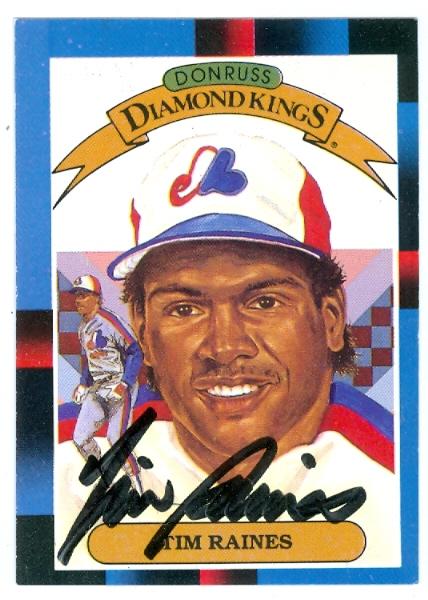
> Tim Raines, YES – Overlooked and underrated, he might be the second best leadoff hitter in the history of the game. Over 2,600 hits and 800 stolen bases, his lifetime WAR is 69. It’s his 10th and final opportunity on the ballot and he was also the player most affected by the owners collusion tactics, costing him millions of dollars. Let’s at least give him a plaque.


> Trevor Hoffman, YES – Got 67.3% last time in his first year of eligibility and just might make it this time. 601 Saves…let that sink in.


> Curt Schilling, NO – One of those marginal guys with 216 Wins, his lifetime WAR of 76 is very impressive and higher than many Pitchers already enshrined. While it isn’t fair, his political comments will probably impact the voting.


> Roger Clemens, NO – Yes, he was probably a Hall of Fame player without steroids and yes, he will get in someday, but sometimes you must make a stand. If Robby Alomar had to wait a year for spitting on an umpire, this arrogant jerk should have to wait a few years for each needle-marked cheek.


> Barry Bonds, NO – Same comment as Clemens.


> Edgar Martinez, YES – The argument against the DH doesn’t hold any more credence than the one against relief pitchers ten years ago. The best at every position belong in the Hall. His lifetime OPS of .933 is better than Mike Piazza and the WAR of 68 seals the deal.


> Mike Mussina, YES – This is one of the tougher choices, but the overall numbers are very impressive…270 Wins and a WAR of 83 are both better than Schilling.


> Lee Smith, NO – Just not convinced he was a “difference maker” during his career in the same way as Dennis Eckersley, Trevor Hoffman & Mariano Rivera. There could be an argument made, however, that if Bruce Sutter belongs, so does he.


> Fred McGriff, NO – As time goes on and voters have a chance to digest his numbers prior to the PED era, more consideration will come his way.


> Jeff Kent, NO – His credibility has more to do with his position (2B) than his performance.


> Larry Walker, NO – Another player who may be more appreciated as the years roll on, but the Colorado factor makes it difficult to determine his real credentials.


> Gary Sheffield, NO – His cumulative totals of 509 HR’s and a 60.3 WAR are impressive but they’re watered down by the era in which he played. Also impacted by a lack of fan loyalty because he played for eight different franchises.


> Billy Wagner, NO – Had an outstanding career but overshadowed by Rivera, Hoffman and others.


> Sammy Sosa, NO – Got 7% of the vote last year…everyone feels he had help. He will, however get more votes than Chico Esquela.


> Ivan Rodriguez, YES – On the ballot for the first time, “Pudge” did have a complete change in his physicality after MLB instituted PED testing, but even if some of the offensive numbers are tainted, he did win 13 Gold Gloves playing the toughest position on the field.


> Manny Ramirez, NO – Another first-timer, he was caught cheating on multiple occasions. Maybe his use of female hormones can get him into the “League of Their Own” wing.


> Vladimir Guerrero, NO – Will get a reasonable amount of votes, but his 59.3 WAR is less than Sheffield & Walker.


Only five of my ten spots are filled but that seems reasonable. Don’t forget about some of the other players on the ballot for the first time – Mike Cameron, J.D. Drew, Tim Wakefield, Melvin Mora & Pat Burrell. That sounds more like one of my Rotisserie teams from the past.


A Baseball Holiday Song

cole-nat-king

Real baseball fans enjoy the holiday season but their true passion doesn’t always take a back seat to the holiday spirit. So, with apologies to Nat “King” Cole & Mel Torme, here’s the baseball nerd version of the Christmas Song.


“Chestnuts roasting on an open fire”


(Virgil “Fire” Trucks pitched for 17 years in the big leagues and made two All-Star teams)


“Jack Frost nipping at your nose”


(Dave Frost was a 16-game winner for the Angels in 1979)


“Yuletide carols being sung by a choir”


(Dae-Sung Koo pitched in 33 games for the Mets in 2005 after being called up from the AAA Norfolk Tides)


“And folks dressed up like Eskimos”


(The Edmonton Eskimos were part of the Western International League in 1953 & 54. One of the pitchers on the ’53 team was former Negro League star Leon Day…he was inducted into the Hall of Fame in 1995)


“Everybody knows a turkey and some mistletoe”


(Turk Wendell pitched for 11 years in the majors and never met a foul line he liked)


“Help to make the season bright”


(Harry Bright was a big league infielder for eight seasons in the 50’s & 60’s)


“Tiny tots with their eyes all aglow”


(Tot Pressnell pitched for the Dodgers & Cubs from 1938-42)


“Will find it hard to sleep tonight”


(Sleeper Sullivan played professional baseball from 1881-84 and had a lifetime batting average of .184)


“They know that Santa’s on his way”


(F.P. Santa-ngelo finished 4th in the 1996 NL ROY balloting)


“He’s loaded lots of toys and goodies on his sleigh”


(Ival “Goodie” Goodman made the NL All-Star team in both 1938 & 39)


“And every mother’s child is going to spy”


(Harry Child pitched in five games for the 1930 Washington Senators)


“To see if reindeer really know how to fly”


(“Reindeer Bill” Killefer was a major league Catcher from 1909-21)


“And so I’m offering this simple phrase”


(Jose Offerman led the AL in Triples in both 1998 & 99)


“To kids from one to ninety-two”


(One of Ted Williams’ nicknames was “The Kid”)


“Although its been said many times, many ways”


(Bobby Seay was a situational left-hander for eight seasons and had one Save)


“A very Merry Christmas to you”


(Steve Christmas had 37 major league AB’s in the 80’s and hit .162)


Sharing The Wins

williams-holiday-ball

With the Winter Meetings finally in the rear view mirror, let’s take a look at the relative value of the players in the game. In a sport awash with money, old-school fans often have difficulty wrapping their heads around the new levels of salaries and budgetary guidelines. With the average MLB salary now above $4 Million, how do we really know what a player’s contribution is worth? And do these contributions really make a difference in the standings?


In other words, what is their contribution to winning games? We’ve discussed WAR (Wins Above Replacement) numerous times in this space and that statistical outcome does impact decisions made by writers voting on awards and General Managers making deals. It has become a mainstream analysis over the last decade and can help clarify and justify some contract amounts. For example, if you believe in the WAR calculations, it confirms that Mike Trout was the best player in the AL (10.6 WAR) and Kris Bryant topped the NL (7.7 WAR). The fact that they each won the MVP adds to the credibility of the statistic.


Most baseball stat-heads believe a player is worth about $6-8M per win to his team and free agent signings give us a window into that formula. Dexter Fowler’s average WAR for the last three seasons is 3.3 and he got $17.5M per season…Ian Desmond’s 2.9 WAR average netted $14 per season. When it comes to free agents, scarcity and need sometimes throw salaries out of whack. Aroldis Chapman’s 2.4 WAR average doesn’t seem to justify his new deal with the Yankees but how many Chapmans come along?


Each year at this time, we turn to another statistical measure in an attempt to gauge player value. The other stat that is team-result based is WS (Win Shares) as developed by the godfather of modern statistical analysis, Bill James. While trying to describe the formula is impossible (James wrote an entire book on the topic in 2002), it comes down to a system where each game a team wins during the season is meticulously analyzed and the three players most responsible for that win get a “win share”. So, if a team wins 80 games, there will be 240 win shares distributed on the roster. Position players will have a tendency to accumulate higher totals than pitchers, but it’s all about comparisons between players among positions. Less than twelve position players had a number of 29 or better in 2016 and it’s difficult to take exception with the results – both MVP’s are on the list with Trout at 35 and Bryant at 32.


Let’s see who made the Win Shares All-Star team in ’16…


1B – Joey Votto at 32 followed closely by Anthony Rizzo at 29.


3B – Bryant followed by Kyle Seager with 30 with Adrian Beltre right there at 29.


2B – Jose Altuve was the best in the game at 36 while two others had amazing campaigns…Daniel Murphy at 31 and Ian Kinsler at 29.


SS – A rookie led the way as the younger Seager (Corey) chipped in with 29.


C – Buster Posey & Wilson Ramos each contributed 29 Win Shares.


LF – A bit of a wasteland at a historically offensive position with Christian Yelich posting 21 and Ryan Braun 20.


CF – Trout in a runaway…no other CF had more than 22.


RF – Mookie Betts exploded onto the scene with 29.


SP – Corey Kluber, Jon Lester & Justin Verlander each contributed 20 Win Shares.


CL – Zach Britton’s magical season was the best at 19…above the three guys who got a total of $230 Million in the last few days.


As always, there are some hidden tidbits in the rankings that impact both fantasy and reality baseball…


> The Nationals have taken quite a beating in the media for dealing three pitching prospects to the White Sox for Adam Eaton. Eaton’s Win Share total has been 24 for each of the last two seasons while Fowler’s has been 22…Fowler’s contract is $44 Million more than Eaton’s over the next five years.


> The Phillies are afterthoughts during their rebuilding phase but two of their young players accumulated 24 Win Shares in 2016…Cesar Hernandez & Odubal Herrera.


> Jose Abreu’s numbers during his first three seasons were 29, 27, then 20.


> Jake Arrieta had 16 WS, down from 27 in 2015.


> At age 21, Carlos Correa had a WS total of 26…and a WAR of 5.9.


> Paul Goldschmidt is underpaid with 60 WS the last two seasons…Carlos Gonzalez is overpaid with only 36 in the same timeframe.


> Bryce Harper dropped from 38 in ’15 to 20 in ’16…$400 Million doesn’t buy what it used to.


> Jayson Heyward went from 21 to 12…$184 Million doesn’t buy what it used to.


> Yes, Andrew McCutchen’s decline was real…his WS numbers the last five seasons are 40, 34, 33, 35 & 17.


> Trea Turner had 17 Win Shares (and a 3.5 WAR) in 73 games.


> Justin Upton had 21 WS each year in ’13, ’14 & ’15…then he signed a $133 Million deal and had 14.


Don’t forget, it’s the season for sharing…Happy Holidays

Hanging Around The Hot Stove With Bill James

james-handbook

Many baseball fans from the “Baby Boomer” generation haven’t really bought into the immense change in how statistics are viewed. They still look at the game with their eyes and are only concerned with the numbers on the back of the baseball card. For those of us more immersed in the details of the game, the man who guided us through the wilderness is Bill James. Starting in the late 70’s, he published an annual “Baseball Abstract” that began the task of analyzing data in new and different ways. By 1985, he wrote the first “Historical Baseball Abstract” and that 700+ page volume still sits on the bookshelf in my office.


For baseball fans in general and Fantasy Baseball players who can’t wait for the upcoming season, Bill also helps us get through the winter while we’re longing for box scores. Each November, The Bill James Handbook gives us a review of the season, lifetime stats of every major league player and numerous articles and lists to make the “hot stove” season tolerable. The 2017 version is available now and at 609 pages, offers just about something for everyone. The Old Duck has an annual exercise, where I take my initial cursory glance at the book and begin discovering information that surprises and enlightens me.


So, here are some random observations from my first time through the pages…


> In golf and tennis, fans can easily find current rankings on each player. The systems are set up so that the rankings move up and down based on performance and are not just for the current season. James has developed a similar idea for ranking starting pitchers. The current top five are Clayton Kershaw, Max Scherzer, Madison Bumgarner, Corey Kluber & Jon Lester. Justin Verlander was 98th in mid-2015 and is now 6th while Felix Hernandez was 12th a year ago and is now at #31.


> Most spectators are much more aware of pitch velocity than they were 10, 20 or 30 years ago. With radar guns in stadiums and in every scout’s hands, we focus on that statistic and assume a pitcher’s performance will deteriorate with diminished velocity. This year’s handbook charts average fastball velocity by age and actually shows how little difference there is for most pitchers. For example, Kershaw’s average velocity for the last eight years has been either 93 or 94 mph. Looking for outliers, however, shows that from 2009 to 2016, Felix Hernandez has dropped from 94 to 90, Johnny Cueto from 93 to 90, Ubaldo Jimenez from 96 to 90, Jered Weaver from 89 to 83, Jonathan Papelbon from 95 to 91, C.C. Sabathia from 94 to 89 and Francisco Rodriguez from 93 to 89. On the flip side, Carlos Carrasco has upped his velocity from 92 to 94 during the same timeframe. Even when you look at a disastrous performance like James Shields’ 2016 campaign, the obvious assumption of diminished velocity doesn’t hold up…he’s been at 89 or 90 for the last eight seasons.


> Fielding metrics are relatively new and not yet accepted by fans or even by many statisticians. The handbook’s “Defensive Runs Saved” chart does help us verify what we think we’re told by our eyes. The Cubs defense was a major part of their winning formula in 2016, so it isn’t difficult to understand that Anthony Rizzo saved 27 runs over the last three seasons to lead all 1B and Jason Heyward led all RF with 62 runs saved during the same span. Throw in Addison Russell’s 19 runs saved in 2016 alone (trailing only Brandon Crawford at SS) and you can easily understand what a difference that makes. Nolan Arenado topped all 3B with 20, Starling Marte was the best LF with 19, Kevin Kiermaier led the CF’s with 25 and Mookie Betts was the best in the game at 32 runs saved in RF. In addition to Crawford’s heroics, the Giants also had the best defensive Catcher in Buster Posey, who saved 23. For all the cynical fans out there, we can’t leave out the worst fielders in the game and how many runs they cost their teams…


1B) Joey Votto -14

2B Ryan Schimpf -9

3B) Danny Valencia -18

  1. SS) Alexei Ramirez -20
  2. LF) Robbie Grossman -21
  3. CF) Andrew McCutchen -28
  4. RF) J.D. Martinez -22
  5. C) Nick Hundley -16


> A consistently debated topic among fans and media is the dramatic increase in defense shifts. In 2014, shifts were utilized over 13,000 times, in 2015 the number increased to over 17,000 and in 2016, it grew tremendously (+58%) to over 28,000. To the naysayer, the question becomes, would teams be shifting more if it didn’t work? According to the “Runs Saved” statistic, shifting saved 196 runs in 2014, 267 runs in 2015 and 359 in 2016. Only three teams (Blue Jays, Orioles & Royals) shifted less than the previous year. The Mariners, Angels & Brewers increased their defensive shifting from a few hundred times to over 1,000. With much more detailed data available, we know that the shift impacted Curtis Granderson more than any other batter…he lost 34 hits and gained 10 hits for a net number of -24. Close behind was Kendrys Morales (-21), David Ortiz (-17), Ryan Howard (-16) as well as Victor Martinez & Albery Pujols (both at -15).


> In the past, players were judged as good baserunners if they swiped a lot of bases. Not only weren’t their other baserunning skills not considered, even their caught stealing stats were ignored. However, as Tom Boswell pointed out over 20 years ago, a caught stealing is equivalent to two outs because it not only removes a baserunner, it also causes an out. Now we have information that tells us how often a player goes from 1st to 3rd or 2nd to home plate on a single. The handbook grades baserunning on the net amount of bases a player gains in a given season. Only three teams managed to have a net gain of over 100 bases in 2016…Padres (107), D’Backs (106) & Indians (105).  Only one MLB player gained over 60 bases for his team in 2016 and it was the Reds Billy Hamilton at 68. AL MVP Mike Trout was next at +58, while the worst baserunners were Victor Martinez (-34) & David Ortiz (-32). The worst baserunning teams were the Angels & Athletics, both at -57.


> If you’re wondering how the top five pitchers ascended to that rank, The “Pitcher Analysis” in the handbook gives you some insight. Old-school fans would tell you that getting ahead in the count is extremely important and digging deeper into the stats seems to confirm that logic. When you check how many times these hurlers got ahead in the count 0-1, the numbers are amazing. Kluber is at 49%, Lester at 51%, Bumgarner at 55, Scherzer at 56% and Kershaw was at 57%!


> Were there any successful major league pitchers who threw their fastball over 90% of the time? The “Pitchers’ Repertoires” section will answer that question by telling you that there only two and both are well-known Closers…Kenley Jansen & Zach Britton.


That’s just a taste of the information in this year’s edition and we haven’t even looked at the individual player stats. No wonder that “stathead” is now an accepted baseball term.


james-handbook

Baseball Card Q & A

mays-auto

Baseball fans fall into categories – 1) card collectors…2) former card collectors…3) wannabe card collectors…4) or as George Carlin once said, “Grow up, these are just pictures of grown men”. For those of you in the first three groups, maybe a primer on the basics of collecting would enhance your experience or motivate you to get back into the hobby. For this exercise, we’ll stick to new products as opposed to secondary markets that sell older cards.

Q. Where do I buy cards

A. Card shops, hobby stores, retail chains and Internet dealers.

Q. Are the products from these outlets all the same?

A. No, there are “Hobby” packs and “Retail” packs. A hobby pack will have more autograph, memorabilia and insert cards…and will have a higher price.

Q. Huh, what are autograph, memorabilia and insert cards?

A. When the card manufacturers re-invented themselves about 15 years ago, they created interest in new products by inserting cards autographed by players or including a piece of memorabilia in the card (jersey, bat, etc.). Insert cards include parallel versions of the regular card or a special set highlighting certain players.

Q. Can cards be purchased directly from card companies?

A.Yes…some manufacturers sell on their websites, but the pricing will be comparable to other outlets

Q. What is the configuration of today’s cards?

A.Baseball cards still come in packs which have a certain number of cards (depending on the product). A sealed box of cards will include a specific number of packs. For example, Topps Heritage brand arrives from the factory in a case of 12 boxes, each box has 24 packs, each pack has 8 cards.

Q. What size are cards?

A. Today’s standard is 2.5 inches by 3.5 inches.

Q. What is a rookie card?

A. Usually, the first regular issue card of a player in his major league uniform.

Q. What is a short-print card?

A. This goes back all the way to the 50’s and is a card made in smaller quantities than others. Again, using Topps Heritage as an example, the 500 card set has #’s 426-500 made in lesser quantities.

Q. Sometimes when I open a pack, there’s a blank card inserted – why is that done?

A. Companies insert them to discourage people from trying to “search” unopened packs for thicker memorabilia cards. If they weren’t used, a buyer could just buy the one thick pack in a box to acquire a more valuable card.

Q. What is a “common” card?

A. The Beckett price guide only lists certain star players in each set. The remaining cards are listed as commons or semi-stars are have equal value.

Q. What is a “redemption” card?

A. When card companies contract with players for autographs, the timing doesn’t always allow for those cards to be in the original production run. So, the manufacturer puts an insert in the pack that describes the card and gives the collector guidelines to redeem the insert for the real item at a later date.

Q. When were the first cards made?

A. Baseball cards first appeared in the late 1800’s when they were inserted into packs of cigarettes and tobacco. The modern era of baseball cards really began with the 1952 Topps set.

Q. When I was kid, there was a piece of bubble gum in the packs…when did that end?

A. As collectors became more aware of card condition, they complained about the gum staining or damaging the cards. Topps removed gum from the cards in the early 1990’s.

Q. How can I protect my cards?

A. For newer cards, many collectors still use albums and nine-pocket pages…especially for sets. For loose cards of any value, always use “penny sleeves” (a clear plastic sleeve that covers the card) and then a “top-loader” (a more rigid holder). Never use rubber bands!

Q. What about really valuable cards?

A. Utilize a “screw-down” holder (two pieces of hard plastic screwed together) or a “one-touch” holder (the same concept but held together by a magnet)

Q. What is grading?

A. Third-party companies will inspect your card, give it a grade (from 1-to-10), encapsulate it and include a serial number on the case. This is the best way to protect valuable older cards and enhance their marketability. The two major vendors in this field are PSA & Beckett.

Q. What is an error card?

A. A mistake on the card such as the player’s name spelled incorrectly or his position missing. If the mistake was never corrected by the manufacturer, it is listed in guides as “UER” (uncorrected error). However, if the mistake was corrected, these cards become variations and can be more valuable.

Q. I see some cards referred to as “Refractors”…what does that mean?

A. A Refractor is a card manufactured by Topps using a technology that creates a shiny version of their “Chrome” cards. It reflects light and can be found in a number of colors. These are always made in limited quantities.

Q. What is a rack pack?

A. Not as prevalent as in the past, it was a pack of cards made from clear cellophane that usually had cards in three separate compartments. Today, they are primarily found at retail outlets.

Q. Who should I collect?

A. The most difficult question of all. Think about your own personal history involving baseball and go from there. Your favorite player(s), your favorite team or maybe your favorite year. Above all, create a collection you can enjoy and share.


Questions are welcomed…