Grading The Prognostications

'17 Fantasy Guide

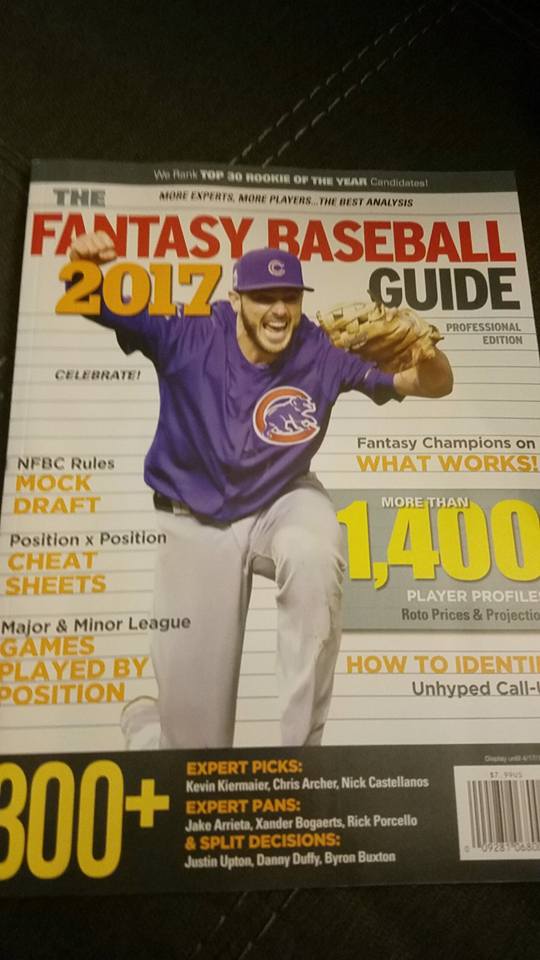
Each year, a number of us who write about the game are fortunate enough to be included in the best Fantasy Baseball pre-season magazine. It is called “The Fantasy Baseball Guide – Professional Edition” and is edited by that Superhero, Rotoman. For many of us, the contribution is a list of “Picks and Pans” where we try to predict which players the readers should target or avoid.


Before attempting to objectively assign a grade to my own 2017 predictions, a few disclaimers are in order…


1) While the publication itself hits the shelves in anticipation of Spring Training, our lists need to be submitted well before the December holidays. At that point, numerous free agents haven’t signed and many MLB roster roles haven’t been determined.


2)  The Old Duck always attempts to focus on players that are more marginal than the obvious fantasy stars. You don’t need me to tell you that Mike Trout is a good player, you need me to find you a bargain or to steer you away from an over-rated player. Taking this approach is more fun but also more challenging.


3) One lesson to take away from this exercise is that being an “expert” has a price. Most of my opponents sitting around the Draft table in March/April have read the magazine and already know my thoughts about many players. Having your name in print is a reasonable excuse for sharing information, but for those of you in home leagues, make sure you keep your opinions to yourself in the company of your mortal enemies.


So, without pulling any punches, let’s see how the Quacker made out…first the prediction and then the post-season analysis.


> Jose Abreu, PICK – Everyone seemed to be down on him in 2016 but in three full seasons, he’s averaged .299 with 30 HR’s & 103 RBI’s. In Fantasy, there’s something to be said about boring consistency. – Got one correct right off the bat as he delivered .304 with 33 HR’s & 102 RBI’s…Grade “A”


> Cody Allen, PICK – Let Andrew Miller’s presence lower the price…in the last two seasons, he’s had 66 Saves with 186 K’s in 137 IP’s. – 30 Saves with solid peripherals and 92 K’s in 67+ innings…Grade “A”


> Javier Baez, PAN – Yes, he’s a great 2B but in parts of three seasons, he has 173 Hits and 227 K’s. Job security may hurt instead of help when it comes to plate discipline. – Got 469 AB’s and produced 23 HR’s with a .273 average…Grade “C”


> Kyle Barraclough, PICK – No role yet but in 97 MLB IP’s, he has 143 K’s…the stuff is there. – Didn’t get the chance to close but had 6 Wins, a 3.00 ERA and 10.4 K rate…Grade “B”


> Jose Bautista, PAN – Thinks he’s worth $20+ Million per year, but his BA & OPS have gone down for the last two seasons and he’ll be 36. – Stick a fork in him, as he hit .203 with a OPS under .700…Grade “A”


> Brandon Belt, PICK – Doesn’t have the gaudy numbers of some other 1B, but a .868 OPS playing in that ballpark tells you he’s a great second-tier fallback pick. – We’re just starting to understand how concussions impact athletes but he did hit 18 HR’s with a .823 OPS in 382 AB’s…Grade “C”


> Byron Buxton, PAN – Even though he was the #1 prospect in baseball, there’s something missing…427 MLB AB’s, 162 K’s, 29 BB and a .672 OPS. – Proved me wrong by finally living up to the hype with 16 HR’s & 29 SB’s but still struck out 150 times in 462 AB’s…Grade “D”


> Mauricio Cabrera, PICK – Jim Johnson has the Closer job but this is the guy down the road. – Started the season on the DL and didn’t pitch at the major league level…Grade “NA”


> Nick Castellanos, PICK – May fly slightly under the radar because he only played 2/3 of the season…an .827 OPS going into his age 25 campaign. – One of the few bright spots in Detroit, he contributed 26 HR’s, 101 RBI’s and a .811 OPS…Grade “A”


> Wilson Contreras, PICK – Even though he weighs 210, from a Fantasy perspective, he’ll be Buster Posey “Lite” in 2017. – How many Catchers would you rather have? Despite only 377 AB’s (due to injury), he had 21 HR’s, 74 RBI’s and a .855 OPS…Grade “B”


> Chris Davis, PAN – A highly paid slugger can’t have an OPS under .800…427 K’s the last two seasons. – Right on target as he hit 26 HR’s with 61 RBI’s and a .215 BA…Grade “A”


> Chris Devenski, PICK – His 1st big league season was impressive with 104 K’s in 108 IP and a 2.16 ERA…now let’s see how the Astros utilize him. – A big part of the team’s bullpen, he pitched 80+ innings with 8 Wins and 4 Saves…Grade “B”


> Brandon Finnegan, PAN – Not his fault, but a young SP in that ballpark is going to have trouble…he was lucky to have an ERA under 4.00. – Injuries limited him to only 14 IP…Grade “NA”


> Ken Giles, PICK – Early season hiccups are behind him…102 K’s in 66 IP says he’s a Closer. – The Astros Closer all season, he added 34 Saves to the cause…Grade “A”


> Carlos Gomez, PAN – Hits .210 in 295 AB’s in Houston, then .284 in 116 AB’s in Arlington. The result? His agent thinks he’s a candidate for a five-year deal. Don’t even give him a one-year deal. – The second half of ’16 was a fluke as he battled injuries and only hit .255…Grade “B”


> Matt Harvey, PAN – Anyone with the word “syndrome” on his medical chart isn’t on my draft chart. – Sorry to say the prediction was right. 5 Wins and a 6.70 ERA makes him a non-tender candidate in ’18…Grade “A”


> Ryon Healy, PICK – A possible late-bloomer….861 OPS in 269 AB’s. – 25 HR’s & 78 RBI’s as a full-time player…Grade “B”


> Cesar Hernandez, PICK – Sneaky improvement with a .371 OBP…speed component is there, as he led the NL in Triples. – Started slow and then had a DL stint, but his final numbers might surprise you….373 OBP, 85 Runs and 15 SB’s….Grade “B”


> Adam Jones, PAN – His HR totals always make him over-priced as a Fantasy player…OPS under .800 the last three seasons. – Spot on, as he had 26 HR’s and a .787 OPS…Grade “B”


> Tommy Joseph, PICK – Out from behind the plate and Ryan Howard is gone…hit 21 HR’s in 315 AB’s. – Not sure how he’ll be impacted by the arrival of Rhys Hoskins, but he delivered with 22 HR’s in 495 AB’s…Grade “B”


> Starling Marte, PAN – Great Fantasy player but when a speed guy misses the last month of the season with a bad back, you better hedge your bet. – Honestly, I didn’t know about the PED issue but he blew up countless Fantasy rosters…Grade “A”


> Leonys Martin, PICK – If you can absorb the BA/OBP, he gives you 12-15 HR’s and 20+ SB’s. – WTF! Started slow, lost his job, spent the season in the Minors…Grade “F”


> Jose Peraza, PICK – The Reds will find AB’s for him this time around…speed is scarce and he swiped 21 bases in 241 AB’s. – Not a great season with a .259 BA but did have 23 SB’s…Grade “C”


> Jose Quintana, PICK – Four consecutive seasons of 200 IP and good ERA have only produced 40 Wins…doesn’t his luck have to change? – Found himself in the post-season after a trade to the Cubs, he was 11-11 to make his lifetime record 57-57. Guess he’s just a .500 Pitcher…Grade “C”


> Robbie Ray, PAN – A fantasy darling due to the strikeout rate, he still had a 4.90 ERA and pitches in a launching pad. – A force in the D’Backs resurgence, the 2.89 ERA was a vast improvement…Grade “D”


> A.J. Reed, PICK – After tearing up the minor leagues, hit .164 in 122 MLB AB’s. There is such a thing as a post-hype sleeper…in 2011, Anthony Rizzo hit .141 in 128 MLB AB’s. – Spent the year in the Minors…Grade “NA”


> Ryan Schimpf, PAN – None of the plotlines fit…a 28 year-old lifetime minor leaguer hits 20 HR’s in 276 AB’s and strikes out 105 times while hitting .217. – Hit .158 before being sent down…Grade “A”


> Jonathan Schoop, PICK – Played all 162 games at 2B with 25 HR’s & 82 RBI’s…just turned 25, so plate discipline improvement could take him to the next level. – Now All-Star caliber with 32 HR’s, 105 RBI’s and a .841 OPS…Grade “A”


> Tyler Thornburg, PICK – The Brewers are re-building and won’t spend money on a Closer…90 K’s in 67 IP with a 2.15 ERA tells you he gets first shot. – Lost the Closer opportunity due to a trade and then missed the season with injuries…Grade “NA”


> Troy Tulowitzki, PAN – Will be overpriced in every league…even in a great hitting environment, his OPS was under .800 and at age 32, he’ll only be less durable. – 241 AB’s and a .249 BA shouldn’t have come as a surprise…Grade “A”


> Justin Upton, PAN – The late-season surge doesn’t sway me…with a big contract and no plate discipline (179 K’s), improvement isn’t likely. – Arguably, his best season with a .901 OPS but he’ll probably screw it up by leaving Anaheim…Grade “D”


Statistics can be manipulated to reach a number of different conclusions, but the Quacker did manage “A” or “B” ratings on 70% of the players. The overall GPA was about 2.93, which matches my blood alcohol level in college. The good news is that Schoop, Hernandez, Giles, Devenski, Contreras, Barraclough & Abreu were helpful members on my fantasy squads…hope they helped you too.


You Can’t Tell The Players Without A Program

'47 ProgramAre you old enough to remember when major league players didn’t have names on the back of their uniforms? The first thing you’d see at the ballpark was a small stand with a vendor yelling, “Programs, Programs…you can’t tell the players with a program”.
 

During the course of any given year, lots of sports memorabilia comes across my desk. Dominated by baseball cards and autographed items, there are always odds & ends. This time, a collection included an official program and score card from a 1947 game at Yankee Stadium. The exact date isn’t on the program as they were most likely printed for a series of games with the same opponent, but the best guess is that this particular one was from an August visit from the defending AL pennant-winning Red Sox.


Looking at baseball history through a 70 year-old lens is one thing, but before focusing on the game and the players, let’s get a sense of American society at the time by examining the advertising that helped keep the cover price at 10 cents…


> Smoking was an accepted practice in 1947 and there are cigarette ads for Camel, Chesterfield, Old Gold & Lucky Strike…none of which had filters. In addition, Briggs pipe mixture, Muriel cigars and Garcia y Vega Havana cigars (made in Tampa) were featured.


> Catering to a predominantly male audience, tobacco shared the space with alcohol. Three Feathers Whiskey claimed to be “Major League” quality, Great Western Champagne showed a winning medal from a 1900 Paris tasting, Ruppert Beer was “slow aged” and Ballantine Ale & Beer always meant “The Perfect Glass”. In case you needed to concoct a mixed drink, there were also ads for Morgan Beverages, Canada Dry Ginger Ale and White Rock Sparkling Water.


> The well-dressed fan was also being tempted with marketing from Eagle Clothes, Douglas Shoes, Sherman Bows (bow ties), Esquire Boot Polish & GGG Clothes.


> To make the fans taste buds take notice, some New York restaurants took space along with ads for Schrafft’s Peppermint Patties, Gulden Mustard, Drake’s Cake (“The Rooters Snack”) and Beech-Nut Gum.


> Not to leave Fantasy Baseball players out of the history, there was even an ad for a baseball-themed board game called Pro-Baseball Game. You could purchase it at Department and Sporting Goods Stores for $5.00.


Now that the stage has been set, we’ll travel back to the Friday night game on August 15, 1947 in front of 67,803 fans at Yankee Stadium. Here are the starting line-ups…


Red Sox


1) Sam Mele, RF – A rookie who ended up with a 10-year big league career, he was very productive in ’47 with a .356 OBP in 123 games.


2) Johnny Pesky, SS – A legendary figure in BoSox history including the famous “Pesky Pole” at Fenway Park. Think about this…he led the AL in hits (205) in his rookie season of 1942, then missed three years serving in World War II before coming back to lead the AL in hits again in both 1946 (208) and 1947 (207).


3) Dom DiMaggio, CF – Despite playing in the shadow of his Brother, he was an outstanding player. In 10 seasons surrounding his three-year military commitment, he was a 7-time All-Star.


4) Ted Williams, LF – Arguably the greatest hitter in the history of the game…in ’47, he led the AL in Runs, HR’s, RBI’s, BB, BA, OBP, SLG & OPS. Oh, by the way, he finished 2nd in the MVP vote.


5) Bobby Doerr, 2B – The oldest living Hall-of-Famer at age 99.


6) Jake Jones, 1B – Traded over from the White Sox in June, ’47 was his only season as a regular…he hit .237, but had 19 HR’s & 96 RBI’s.


7) Birdie Tebbetts, C – A reliable back-stop who made four All-Star teams during his career, he shared the catching duties with Roy Partee. In the 50’s & 60’s, he was a big league Manager for 11 seasons.


8) Sam Dente, 3B – The Sox never had a reliable regular at this position during the season and this rookie hit .232 in 168 AB’s.


9) Mickey Harris, P – Had 17 Wins in ’46, but only got six starts in ’47…had a 5-4 record with a 2.42 ERA.


Manager – Joe Cronin


Yankees


1) Stuffy Stirnweiss, 2B – An interesting case study, as he was one of the few everyday players who didn’t serve in World War II. He led the AL in Hits for both 1994 & 1945, batting over .300 each season. Once the soldiers got back and the competition was tougher, he regressed to a .256 BA in ’47.


2) Tommy Henrich, RF – A natural hitter, he was very good even into his mid-30’s…led the league in Triples for both ’47 & ’48 at ages 34 & 35.


3) Yogi Berra, C – Just starting his illustrious career in ’47, he played 83 games and hit .280. Won three AL MVP’s in the 50’s.


4) Joe DiMaggio, CF – The famous “Yankee Clipper” was still in his prime at age 32…a 315 BA, 20 HR’s & 97 RBI’s got him the MVP.


5) George McQuinn, 1B – A 37 year-old veteran, he posted a solid year with a .304 BA, 80 RBI’s and a .395 OBP.


6) Billy Johnson, 3B – Hit .285 with 95 RBI’s and made the All-Star team.


7) Johnny Lindell, LF – Played as a position player through 1950, then returned to the majors in 1953 (at age 36) to make 26 starts as a NL Pitcher.


8) Phil Rizzuto, SS – “Scooter” was on his way to a Hall-of-Fame career and many years in the broadcast booth.


9) Karl Drews, P – Started 10 games at the back-end of the rotation…his best season was 1952 when he won 14 games for the Phillies.


Manager- Bucky Harris


So, how did the game turn out? It ended up being somewhat of a slugfest, as neither starting pitcher got out of the 2nd inning. Amazingly, the Yankees brought in their best relief pitcher (Joe Page) in the 2nd inning and he pitched 7 2/3 innings, finished the game and got the win. Can you imagine one of today’s Closers being asked to accomplish that task?


On the offensive side, Stirnweiss had two solo HR’s and a Triple while Berra had 3 RBI’s. For the Sox, Williams went 4-for-5 with two Doubles and Doerr had two RBI’s. The final score was 10-6. Two interesting pieces of trivia are that Williams had an OF assist and Berra got picked off 3rd base.


Hope you enjoyed this little trip through the baseball time machine.'47 Program

The Last Inning Of The Last Game

'17 Turner TTT

As Summer turns to Autumn and the calendar turns to October, many of you will head for the coat closet. As an Arizona resident, that isn’t really necessary, so for this visit, we’ll find a few appropriate remarks in the “quote closet”. They’ll be used to help commemorate the Old Duck sharing the championship of the NL-only Rotisserie auction-style home league in which I compete.


As Dizzy Dean once said, “It ain’t bragging if you can do it” but my comments will also be tempered by the advice of Fantasy Hall of Famer Ron Shandler, who reminds league winners to “Revel in your success because fame is fleeting, but also exercise excruciating humility”.


For all of us who play this wonderful game, the next few months gives us the opportunity to look back at our player decisions and wonder what we were thinking. In “The Magnificent Seven”, Bandito Eli Wallach asks Gunslinger Steve McQueen, “Why You Gringos Come Down Here”?  and he answers, “Seemed Like A Good Idea At The Time”. That could also be the answer for keeping a “Shark” or drafting Franklin Gutierrez (instead of Ricky Gutierrez). Maybe by reviewing some of the positive and negative roster moves in a winning scenario, your brain cells will begin to focus on 2018. If your friends, family and colleagues don’t understand your passion for the game, remind them that Dr. Seuss suggested, “Fantasy is a necessary ingredient in living, it’s a way of looking at life through the wrong end of the telescope…and that enables us to laugh at life’s realities”.


> Donald’s Ducks…12 Team, NL only, 4×4, 23 man rosters (14 hitters, 9 pitchers), $260 budget, maximum of 15 keepers and 3 Farm players, established 1984


* Smart Keeper Decisions (April 2nd)…


1) Kris Bryant $20 – Followed up his ROY season in ’15 with the MVP in ’16, so his Fantasy contract was extended thru 2019. While 2017 didn’t quite live up to last year, his $24 value was solid.


2) Eugenio Suarez $10 – Didn’t run as much as last year, but his 26 HR’s lifted his value to $15.


3) J.T. Realmuto $10 – A Catcher with a good BA and a few SB’s is like gold and he also added 17 HR’s to contribute $16 to the cause.


4) Anthony Rizzo $31 – In this format with significant Draft inflation, top 1B go in this range…he provided a $25 return.


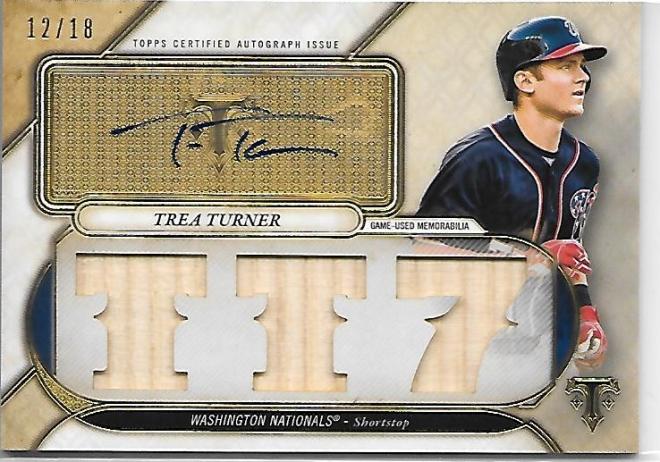
5) Trea Turner $20 – Another contract extension thru ’19 because SB’s are just getting more scarce. Despite only 412 AB’s (due to injury), he was worth $32.


6) Corey Seager $10 – Last year’s ROY battled injuries all season but still produced $20 in Fantasy value.


* Dumb Keeper Decisions


1) Jeff Samardzija $14 – Traded for him in the off-season just to add another pitcher to the roster (Ivan Nova was the only other keeper). His 4.42 ERA in over 200 IP didn’t help much.


* Good Draft Day Decisions ( April 8th)


1) Domingo Santana $16 – Had overpaid for him last year in an injury-plagued season but got him back at a more reasonable price….his 30 HR’s & 15 SB’s produced a $25 campaign.


2) Enrique Hernandez $1 – The ultimate Utility player, he ended up qualifying at five different positions to provide roster flexibility.


3) Aaron Nola $13 – Another player who was on my squad last year, he came back from 2016’s injuries to post a solid season.


4) Arodys Vizcaino $5- Following a familiar pattern, we also had him a year-too-early in ’16 but rolled the dice on him eventually getting the Closer job…14 Saves equaled $14.


5) Alex Wood $3 – Sometimes you find skills in the end-game and the player gets the opportunity…16-3 with a 2.72 ERA was beyond any expectation.


* Dumb Draft Day Decisions


1) Adonis Garcia $11 – Seemed to be in line to play everyday and hit in the middle of the line-up…started slow, got hurt, disappeared.


2) Logan Forsythe $13 – Was patting myself on the back for picking up a middle-infielder who had hit 20 HR’s the previous season…he hit .224 and didn’t even have a positive dollar value.


3) Wei-Yin Chen $6 – Locked as a member of the rotation due to his contract, he seemed like a reasonable comeback opportunity…he only pitched 33 innings.


4) Mark Melancon $31 – The Mother of all blunders. There were only a few Closers available at the Draft and he seemed the most reliable. Greg Holland went for $25 coming off surgery, Neftali Feliz cost $26 and had 8 Saves with an ERA of 6.00, while Wade Davis was purchased at $35. If the Ducks hadn’t succeeded, this would have been reason #1.


* In-Season Roster Moves


1)  Activated Manuel Margot from the Farm portion of my roster on opening day…had a solid rookie year with $14 in value.


2) Picked up Dinelson Lamet in late May and even though he had typical rookie issues (4.57 ERA), his seven Wins helped in a very close category.


3) Added Josh Hader from the Farm in late June and even though he didn’t have a defined role, a 2.08 ERA & 0.99 WHIP was a boost.


4) After being outbid on J.D. Martinez in July, went all in to FAAB Rhys Hoskins in August. He wasn’t as good as Martinez, but 18 HR’s & 48 RBI’s in 170 AB’s definitely made a difference.


If nothing else, this summary shows two strategic points…1) if you have a chance to win, go all-in and 2) even seemingly insignificant moves can make a big difference in the final outcome of a Fantasy league.


So, how did it come down to “the last inning of the last game”?

The Ducks and two other teams were jockeying for position during the final week and thanks to MLB starting every game on the last Sunday at the same time, watching box scores and biting nails were the order of the day. With only one game still in progress, it seemed like the Ducks were doomed. It appeared that one team would end up with 70 1/2 points, another with 70 points and the Ducks with 69 1/2 points. Most veteran Fantasy players know, however, that some categories can be so close, the results may not be locked in ’til the Fat Lady sings. In the last game to finish, the Nationals inexplicably still had Trea Turner in the line-up and he was due up in the 9th inning. When he got a base hit, it moved the Ducks season-long BA to .2677, putting them ahead of another team that finished at .2676. That extra hit (out of 6,552 AB’s) gained one point and put my squad into a 1st place tie. Can we even understand the feelings of the 3rd place team? If you’ve played the game long enough, you can. I’ve lost a title on the last day of a season that was so close, the winning team sent me an e-mail congratulating me on the championship…I had to convince them that they had won. In this same league just a few years ago, we had another tie for the title, as two teams had 75 points each.


Of course, we all agree that hearing about someone else’s Fantasy team is a cure for insomnia, but for those of you who play the game, reviewing the principles utilized to win can be helpful. Remember the words of Groucho Marx, “Those are my principles, and if you don’t like them…well, I have others”.


The Clutch Chronicles – 2017

Perez, Tony

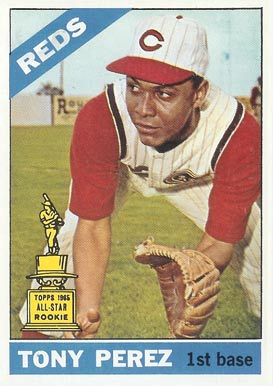
The Urban Dictionary defines Clutch as, “To perform under pressure”. For decades, baseball pundits and fans have extolled the virtues of players who supposedly had this trait. Their evidence, however, was only visual and anecdotal. Back in the 1970’s, most people considered Tony Perez of the “Big Red Machine” one of baseball’s best clutch hitters. After all, he had over 100 RBI’s in six seasons between 1967 & 1975. In fact, some would argue that his election to the Hall of Fame was based on this reputation.


Now that baseball is in the age of statistical analysis, our old observations may be called into question. Even a math-challenged fan understands that you can’t get a plethora of RBI’s without baserunners. And, boy, did those Reds teams have baserunners!


Statistics on RBI Percentage (RBI-HR/Runners On) now go back to 1974, so let’s see how our legendary clutch hitter fared in a season where he was an All-Star. Perez had 101 RBI’s, 28 HR’s & 489 runners on base for a RBI percentage of 14.93%. That didn’t even crack the top 50 for the major leagues in ’74! He finished behind household names such as Reggie Smith, Richie Zisk, Jimmy Wynn, Cesar Cedeno & Ted Simmons. The leaders were Jeff Burroughs at 21.18% and Sal Bando at 21.15%.


Our Hall-of-Famer improved considerably in 1975 as he accumulated 109 RBI’s with 20 HR’s and 489 runners on base (again). His percentage improved to 18.20% and he just snuck into the top ten for that season. The only hitters at 20% or higher were Willie Stargell at 20.48% and Thurman Munson at 20.00%.


As a fan, you certainly have an opinion on today’s clutch hitters but do the stats back you up? In 2017, there were 25 hitters who exceeded the 18.20% that Perez posted in ’75. We’ll only include players who had at least 200 baserunners during the season to eliminate the “small sample size” outliers.  These are “Quacker’s Clutch All-Stars” and we’ll see how well their performance aligns with their reputation.


1) Charlie Blackmon, Rockies OF, 22.4% – Maybe his season was even better than it appeared…had 104 RBI’s out of the lead-off spot.


2) Adrian Beltre, Rangers 3B, 21.6% – This future Hall-of-Famer got his 3,000th hit and still was clutch at age 38.


3) Marwin Gonzalez, Astros OF, 20.8% – Also played every infield position during the season and hit .303 to go with his 90 RBI’s.


4 Nolan Arenado, Rockies 3B, 20.7% – Talk about consistency, he was also 4th last year with a 20.6% number.


5) Josh Reddick, Astros OF, 20.5% – Another under-the-radar contributor for Houston.


6) Scooter Gennett, Reds 2B, 20.5% – If you don’t get it, join the club…the Brewers waived him prior to the start of the season and he had 97 RBI’s. That’s like finding a Mantle rookie card in the bargain bin.


7) Nomar Mazara, Rangers OF, 20.5% – Seems like everyone got off the bandwagon when he was off to a slow start. Yes, he only hit .253, but 101 RBI’S at age 22?


8) Wilson Contreras, Cubs C, 20% – Should only get better after less than two seasons in the “show”.


9) Anthony Rendon, Nationals 3B, 19.8% – Health was all he needed and the last two years have been stellar…85 RBI’s in ’16 and 100 in ’17.


10) Justin Bour, Marlins 1B, 19.6% – May only be a platoon player due to lefty splits, but produces when he plays.


11) Adam Frazier, Pirates OF, 19.3% – Got the chance to play regularly thanks to Starling Marte’s stupidity…might be an everyday player in ’18?


12) Nick Castellanos, Tigers 3B, 19.3% – Seemed to be on everyone’s watch list in the Spring and came through with 101 RBI’s.


13) Gerardo Parra, Rockies OF, 19.3% – A free agent bust in ’16, he was much improved this season.


The rest of the 25 included expected performances from the likes of Daniel Murphy, Mookie Betts, Paul Goldschmidt, Nelson Cruz, Josh Donaldson & Jose Abreu. The emerging stars are Marcell Ozuna, Jonathan Schoop, Whit Merrifield & Nick Williams.


How about some of the game’s young stars? Bryce Harper and Giancarlo Stanton were solid at 18% but some of the other numbers will surprise you. ROY locks Cody Bellinger (15.3%) and Aaron Judge (14.5%) were decent but Mike Trout at 15.9% and Kris Bryant at 11.6% seemed to underperform in this category.


For everyday players, the worst clutch hitters in baseball were Kevin Pillar at 7.7%, Gregory Polanco with 9.6% and Russell Martin at 9.9%.


Hope all your fantasy players come through in the clutch. For more information on RBI Percentage, go to baseballmusings.com.


MVP’s Go To WAR

'17 Judge SP

“Wins Above Replacement” (WAR) has been discussed in this space on multiple occasions and the complete definition & calculation formulas can be found at baseball-reference.com as well as fangraphs.com. In essence, it is an attempt by baseball analysts to come up with a player’s overall contribution to their team in one statistic. The key question is, “if this player got injured and was replaced by an available minor-leaguer or AAAA bench player, how much value would the team be losing?” The answer is shown as the number of wins a player is worth to his team over the course of a season. If you’re an “old school” fan, this type of stat might not be your cup of tea but over the years it has become much more mainstream and is certainly taken into consideration by writers who vote on post-season awards.


With that background, let’s look at the real MVP’s of each major league team for 2017.


AL East


> Red Sox – Mookie Betts’ WAR rating of 6.4 isn’t quite up to 2016’s performance but still leads the AL Champs…Cy young contender Chris Sale leads the hurlers at 6.0


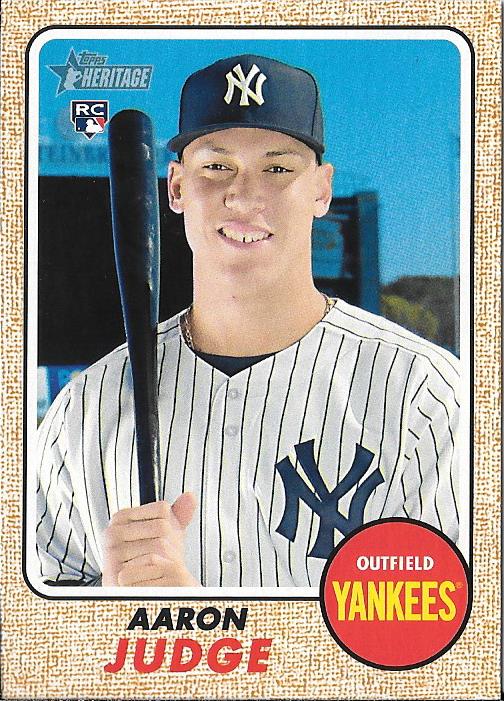
> Yankees – Two emerging young stars bode well for the Bombers future…Aaron Judge (age 25) had a MVP caliber season at 8.1 while Luis Severino (age 23) led the rotation at 5.4


> Rays – Only two games under .500, they got good performances from numerous players like Steven Souza, Logan Morrison & Evan Longoria but the one worth his weight in Gold (Glove) was Kevin Kiermaier with a 5.1 rating.


> Blue Jays – A disappointing year north of the border but Marcus Stroman pitched his way to a 6.0 WAR…Josh Donaldson led the offense with 4.8.


> Orioles – Cellar dwellers with lots of offense and dismal pitching…breakout star Jonathan Scoop led the way with 5.1.


AL Central


> Indians – Corey Kluber’s 18 Wins and 2.25 ERA puts him in the hunt for the Cy Young Award with a 8.0 WAR…multi-talented Jose Ramirez added 6.8 Wins to the Tribe’s success.


> Twins – This year’s amazing turnaround with 85 Wins…Byron Buxton finally lived up to the hype with a 5.1 rating while Ervin Santana’s 16 Wins were worth 4.9.


> Royals – The last gasp of their core included a strong 5.3 WAR season from CF Lorenzo Cain.

> White Sox – They’re in full rebuild mode but Jose Abreu’s stability and consistency is a model for their young players…his 4.7 WAR was fueled by 33 HR’s, 102 RBI’s and a .304 BA.


> Tigers – This will be tough to watch in ’18, as their two best players were Justin Upton (5.2) and Justin Verlander (4.5)…both were traded in August.


AL West


> Astros – A great combination of youth and experience, they won 101 games…likely MVP winner Jose Altuve had a spectacular season that generated a rating of 8.4.


> Angels – Hung around in the Wild Card race despite a patchwork pitching staff because they have the best player in baseball…Mike Trout produced a 6.1 WAR in only 114 games. They also had the most under-rated player in the AL in SS Andrelton Simmons…his 7.1 WAR was based on 14 HR’s, 69 RBI’s, 19 SB’s and amazing defensive skills in the middle of the diamond.


> Rangers – A disappointing season at six games under .500, their top contributor was Elvis Andrus at 4.8.


> Mariners – Also six games under .500 as their pitchers couldn’t stay healthy, they did get a 4.1 WAR from Nelson Cruz due to his 39 HR’s & 119 RBI’s.


> Athletics – When your best player is Jed Lowrie (3.9), the season won’t be a success. In ’18, watch for Matt Chapman (3.6 in only 84 games) and Matt Olson (2.8 in only 59 games).


NL East


> Nationals – Max Scherzer leads an impressive pitching staff with a Cy Young Award caliber 7.5 rating, but both Stephen Strasburg (6.4) and Gio Gonzalez (6.5) have been stellar…the best position player is Anthony Rendon at 5.9.


> Marlins – Despite a losing season, Giancarlo Stanton will get some MVP consideration with his 59 HR’s & 7.6 WAR.


> Braves – Another franchise set on rebuilding, they still count on their cornerstone player in Freddie Freeman who produced a 4.5 WAR in only 117 games.


> Mets – That vaunted starting rotation fell apart other than Jacob deGrom and his 5.0 WAR.


> Phillies – Speaking of rebuilding, this team was 30 games under .500. Their best player was Aaron Nola with 12 Wins, a 3.54 ERA and a 4.3 WAR.


NL Central


> Cubs – Most observers thought Kris Bryant didn’t have a great year, but he hit 2nd in the line-up and didn’t have Dexter Fowler batting leadoff. If you look closely at the numbers, what you find is a .295 BA, .409 OBP, .946 OPS & 29 HR’s. It all factors in to the team-leading 6.1 WAR


> Brewers – They had 86 Wins and were in the Wild Card race down to the last weekend of the season. The best news is that there’s talent all through the roster with six players contributing at last a 3.0 WAR…Travis Shaw was #1 at 4.0.


> Cardinals – A disappointing season from the Redbirds even though they won 83 games…their best player was a 29 year-old in his first full major league season and Tommy Pham produced a 6.3 WAR.


> Pirates – Starling Marte’s suspension for PED’s was the beginning of the end for the Bucs in ’17…Utility man Josh Harrison was their top contributor at 3.3.


> Reds – Another last-place finish doesn’t bode well for the future even though Joey Votto may have been the best hitter in the game with a .320 BA, .454 OBP, 1.032 OPS, 36 HR’s, 100 RBI’s and a 7.5 WAR.


NL West


> Dodgers – The most victories in baseball led by 3B Justin Turner (5.7) and SS Corey Seager (5.6)…Clayton Kershaw’s 18-4 record added another 5.0 WAR.


> Diamondbacks – New leadership in the front office and in the dugout made a huge difference in this team’s ascension to the playoffs with 93 Wins…the difference makers on the field were Zack Grienke (6.4) & Paul Goldschmidt (5.8).


> Rockies – Another surprise team in the playoffs, they were led by Nolan Arenado (7.2) & Charlie Blackmon (6.0)


> Padres – Difficult to have hope when no player on the team even had a WAR rating of 3. The best upside for ’18 may belong to Manny Margot, who produced a 2.5 rating in his rookie year.


> Giants – Sometimes, it all goes wrong…Buster Posey’s 4.0 was the best they could muster and where are the young players? This storied franchise may be busy in the free agent market.


Overall, the five best position players were…


1) Jose Altuve 8.4

2) Aaron Judge 8.1

3) Giancarlo Stanton 7.6

4) Joey Votto 7.5

5) Nolan Arenado 7.2


And the top five Pitchers…


1) Corey Kluber 8.0

2) Max Scherzer 7.5

3) Gio Gonzalez 6.5

4) Stephen Strasburg 6.4

5) Justin Verlander 6.4


As the developers of this gauge point out, you shouldn’t get too bogged down in decimal points. Over the course of a  season, one player with a 6.4 WAR and another player with a 6.1 WAR cannot really be distinguished from each other. However, a 6.4 WAR player and a 4.1 WAR player are significantly different when calculating their value to a team in any given season. If you had no other information available and had been in solitary confinement since March, your MVP ballot with Altuve or Judge in the AL and Stanton or Arenado in the NL along with a Cy Young ballot listing Kluber in the AL and Scherzer in the NL certainly wouldn’t put your BWAA membership card in jeopardy.


Going, Going, Gone

Batman Baseball

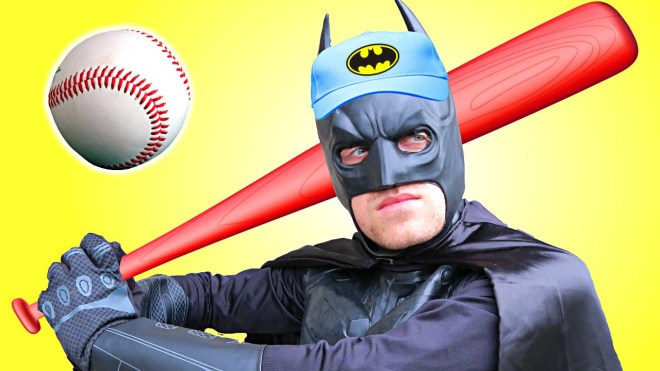
BAM! POW! KABOOM! No, this isn’t a rerun of the Batman TV series from the 60’s. Its the sound coming from major league ballparks as baseballs fly over the wall. With a few games left in the regular season, more home runs have been hit in 2017 than any other time in the history of the game. And, there seems to be as many opinions on the reasons as there are home runs at the yard.


Last week, during an on-line debate with another fan, I took the position that the baseball isn’t the same as it was just a year or two ago. The other writer disagreed and brought up many salient points including launch angle, the “swinging for the fences” mentality of players, the increased average velocity of pitches, etc. While this might sound like a conversation between an “old-school” fan and one who leans toward analytics, that isn’t really the case. The best Fantasy players and most real-world baseball executives use a balanced approach toward scouting that includes statistics and eye-tests. Eye-tests sometimes fool us because anecdotal evidence can have a small sample size…like the nine HR’s hit in one game at Petco Park last week. However, when the anecdotal evidence is overwhelming and statistics are utilized to verify the results, you may have found the truth.


Let’s look at some of the anecdotal numbers…


> Less than 5,000 HR’s were hit in 2015…we are already over the 6,000 figure in 2017 (a 20% increase).


> Giancarlo Stanton of the Marlins is poised to be the first player to reach the 60 HR plateau since Barry Bonds in 2001.


> J.D. Martinez has hit 45 HR’s this season…16 in the AL and 29 in the NL.


> Scooter Gennett was claimed on waivers just prior to opening day by the Reds (in essence, the Brewers gave him away). This year, he has become the first player in history to hit four HR’s in one game and four Grand Slam HR’s during the same season. His HR totals the last three seasons are 6, 14 & 27.


> Rhys Hoskins was the #14 prospect in the Phillies organization prior to the season. After being called up to the majors on August 10th, he established a baseball record by hitting 18 HR’s in his first 34 games.


> Aaron Judge of the Yankees had a short stint in the big leagues late last season where he batted .179 with 4 HR’s in 84 AB’s. This year, he has 51 HR’s…more than any rookie in the history of baseball.


> Matt Olson was the #8 prospect in the Athletics organization last Spring. After being called up from the Minors, he had 24 HR’s in his first 184 AB’s. That’s one HR for every eight AB’s…Babe Ruth only hit one HR every 12 AB’s.


> Justin Smoak of the Blue Jays is 30 years old and had never hit more than 20 HR’s in a season…he has 38 HR’s in 2017.


> Kurt Suzuki was the regular Catcher for the Twins in 2014, 15 & 16 where he hit a total of 16 HR’s in 1,230 AB’s. This year (at age 33), as a part-time Catcher for the Braves, he has 18 HR’s in 259 AB’s.


> Details aren’t even necessary on additional career numbers by Yonder Alonso, Logan Morrison, Travis Shaw, Steven Souza and others.


Researchers have also lent their expertise to the discussion. A recent blog on fangraphs.com pointed out differing opinions about the radius of the ball being smaller or that the seams are smaller. No matter the variables, their analysis clearly believes that the ball is flying slightly further than in 2015…or 2014…or 2013. Small changes in flight distance, however, can make large differences in home run outcomes. A few months ago, the statistical website fivethirtyeight.com indicated that a study of game-used baseballs clearly showed that the balls are smaller and the seams are lower. That would result in less air resistance…or drag.


Of course, the Commissioner’s office disagrees and says that the baseballs are “within specifications”. If you’re old enough to remember Watergate, that’s what Ben Bradlee would call a “non-denial denial”. Just because something is within specifications doesn’t mean that it is the same.


A key point in the discussion is that this isn’t the first time  Major League Baseball has attempted this subterfuge. Fantasy Baseball was in its infancy in 1987, but I can clearly remember that my pennant-winning team had a (skinny) rookie named Mark McGwire who hit 49 HR’s and a journeyman 3B named Brook Jacoby who smacked 32 round-trippers (never had more than 20 in any other season). It was also the year that Wade Boggs hit 24 HR’s…his average output for the other 17 seasons of his career was 6! Think about this…


> MLB HR’s 1985 = 3,602

> MLB HR’s 1986 = 3,813

> MLB HR’s 1987 = 4,458

> MLB HR’s 1988 = 3,180

> MLB HR’s 1989 = 3,083


You can’t blame the players for their home run mentality. After all, the owners still pay through the nose for mediocre performance that has highlight reel moments. Chris Davis of the Orioles is batting .219 with 26 HR’s & 188 Strikeouts but he’s making $23 Million this season. Jose Bautista is batting .204 with 23 HR’s & 165 K’s at a $17.5 Million price tag. For $22.5 Million, it seems like Joey Votto’s .319 BA & 36 HR’s is a better investment. But Votto gets criticized for not being more aggressive at the plate, even though his 80 K’s and 133 BB equates to a .454 On-Base Percentage.


In the September 18th issue of Sports Illustrated, Tom Verducci reminds us that some teams stick to a philosophy because they’re sure it works. Working the count, being more selective at the plate and putting the ball into play with two strikes are old-fashioned ideas that don’t show up in a box score. The reality, however, is that the three best teams at making contact are the Astros, Indians & Red Sox. The other category they’ll have in common is the post-season.


History In The Hallway

T206 HOF

In a recent visit, the Old Duck teased you with the top ten list of baseball card sets in history while leaving out the number one set. Today, we’ll look at the tobacco card set from over 100 years ago nicknamed “The Monster”. To put some perspective on the timeframe, on opening day of the 1910 season, President William Howard Taft declared that baseball would officially become our “National Pastime”. That is the backdrop for a massive set that essentially began the history of the hobby while also helping to create the heroes of the game.


T206’s were sold as a premium item in tobacco products from 1909 through 1911. Almost all the cards have only a tobacco advertisement on the back promoting the most popular brands of the American Tobacco Company. So, when you turn over a T206, it might say “Piedmont”, “Old Mill”, “Sweet Caporal” or some other name. There are 16 varieties in all and include numerous scarcities, the most famous of which is a Ty Cobb card with “King of the Smoking Tobacco World” on the red back portrait. Even though it wasn’t a scarcity at the time of production, the Honus Wagner card has become the pinnacle of the hobby, as the star objected to the product and it was pulled from the set after only relatively few were made.


The series includes 524 different cards measuring only 1-7/16″ by 2-5/8″ with a white border and the size was dictated by the packages they shared with the company’s products. The collection includes 390 cards of major league players as well as 134 minor leaguers and the speculation is that the minor league players were added late in the run to interest fans living outside the areas of major league cities. While the basic set is 524, there are thousands of variations due to the different tobacco backs, switched poses of the players and updated team affiliation due to trades.


The most amazing fact about the set is that there are 76 different cards featuring Hall of Fame members. In that category are famous names from the past that even casual fans might recognize. How about “Home Run” Baker, Ty Cobb, Tinker-Evers-Chance, Walter Johnson, Nap Lajoie, Eddie Plank, Tris Speaker & Cy Young?


A few years ago, I had the privilege of assisting the owners of  a collection with 100 + examples from this iconic set.

A couple living in a Phoenix area retirement community happened to see an episode of the PBS series “Antiques Roadshow” that featured some valuable baseball cards found in the attic of a boarding house in New England and wondered if one of their family artifacts might be of value. Through a succession of local referrals, they contacted me and asked for my expertise and assistance in helping them with the project. While I’m always optimistic about collections, the reality is that most folks significantly overvalue what they own and the Old Duck ends up being the bearer of bad tidings. When I arrived at their home and walked down the hallway, it was obvious that this experience would be different.


On the wall, in a glass-covered frame sized 3 feet x 5 feet, was a display of about 200 baseball cards from the early 1900’s. The owner of the collection (we’ll call him Phil) proceeded to tell the story. His Uncle was a baseball fan and a heavy smoker who passed away in the 1960’s at age 90. He had collected baseball cards that were included in tobacco products around 1910 and, at some point, decided to create a beautiful display to put up in his house. Phil (who was born in 1944) remembered the framed collection and always loved looking at it as a child, so we know it has been encapsulated for over 65 years. Initially it was left to Phil’s Dad and has now been in his possession for the good part of 40 years. He and his wife didn’t really know what to do in terms of appraising it, selling it, insuring it or just keeping it, so we talked about the options.


In today’s marketplace, the key to older sports collectibles is the authenticity and condition. Even though the display looked great, there was no way to tell if all of the cards were authentic and unless they just wanted to leave it on the wall as a memento, the logical approach was to open it up and see what they really had. They decided that reaping some profit from the cards would be their priority, as they wanted to give the money to a needy cause. So, after a lengthy battle with 50+ year-old screws in the back of the wood, we turned over the frame.


If you’ve been thinking along with me on this, your reasonable fear is correct. All of the cards had been glued onto a black felt backing to keep them secure in the frame. Removing a fragile piece of cardboard from vintage glue is a daunting task and really can’t be done without damaging the back of the card. We decided to take some samples off the backing in an attempt to verify the authenticity and keep them intact enough to send off to a 3rd party firm for grading and authentication. A number of factors became clear very quickly…1) many of the cards were real because they had cigarette ads (Piedmont, Sweet Caporal, etc.) on the back of the cards confirming they came from an era starting in 1909…2) no matter how you tried to remove them, the backs were going to be damaged…3) some of the “cards” had blank backs and the texture of paper instead of cardboard meaning they were probably just magazine photos added to enhance the display.


To test the items without spending too much of their money, I sent ten (10) of the cards to the authentication company and then we went through the agonizing process of waiting 3-4 weeks for the results. When the cards came back there was good news and bad news. Eight of the ten cards were designated as “Authentic” without a grade due to the damage on the backs. Two others were not authenticated because they had “evidence of trimming”. That doesn’t mean they weren’t real, it’s just that the original owner had cropped them slightly to improve the aesthetics. While this didn’t turn out to be a major windfall for Phil and his wife, it was a project worth pursuing because these cards looked much better on the front than many similar cards with actual grades. It  gave collectors of vintage cards the opportunity to own a 100 year-old collectible at an affordable price and I was very glad to be the conduit for that process.


The first eight had an enormous amount of history and here’s who was included…


> 1909-1911 T206 Nap Lajoie (2B) – Napoleon was one of the best players of this era. He played from 1896 – 1916, was a .338 lifetime hitter with over 3,200 hits and was elected to the Hall of Fame in 1937.


> 1909 – 1911 T206 Willie Keeler (OF) – Nicknamed “Wee Willie” at 5′ 4″, he played 19 seasons with a lifetime BA of .341.


> 1909 – 1911 T206 Hal Chase (1B) – Played 15 big-league seasons and led the Federal League with 17 HR’s in 1915 and then won the National League batting title in 1916 with a .339 average.


> 1909 – 1911 T206 Jim McGinley (P) – This set included minor league players and the uniform on his card portrait says “Toronto”. He did pitch a few games for the Cardinals in 1904-05 but the bulk of his career was in the Eastern League where he won 22 games for the Maple Leafs in 1909.


> 1909 – 1911 T206 Charley Carr (1B) – Played in the majors until 1906, but was with the Indianapolis Indians of the American Association when these cards were issued.


> 1909 – 1911 T206 Lee Quillen (3B) – The correct spelling of his name is “Quillin” and he only played 53 games for the White Sox in 1906-07. A member of the Minneapolis Millers of the American Association in 1909.


> 1909 – 1911 T206 Iron Man McGinnity (P) – “Joe” actually ended his major league playing career in 1908 but won 29 games for the Newark Indians of the Eastern League in 1909. You can understand the nickname when you see his record with the New York Giants. In 1903, he pitched 434 innings and won 31 games…the following season he threw 408 innings and won 35 games. Those were league-leading totals in both years and he was inducted into the Hall of Fame in 1946.


> 1912 T207 Walter Johnson (P) – “The Big Train” joined Ty Cobb, Babe Ruth, Honus Wagner & Mathewson in the inaugural Hall of Fame Class of 1936. He pitched for the Washington Senators for 21 seasons and won 417 games.


That was a nice start to a century-old collection and eventually we authenticated another 100 cards from the find. Here are some highlights from the famous, and not so famous, baseball players who spent a few moments on my desk before they were sold…


> Jake Beckley, Kansas City Blues Manager – “Eagle Eye” Beckley was a 1B who hit over .300 14 times during his 20-year career in the National League. He was elected to the Hall of Fame by the Veteran’s Committee in 1971


> George Davis, White Sox SS – Batted over .300 nine times and led the Pale Hose to a World Series Championship in 1906. He was elected to Cooperstown by the Veteran’s Committee in 1998.


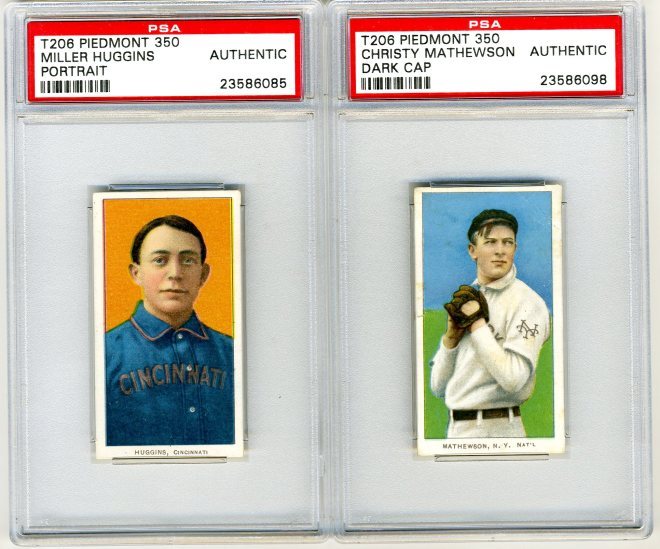
> Miller Huggins, Reds SS – “Mighty Mite” played 13 seasons in the NL but his claim to fame came as the Manager of the New York Yankees from 1918-1929, which included the legendary 1927 team with Babe Ruth & Lou Gehrig. Inducted into the Hall of Fame by the Veteran’s Committee in 1964.


> Christy Mathewson, Giants Pitcher – One of the five charter members of the Hall of Fame inducted in 1936, “Big Six” is one of the greatest pitchers of all-time. He won 373 games over a 17-year career and had 30 or more wins in a season four times.


> Gavvy Cravath, Minneapolis Millers OF – Even  though he spent many years in the minors, after joining the Phillies at age 31, he led the NL in Home Runs six times and was one of the great power hitters of the dead-ball era.


> Sherry Magee, Phillies OF – Played 16 seasons in the majors and in 1910, led the NL in batting with a .331 average. He also led the NL in RBI’s on four separate occasions and swiped a total of 441 bases.


> John Anderson, Providence Grays 1B/OF – Born in Norway, “Honest John” had 14 productive seasons in the majors and was in his last year at age 35 when he appeared in the T206 set.


> Bill Bergen, Dodgers Catcher – Considered one of the best defensive Catchers of the time during his 11-year career, he was also one of the worst hitters. In over 3,000 lifetime AB’s, his batting average was .170.


> Bill Clymer, Columbus Senators Manager – “Derby Day Bill” knew early on that he wasn’t destined to be a major league player when he went 0-for-11 in his 1891 debut. He went on to win 2,122 games as one of the best minor league managers of all time.


> Monte Cross, Indianapolis Indians SS – A weak-hitting infielder who played 15 seasons in the majors, he hit the first home run of the 20th century on April 19,1900.


> Mickey Doolan, Phillies SS – “Doc” led the NL in fielding twice and was one of the most eduacated players of the day, with a degree from Villanova where he studied dentistry. Stayed in the game as a manager and coach until 1932, then practiced dentistry until his retirement in 1947.


> Clyde Engle, New York Highlanders Utility – “Hack” didn’t have much of an overall career, but he was a significant part of baseball history. In the 1912 World Series, his lazy fly ball in the 10th inning of the deciding game was dropped by the Giants’ Fred Snodgrass leading to the Red Sox victory.


> Tommy Leach, Pirates OF – Amassed over 2,000 hits in a 19-year career and hit four triples in the first World Series game ever played (1903).


> Carl Lundgren, Cubs Pitcher – Played on two World Series championship teams with the Cubs (1907 & 1908) and had the nickname “The Human Icicle” for his ability to pitch in cold weather.


> Fred Mitchell, Toronto Maple Leafs Pitcher – Only an average player, he went on to coach with the Braves and then managed the Cubs to the NL pennant in 1918.


> Ollie Pickering, Minneapolis Millers OF – Played eight seasons in the majors with six different teams. In 1901, he was the first batter in the new American League while playing for the Cleveland Blues.


> Ossee Schreck, Columbus Senators C – A good catcher, he was Rube Waddell’s battery mate for six years with Connie Mack’s Philadelphia A’s. He was born Ossee Freeman Schreckengost.


> Frank Smith, White Sox Pitcher – He was the son of a furniture mover and claimed that he could carry a baby grand piano up four flight of stairs without a break. That led to his nickname…”Piano Mover” Smith.


> Mike Donlin, Giants OF – One of the most notorious characters of the era, “Turkey Mike” was a drinker and playboy known for his lifestyle and baseball ability. He hit over .300 in ten of his 12 seasons but also ended up in prison for public drunkenness in 1902. Donlin took several seasons off to act in vaudeville and appeared in silent movies after his baseball career ended.


That’s just a sprinkling of the players from the amazing collection and it was a privilege to be part of the project. Thanks to baseball-reference.com and the T206 book authored by Tom & Ellen Zappala for supplying some of the source material.


The Top Ten Baseball Cards Sets…Ever

Topps Pack

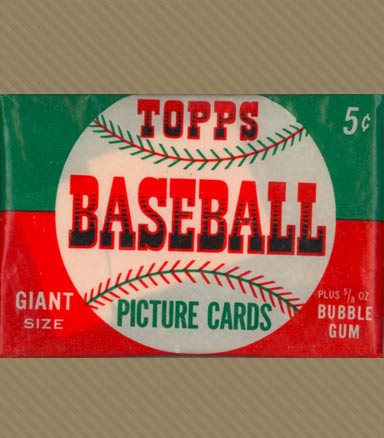
Sometimes you have to wonder how the Internet would exist without top-ten lists. Everything from household appliances to cars to “Black Friday” sales to movies, show up on your home page everyday without you even requesting the information through a search engine. Of course, those magical software engineers have reviewed your recent website searches and already know you’re considering a new car or a trip to Europe or some new underwear, so don’t be surprised that some electronic Sherlock Holmes knows your inner most thoughts. The only clue this writer has is that you like baseball and as a consequence, might have interest in the sport’s history. And nothing portrays the history of the game better than a baseball card. For well over 100 years, they’ve been imbedded in the fabric of the game for youngsters and the young at heart.


As with any “best” list, there is a natural bias due to the age of the person making the judgment. Today’s median age in this country is about 37 and you won’t find any sets listed that didn’t appear before Mr. Median was born. Another prejudice takes the form of the reviewer’s favorite set from their childhood and for “Baby Boomers”, they’ll all come from the 50’s & 60’s. So while some of you will wonder why the beautiful 1975 Topps set isn’t on the list, that’s the whole point of going through this exercise…if we all agreed, the discussion wouldn’t be fun. The values of the sets listed are based on cards in “Excellent” (EX 5) condition.


#10 – 1956 Topps

In 1955, Topps produced their first horizontal card set and some people prefer it due to the rookie cards of Roberto Clemente & Sandy Koufax. The ’56 set, however, actually improved upon the design and is one of the most beautiful ever issued. The 340-card issue has a profile shot layered over an actual action sequence of the player. The most expensive card is the Mickey Mantle (who was not in the ’55 set), representing his Triple Crown season. Included are all the great stars of the 50’s such as Ted Williams, Jackie Robinson, Hank Aaron & Willie Mays. A complete set would be about $6,000.


#9 – 1953 Topps

This was the second year issue of the Topps Company and it still stands out as one of the most artistic in the annals of the hobby. The 274 card set uses a format that bears a recognizable artistic depiction of the featured player. Both Mantle and Mays were shortprints and are the two most expensive cards in the set. You’ll also find many other legendary New York players like Robinson, Roy Campanella, Pee Wee Reese, Yogi Berra, Whitey Ford and the rookie cards of Jim Gilliam and Johnny Podres. Set aside $12,000 for this one.


#8 – 1953 Bowman (Color)

This amazing set is famous for its simplicity. The 160 cards  have only a color photo of the player on the front with no name, position or team affiliation. In fact, even for veteran baseball fans, trying to see how many players you can recognize without looking at the back of the cards is a real challenge. The photography is exquisite and there are many action shots and a few multiple-player cards. The Stan Musial card is a prized collectible and you’ll also find a card that has Mantle, Berra & Hank Bauer. $7,000 will put this set in your collection.


#7 – 1915 Cracker Jack

Yes, they’re called Cracker Jack cards because they were inserted in boxes of the molasses-covered popcorn snack…and the entire set was also available through a mail-in offer. The 176 players were from the American, National and Federal League (the third major league in 1914-15) and include Ty Cobb, Christy Mathewson, Honus Wagner, Walter Johnson and the famous “Black Sox” player, “Shoeless” Joe Jackson. A set in “EX” condition is worth $60,000…say it ain’t so, Joe.


#6 – 1963 Topps

The most recent of our top ten, this 576 card set was one of many great issues of the 1960’s. Its unique format with a large photo of each player as well as a smaller, black & white image in a circle stands the test of time. Topps added many other aspects to the set with theme cards such as “League Leaders”, “Managers”, “World Series” and multi-player cards including rookie cards that showed four individual players. In that category is the highest valued card, Pete Rose’s rookie card (#537) as well as the rookie card of Pirates legend Willie Stargell. Many of the stars from the 50’s were still active in ’63 and the horizon was filled with new stars like Carl Yastrzemski, Brooks & Frank Robinson, Bob Gibson, Lou Brock, Willie McCovey and Orlando Cepeda. A $4,000 budget should get it into your collection.


#5 – 1941 Play Ball

This was the third year of production for the Play Ball series, but the first to add color to the cards. In addition, 1941 ended up being an enormously historic season with Joe DiMaggio’s 56-game hitting streak and Ted Williams batting .406. It also turned out to be the last year for the product as World War II changed the landscape of baseball for years to come. In addition to the Yankee Clipper and Teddy Ballgame, you’ll find Hall of Famers like Lefty Gomez, Bill Dickey, Bobby Doerr and the rookie card of Pee Wee Reese. Only 72 cards, it will still cost around $7,000 to collect.


#4 – 1951 Bowman

The Bowman Company produced baseball cards from 1948-1955 and this is the most coveted of the group. The initial run was 252 cards but late in production, another 72 were added and having the rookie cards of both Mantle & Mays in that “high number” series took the set to another level for collectors. You’ll also find Ford, Williams, Campanella, Duke Snider, Bob Feller and many others. $20,000 is the ballpark price.


#3 – 1952 Topps

The “Holy Grail” for collectors of post-war baseball cards, this is the first complete set issue from the Topps Company. It includes 407 cards but #’s 311-407 were issued late in the production run and are very scarce. Ironically, the first card of the difficult series is Mickey Mantle, who went on to be the most popular player of the 50’s & 60’s. Even though it isn’t technically his rookie card, it is his first Topps card and his appeal and the scarcity of the card make it an iconic collectible. Hopefully, you’re sitting down because the Mantle card in “EX 5” condition books for $50,000. The set has many other great stars including Phil Rizzuto, Warren Spahn, Richie Ashburn, Larry Doby and the rookie card of Eddie Mathews. Even common cards from the scarce series book for $125 each. The complete set is worth over $80,000.


#2 – 1933 Goudey

Produced by Big League Gum, these colorful cards set the standard for sports collectibles. They were larger than earlier issues and had great eye-appeal with their artistic illustrations. As with all sets, the real demand is created by the players featured on the cards. The 240 cards in the Goudey line-up are a who’s-who of Hall of Fame players and in many cases, the most famous ones had multiple cards in the set…including Babe Ruth & Lou Gehrig. Also included are Jimmie Foxx, Tris Speaker, Mel Ott & Rogers Hornsby. $60,000+ is the price tag.

That brings us to #1 and to hearken back to Saturday morning serials at the movie theater, we’ll leave you hanging and talk about the winner in detail during a future visit. Here’s a hint – tobacco is a key factor.

Up & In, High & Tight

Tony C - SI

Baseball is the easiest sport for fans to criticize because almost all of us have played the game at some level. We’ve fielded ground balls, thrown from the outfield and maybe even hit a home run or two. So, when a batter flails away at a pitch in the dirt or a fielder misses the cutoff man, we’re quick to attach a negative analysis to the event. That all stops, however, when we see a major league player get hit in the head by a 95-mph fastball.


Watching the recent embarrassing brawl between the Tigers & Yankees, in which four batters were hit and eight were ejected, makes you wonder if baseball will ever get rid of the unwritten rules of “retaliation”. It’s one thing to go after a batter who has been “showing up” the opposition, but throwing at someone who hit a Home Run in his last at-bat is childish.


Even though some modern writers and broadcasters use the term “bean ball” to describe a pitch that hits a batter anywhere on his body, the historic definition seems much more narrow and means being hit in the head or “beaned”. As with many rules within the game, the issue in keeping it under control falls to the umpires and leaves them with the difficulty of determining “intent.” For that reason, players and managers still take the position that HBP (Hit By Pitcher) should be self-policed and retaliations often escalate into “beanball wars.” MLB has yet to figure out a reasonable solution to bench-clearing brawls and we all have some visual available in our brain of one of those fiascos. Mine is 72-year old Don Zimmer charging after Pedro Martinez in the 2003 Yankees – Red Sox ALCS.


The other day, I watched a telecast where an Aroldis Chapman fastball registered 105 mph on the radar gun. Ironically, a player named Chapman is the only major league player to have died from being hit in the head. On August 16th, 1920 at the Polo Grounds in New York, Indians Shortstop Ray Chapman was hit by a pitch thrown by Carl Mays and died 12 hours later. He was 29 years old and in his ninth major league season. Accounts of the incident seem to suggest that Mays was a noted “headhunter.” Pitching for the Yankees, he won 26 games that season and led the American League with 27 wins the following year. Babe Ruth was his teammate during this time and hit 113 Home Runs in those two campaigns.


Many players have had their careers impacted dramatically after being struck in the head by a baseball. Tigers Hall of Fame Catcher Mickey Cochrane was in his 13th season in 1937 when he was knocked unconscious by a pitch and spent seven days in the hospital…he never played another game. Another Hall Of Famer, Lou Boudreau, played very little after being beaned in 1951 and retired the following season. Despite this type of outcome, baseball waited until 1956 before implementing a requirement that batters either wear a batting helmet or protective plastic liners under their caps. Full helmets didn’t become mandatory until 1971 and the earflap was added in 1983.


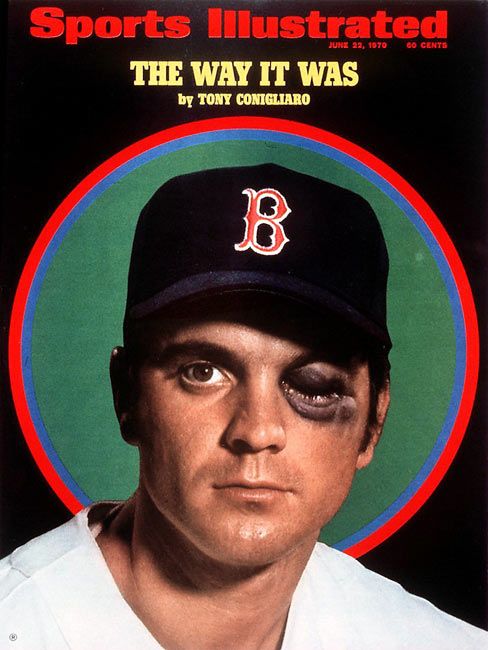
Players of the last 50 years certainly haven’t been immune from these sad stories. Tony Conigliaro of the Red Sox was one of the brightest young stars of the game in the mid-60’s. In 1965, he led the AL in Home Runs at age 20! On the night of August 16th, 1967 at Fenway Park, “Tony C.” was hit in the face with a fastball thrown by Jack Hamilton of the Angels. The injuries were so devastating that he missed the entire 1968 season and even though he played with some success in ’69 & ’70, his deteriorating eyesight forced him to retire at age 26. Dickie Thon came back from a gruesome beaning in 1984, but was never the same player. Twins Hall of Famer Kirby Puckett had his jaw broken by a fastball late in the 1994 season and it would be his last game as he developed glaucoma the following Spring and had to retire.


Getting hit by a pitch can also be strategic instead of tragic. Ron Hunt of the Expos holds the major league record for HBP with 50 in 1971. This was right in the middle of a 7-year run where he led the National League each year. Minnie Minoso of the White Sox led the AL in 10 of 11 seasons from 1951-1961.


Of course, as in all things baseball, humor can always be found. In the 1950’s, Yankees legend Yogi Berra was hit in the head by a pitch and was carried off the field before being taken to the hospital. The headline in the newspaper the next morning said, “X-Rays of Yogi’s head show nothing.”


As for me, I’m going to fire up that InterWiFi thinggy and download some Chin Music.

Field Of Dreams

AFL RD

OK, close your eyes and picture yourself sitting behind home plate at a beautiful ballpark, on a perfect day, surrounded by big league scouts, watching a game filled with prospects from ten different major league teams. Pretty nice dream, isn’t it? Well, without trying to rub it in, your fantasy is my reality because I’m fortunate enough to live in the Valley of the Sun.


An envelope arrived in the mail this week from the “Office of the Commissioner of Baseball”. No, it wasn’t my voting credential for the MVP & Cy Young Award…it was better! It was my annual invitation to purchase a season pass for the Arizona Fall League.


The Arizona Fall League, which was the brainchild of Hall of Fame Baseball Executive Roland Hemond, brings together 180 players for six weeks every October and November. Utilizing six of the Spring Training ballparks in the Phoenix area for six weeks, local fans pay $8 (or less) to watch some of the top prospects in baseball compete against each other and attempt to impress scouts and team executives with their talent. A few years ago, for example, Mike Trout & Bryce Harper patrolled the same outfield for the Scottsdale Scorpions. This Fall, at least ten of the MLB.com top 100 will be on rosters including Victor Robles (Nats), Ronald Acuna (Braves), Kyle Tucker (Astros), Francisco Mejia (Indians), Mitch Keller (Pirates), Kyle Lewis (Mariners) & Corey Ray (Brewers).


Today, we’ll take a retrospective look at the first decade of the league (1992-2001) and the players who made it to “the show”. We’ll use prospect lists that were published at the time along with award winners and all-star team members from the various campaigns. And, of course, a few oddities to flavor the stew.


> 1992


* #1 Ryan Klesko (Braves 1B) – Played 16 seasons in the NL and hit 278 Home Runs


* #2  Rondell White (Expos OF) – Battled injuries for most of his 15-year career but had a lifetime .284 Batting Average


* #9  Mike Piazza (Dodgers C) – Difficult to believe there were eight players rated ahead of him…arguably, the greatest hitting Catcher in history with 427 HR’s and a .308 BA in 16 seasons and now a member of the Hall of Fame


* The Manager of the Scottsdale team was Dusty Baker


> 1993


* #1 Cliff Floyd (Expos 1B) – Another injury-prone player, but lasted in the Majors for 17 seasons with 233 HR’s and a .278 BA


* # 2 Todd Hollandsworth (Dodgers OF) – Was the NL Rookie-of-the Year in 1996 but never really built upon that success in 12 seasons with six different teams


* # 4 Shawn Green (Blue Jays OF) – Had 42 HR’s & 123 RBI’s in his free agent walk-year of 1999 and used that as springboard to a big contract with the Dodgers…had two more 40+ HR campaigns with L.A. and played 15 years


* League MVP Orlando Miller (Astros SS) – Lasted only four seasons in the majors with a lifetime BA of .259…last seen in the big leagues in 1997, he continued to toil in the Minors, Mexico and Independent Leagues until 2008…his final stop was in Edmonton where he hit .319


> 1994


* #1 Ruben Rivera (Yankees OF) – Yes, he was rated ahead of Nomar & Derek…his 9 years in the Majors produced a BA of .216…during Spring Training in 2002, he was released by the Yankees after it was discovered that he had stolen some of Derek Jeter’s baseball equipment from the locker room and sold it…guess the MLB minimum salary of $300,000 just wasn’t enough


* #2 Nomar Garciaparra (Red Sox SS) – Became an icon in New England and made five All-Star teams as a member of the Red Sox before being traded in 2004…a lifetime .313 hitter in 14 seasons


* #3 Derek Jeter (Yankees SS) – The Captain of the Yankees is on a secure path to the Hall of Fame and could become the face of the Marlins franchise.


* League MVP Mark Grudzielanek (Expos 2B) – Played 15 years and accumulated over 2,000 hits with a BA of .289


* The Manager of the Scottsdale squad was Terry Francona


> 1995


* #1 Alan Benes (Cardinals P) – Won 13 games for St. Louis in 1996 but couldn’t overcome injuries…had a career record of 29 Wins & 28 Losses


* #2 Darin Erstad (Angels OF) – Had a very productive 14-year career and won three Gold Gloves as a member of the Angels…an integral part of their 2002 Championship team


* League MVP Robin Jennings (Cubs OF) – Only appeared in 93 Major League games


> 1996


* #1 Kevin Orie (Cubs 3B) – Also the Co-MVP, he was another Cub phenom who didn’t pan out, he played parts of four seasons and hit .249


* #2 Chris Carpenter (Blue Jays P) – Pitched in the Majors for 15 years and won the NL Cy Young Award in 2005 with a mark of 21-5


* #6 Derrek Lee (Padres 1B) – “D Lee” hit 331 HR’s in 15 big league seasons


* League Co-MVP Bubba Trammell (Tigers OF) – Played with five teams in seven seasons and had one 20+ HR campaign with a lifetime BA of .261


> 1997


* #1 Chad Hermansen (Pirates 2B) – Everyone thought he would be a star…hit .195 in six years with four teams…continued to hang on in the Minors until 2007


* #2 Preston Wilson (Mets OF) – Former Mets star Mookie Wilson is both his Uncle & Stepfather (think about that)…played 10 years in the Big Leagues and led the NL with 141 RBI’s while with the Rockies in 2003


* #5 Sean Casey (Indians 1B) – One of the most popular players in the Majors during his 12-year career, he had a lifetime BA of .302


* #9 John Rocker (Braves P) – Did have some success as a closer during his six years in the Majors, but is best known for his racist, homophobic and sexist remarks in a 1999 Sports Illustrated interview


* League MVP Rolando Arrojo (Devil Rays P) – This Cuban defector had an outstanding rookie year in 1998 but was never productive after that and posted a 40-42 W-L record in five seasons


* The Manager of the Peoria team was Mike Scioscia


> 1998


* #1 J.D. Drew (Cardinals OF) – Had some productive results during his 14-year career despite missing significant time with injuries…had 242 HR’s and a lifetime BA of .278


* #2 Matt Anderson (Tigers P) – Detroit was seduced by the 100 MPH Fastball and he did have 22 Saves in 2001…seven years in the majors produced a 5.19 ERA


* #4 Alfonso Soriano (Yankees SS) – A productive player in 16 big league seasons, he hit over 400 HR’s…he also made over $150 Million


* #7 Roy Halladay (Blue Jays P) – “Doc” became one of the best Pitchers in the game with two Cy Young Awards in his trophy room…his record over 16 seasons was 203-105


* League MVP Carlos Lee (White Sox 1B/3B) – After playing 14 MLB campaigns, “El Caballo” accumulated 358 HR’s and a .285 BA


* The Manager of the Maryvale roster was Ken Griffey Sr.


> 1999


* League MVP George Lombard (Braves OF) – Only had 350 AB’s in the Majors hitting .220…his last professional season was 2009, when he hit .343 for the Independent League Long Island Ducks


* Pitcher-of-the Year Doug Davis (Rangers) – If you looked up “Innings Eater” in the dictionary, his picture would be there…in 13 seasons, his record was 92-108 with a 4.44 ERA


* Batting Champion Chad Moeller (Twins OF) – The quintessential AAAA player, he was in the majors for parts of 11 seasons and hit .226


* ERA Leader Chad Durbin (Royals P) – Pitched for 14 seasons (and six teams) …lifetime record was 43-47 with 5.03 ERA


* Maryvale’s Manager was Bob Melvin


> 2000


* League MVP Donzell McDonald (Yankees OF) – Had a total of 25 MLB AB’s in 2001-02 and was never in “the show” again…his final pro year was 2010 when he hit .301 in the Mexican League


* Pitcher-of-the Year Matt Miller (Tigers) – Pitched 10 career innings for the Tigers, allowing 20 Hits and 10 Runs


* All-Star 3B Albert Pujols (Cardinals) – What ever happened to this guy?


* All-Star SS Jimmy Rollins (Phillies) – 2016 was his last year in the “Show”…he had over 2,400 hits and the 2007 NL MVP Award to his credit


> 2001


* #1 Hank Blalock (Rangers 3B) – Had a few productive seasons for Texas, but injuries took their toll…153 HR’s in nine years


* #2 Drew Henson (Yankees 3B) – Followed Tom Brady as the QB at Michigan, but decided to try baseball…those of us who watched him try to hit the breaking ball knew it was a bad idea…had only 9 MLB AB’s before going back to Football in 2004…played briefly for the Cowboys & Lions


* #3 Brandon Phillips (Expos SS) – Both the Expos & Indians gave up on this volatile personality, but he’s still a productive player in his 16th season and has four Gold Gloves to his credit


* #10 Carl Crawford (Devil Rays OF) – Was a real game-changer during his eight seasons with the Rays swiping 400 bases…the huge free-agent contract in Boston didn’t work out and now he’s out of baseball.


If you’ve played Fantasy Baseball for at least 15-20 years, some of these names will bring “Sweet Dreams” (Annie Lennox, 1983) while others will cause “Tears On My Pillow” (Little Anthony and the Imperials, 1958). Hope you can join us sometime at the ballpark in Arizona…you’ll recognize me as the one guy sitting behind home plate without a radar gun.