The Clutch Chronicles – 2019

'12 Rendon Auto

The Urban Dictionary defines Clutch as, “To perform under pressure”. For decades, baseball pundits and fans have extolled the virtues of players who supposedly had this trait. Their evidence, however, was only visual and anecdotal. Back in the 1970’s, most people considered Tony Perez of the “Big Red Machine” one of baseball’s best clutch hitters. After all, he had over 100 RBI’s in six seasons between 1967 & 1975. In fact, some would argue that his election to the Hall of Fame was based on this reputation.


Now that baseball is in the age of statistical analysis, our old observations may be called into question. Even a math-challenged fan understands that you can’t get a plethora of RBI’s without baserunners. And, boy, did those Reds teams have baserunners!


Statistics on RBI Percentage (RBI-HR/Runners On) now go back to 1974, so let’s see how our legendary clutch hitter fared in a season where he was an All-Star. Perez had 101 RBI’s, 28 HR’s & 489 runners on base for a RBI percentage of 14.93%. That didn’t even crack the top 50 for the major leagues in ’74! He finished behind household names such as Reggie Smith, Richie Zisk, Jimmy Wynn, Cesar Cedeno & Ted Simmons. The leaders were Jeff Burroughs at 21.18% and Sal Bando at 21.15%.


Our Hall-of-Famer improved considerably in 1975 as he accumulated 109 RBI’s with 20 HR’s and 489 runners on base (again). His percentage improved to 18.20% and he just snuck into the top ten for that season. The only hitters at 20% or higher were Willie Stargell at 20.48% and Thurman Munson at 20.00%.


As a fan, you certainly have an opinion on today’s clutch hitters but do the stats back you up? In 2019, there were over 20 hitters who exceeded the 18.20% that Perez posted in ’75. We’ll only include players who had at least 200 baserunners during the season to eliminate the “small sample size” outliers.  These are “Quacker’s Clutch All-Stars” and we’ll see how well their performance aligns with their reputation. There will be players you expected to see and others that will cause you to scratch your head.


1) Josh Phegley, Athletics C, 22.83% – When a team seems to over-achieve, you’ll find contributors like this 31 year-old backstop.


2) DJ LeMahieu, Yankees U, 22.16% – One of the strangest free agents signings turned out to be the best…100+ Runs & RBI’s.


3) Freddie Freeman, Braves 1B, 22.13%- One of the most consistent players in the game…he was #8 last year.


4) Anthony Rendon, Nationals 3B, 21.40%- A MVP candidate and a free agent…Cha-Ching!


5) Charlie Blackmon, Rockies OF, 21.01% – Colorado gave him a big contract and his productive season got lost in the team’s disappointing results.


6) Travis d’Arnaud, Rays C, 20.95% – Practically given away at mid-season, he was a huge factor in Tampa Bay’s playoff run…he’ll also be a free agent in 2020.


7) Didi Gregorius, Yankees SS, 20.93%- Didn’t miss a beat coming back from elbow surgery…over 50 RBI’s in half a season.


8) Daniel Murphy, Rockies 1B, 20.63%- All the clutch hitting in the world can’t make up for Colorado’s pitching staff.


9) Eric Hosmer, Padres 1B, 20.21%- This number resulted in 99 RBI’s, but he’s still not a $144 million corner-infielder.


10) Nelson Cruz, Twins DH, 20.18% – At age 39, he just keeps producing…OPS over 1.000


11) Kurt Suzuki, Nationals C, 20.09%- Seemed to be on the highlights every night…over 60 RBI’s in a little more than 300 AB’s


12) Rafael Devers, Red Sox 3B, 20.00%- When you hit 50+ Doubles and 30+ HR’s, you lead the league in Total Bases…he’s also only 22 years old.


13) Asdrubal Cabrera, Nationals 2B, 19.84%- Another player dumped during the Summer, his OPS in Washington was over .950


14) Adalberto Mondesi, Royals SS, 19.78% – Still just 24, only injuries are holding him back.


Others over 19% were Josh Bell, Bryce Harper, Jose Abreu, Colin Moran & David Dahl


What about the MVP candidates? All were outside the top 30…Alex Bregman (17.93%), Mike Trout (16.39%), Christian Yelich (16.16%) & Cody Bellinger (15.89%)


For everyday players, Willy Adames was the worst in baseball at 9.61%. Others under 11% included Brian Dozier, Adam Eaton, Robinson Cano & Leury Garcia.


Hope all your fantasy players came through in the clutch. For more information on RBI Percentage, go to baseballmusings.com.


Going To WAR For The MVP

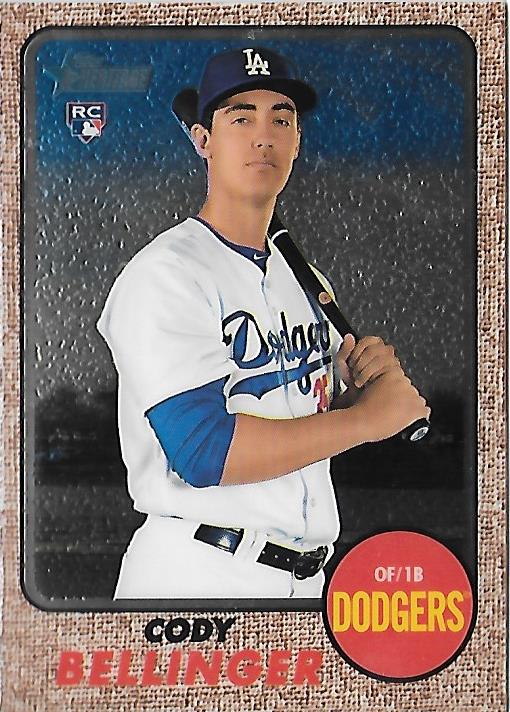
'17 Bellinger Hert Chrm

Are you aware that each year’s MVP winners receive an award called the Kenesaw Mountain Landis Memorial Baseball Award? As the Baseball Writer’s Association has never really defined “most valuable”, would the results have been different over the years if it was just called the “Landis Plaque” and went to the most outstanding player in each league. In other words, do fans think in terms of most valuable player or player of the year? And, do you agree that the MVP is for position players and the Cy Young Award is for pitchers?


While there have been some examples over the years of MVP winners on losing teams like Ernie Banks of the Cubs in ’58 & ’59, the general consensus is that the award should go to a player on a contending team. Ted Williams won the Triple Crown (HR, RBI’s & Batting Average) in both 1942 & 1947 but didn’t win the MVP Award in either year. In both seasons, he also led the AL in Runs, Walks, On-Base Percentage and Slugging Percentage. The winner in ’42 was Yankee 2B Joe Gordon and in ’47, it was Joe DiMaggio. The Red Sox finished nine games behind the Yanks in 2nd place in ’42 and 14 games behind in 3rd place in ’47. If there were more than just two teams going to the post-season in the 1940’s, maybe the results would have been different.


Now that just about any team at .500 or better still has a chance for the playoffs at the end of August, will the voters expand the list of players considered for MVP? And, if “most valuable” is really the criteria, how is that defined? It seems that there is some logic in value being related to teams winning games, so maybe WAR (Wins Above Replacement) can help us determine the real contenders. After all, being a difference-maker in team wins certainly equates to a player’s true value. As a reminder, WAR represents a statistical analysis of how many wins a player is worth to his team over that of a replacement level player (think AAA or AAAA). As you’ll see in the ratings, WAR isn’t just about hitting stats for position players, it also includes advanced defensive metrics.


“Old School” baseball fans will be disappointed to know that advanced statistics have already had a major impact on how this award is viewed. Over the last decade, every MVP has finished in the top five (5) in WAR. That is about the time that this new-age statistic became somewhat mainstream. As recently as 2006, Justin Morneau won the MVP with a WAR number of 4.3. Not only were there twenty players better than that, he finished third on his own team behind Johan Santana & Joe Mauer. Juan Gonzalez won two MVP’s in the 90’s without being in the top 15 while Don Baylor (1979), Willie Stargell (1979) and Jeff Burroughs (1974) weren’t in the top 20. Those days of writers voting without doing thorough research are gone.


Stats are as of Sunday, September 22nd and the WAR numbers are from famgraphs.com & baseball-reference.com


AL


> Mike Trout (8.4) of the Angels is on the shelf at the end of the season but his numbers say that he’s the best in the game. His 3rd MVP will be well deserved, as he leads the AL with 45 HR’s, .438 OBP, .645 SLG and a 1.083 OPS.

> Right behind is Alex Bregman (7.7) of the Astros who has emerged as a star with 38 HR’s and more Walks than K’s. However, the star-studded Houston roster might keep him from the spotlight.

> Marcus Semien (7.5) of the Athletics is a key piece in the team’s unexpected march to the post-season. Playing a premium position (SS) and contributing great defense, he’s produced 32 HR’s, 90 RBI’s & 10 SB’s. Oh, he’s also played every game this season.


> Mookie Betts (6.4) was the MVP in 2018, leading the Red Sox to the World Series title. A victim of his own success, most fans think he ‘s having an off-year. When you look deeper, his OPS of .910 and a league-leading 132 Runs tell a different story.


> Matt Chapman (6.1) is another major contributor to the Athletics success. Gold Glove caliber defense along with 34 HR’s & 98 Runs make him a budding star at age 26.


> Xander Bogaerts (5.6) is another great young (26) player on the Red Sox. Signed to a six-year extension, he has 32 HR’s, 110 RBI’s, 105 Runs and a league-leading 51 Doubles.


NL


> Cody Bellinger (8.0) of the Dodgers leads a very close race in 2019. 45 HR’s and a 1.031 OPS are very impressive and his defensive versatility might give him the edge.

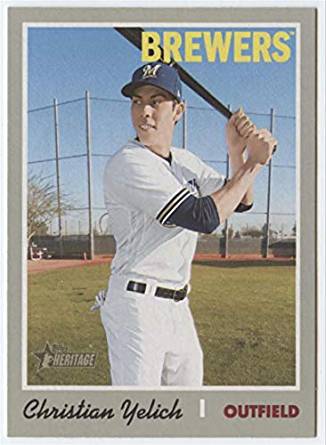
> The Brewers Christian Yelich (7.5) won the MVP last year and has continued his success at age 27. Limited to 130 games due to injury, he still leads the NL with a .329 BA, .429 OBP, .671 SLG and a 1.100 OPS.


> Ketel Marte (7.0) of the D’Backs has been the breakout star of 2019. Playing all over the diamond, he leads the NL with 187 Hits and has a .981 OPS.


> Anthony Rendon (6.8) has put up another stellar campaign on his way to free agency. With 119 RBI’s and a 1.025 OPS, this guy could get big bucks even if I was his agent.


> If you had a vote, would it be a SoCal ballot with Trout & Bellinger?


Just for the record, in 1942 Ted Williams led all of baseball with a WAR figure of 10.6. MVP winner Gordon had an impressive number of 8.2. In ’47, Teddy Ballgame once again led the majors at 9.9 while DiMaggio wasn’t even close to the top ten at 4.8.


If you ever drop by the Duck Pond, you’re welcome to view the extensive collection of Williams memorabilia….but you probably already figured that out.


Field Of Dreams

AFL RD

OK, close your eyes and picture yourself sitting behind home plate at a beautiful ballpark, on a perfect day, surrounded by big league scouts, watching a game filled with prospects from ten different major league teams. Pretty nice dream, isn’t it? Well, without trying to rub it in, your fantasy is my reality because I’m fortunate enough to live in the Valley of the Sun.


An envelope arrived in the mail a few weeks ago from the “Office of the Commissioner of Baseball”. No, it wasn’t my voting credential for the MVP & Cy Young Award…it was better! It was my annual  season pass for the Arizona Fall League.


The Arizona Fall League, which was the brainchild of Hall of Fame Baseball Executive Roland Hemond, brings together 180 players for six weeks every September and October. Utilizing six of the Spring Training ballparks in the Phoenix area for six weeks, local fans pay $9 (or less) to watch some of the top prospects in baseball compete against each other and attempt to impress scouts and team executives with their talent. Back in 2011, for example, Mike Trout & Bryce Harper patrolled the same outfield for the Scottsdale Scorpions. This Fall, at least ten of the MLB.com top 50 prospects will be on rosters including Jo Adell (LAA), Royce Lewis (MIN), Alex Kirilloff (MIN), Forrest Whitley (HST), Joey Bart (SF), Jarred Kelenic (SEA), Alec Bohm (PHL), Nolan Jones (CLV) and Dylan Carlson (STL).


Today, we’ll take a retrospective look at the last decade of the league (2009-18) and some of the players who made it to “the show”.


> 2009


* Starlin Castro hit .376 and swiped 9 bases


* Grant Desme led the league with 11 HR’s but eventually retired at age 23 to join the ministry


* Mike Moustakas cranked five HR’s in only 75 AB’s


* Mike Leake made five starts and posted a 1.37 ERA


> 2010


* Brandon Belt hit .372


* A.J. Pollock hit .317 with 7 SB’s


* Charlie Blackmon only hit .264 but with more walks than strikeouts, his OBP was .372…maybe he’ll make a good lead-off hitter someday


* Marc Rzecpzynski was 4-0 in six starts with a league-leading 1.26 ERA


> 2011


* Forget about Trout & Harper, the leading hitter was Jedd Gyorko with a .437 BA and a 1.204 OPS


* There was also another .400 hitter…Scooter Gennett at .411


* Nolan Arenado batted .388 with 33 RBI’s in 29 games


* Dallas Keuchel’s 5.08 ERA gave you no clue as to his future success


> 2012


* Billy Hamilton stole 10 bases but only hit .234…sound familiar?


* Christian Yelich batted .301 but had zero HR’s…think he’ll ever develop any power?


* George Springer hit .286 and his 13 walks got his OPS up to 1.012


* Chase Anderson went 3-1 with 25 K’s in 23+ IP


> 2013


* Kris Bryant hit 6 HR’s in only 77 AB’s and posted an OPS of 1.184


* C.J. Cron was the leading hitter with a .413 BA and 20 RBI’s


* Mitch Haniger led the league with 24 RBI’s


* Mike Montgomery had a 2.57 ERA…three years later he got the last out of the World Series


> 2014


* Jesse Winker was the leading hitter at .338


* Greg Bird & Hunter Renfroe each hit 6 HR’s


* Roman Quinn swiped 14 bases in 24 games


* Zach Davies was 3-0 in seven starts with a 1.75 ERA


> 2015


* Gary Sanchez was the top slugger with 7 HR’s & 21 RBI’s


* Jeimer Candelario showed off his skills by hitting .329 with 5 HR’s


* Jeff McNeil’s .230 BA didn’t deter his progress to the big leagues in 2018


* Josh Hader’s miniscule 0.56 ERA was a forecast of things to come


> 2016


* Gleybar Torres was the batting champion at .403


* Cody Bellinger posted a .981 OPS


* Tim Tebow hit .194 and struck out 20 times in 62 AB’s


* Frankie Montas allowed one earned run in 17 innings


> 2017


* Ronald Acuna JR. led the league with 7 HR’s


* Austin Riley had an OPS of 1.021


* Victor Robles had a .389 OBP and swiped 7 bases


* Max Fried was 3-1 with a 1.73 ERA


> 2018


* Pete Alonso tied for the league lead in HR’s


* Keston Huira’s 33 RBI’s led the league


* Vladimir Guerrero Jr. hit .351


The season begins on September 18th and finishes with the Championship Game on October 26th. Hope you can join us sometime at the ballpark in Arizona…you’ll recognize me as the one guy sitting behind home plate without a radar gun.

1951 Bowman Nicknames

'51 Klu

Spending lots of time over the years with vintage (pre-1975) baseball cards has helped me define many of the differences in today’s modern game. From visual aspects such as uniforms and gloves to social issues like players of color being limited, our cherished game has certainly come a long way. It seems, however, that one area where the sport has gone backwards is in the category of nicknames.


In 2019, as the game has become richer and more corporate, original and appropriate nicknames have begun to disappear. Of the top players in the game, is there a decent nickname among them? Looking at baseball-reference.com, it appears that many of them have nicknames, but even the most ardent fan might not recognize them. Have you ever heard of the “Millville Meteor” or “Bigfoot”? Those are the nicknames listed for Mike Trout and Giancarlo Stanton. And Clayton Kershaw is “The Claw”? Add this to the weak efforts of “Miggy” for Miguel Cabrera and “Goldy” for Paul Goldschmidt and you can see that the new era of baseball is a wasteland for nicknames. Max Scherzer is “Blue Eye”, Justin Verlander is “JV”, Bryce Harper has three nicknames and they are all boring…”Bam-Bam”, “Mondo” & “Harp”. Maybe you like “Votto-matic” for the Reds 1B?


Thanks to a very large baseball card collection that has taken over significant areas of my house, we can look into the rear-view mirror, travel back to almost 70 years ago and see what kind of nicknames we find for the players in the 1951 Bowman set. This was the 4th issue of the post-war era and had no real competition, as Topps didn’t produce cards until 1952. At 324 cards, it was a treasure trove for fans because almost every major leaguer was represented. If you wanted to add this set to your collection, bring your checkbook and 401K…today’s price would be over $20,000!


Let’s look at some players you’ll recognize and others you won’t. The values are based on a card in “EX 5” condition.


> #1 Edward “Whitey” Ford ($500) – This is the rookie card of the Yankees Hall of Fame Pitcher. Once he became a star of the Bombers dynasty, he was also called “Chairman of the Board”…long before Sinatra.


> #2 Lawrence “Yogi” Berra ($190) – This was long before Yogi Bear and came from childhood friends commenting on the way he sat with his legs crossed.


> #10 Al “Red” Schoendienst ($30) – A mainstay of the Cardinals organization for decades and the good friend of Stan Musial.


> #21 George “Snuffy” Stirnweiss ($12) – While most players were off fighting in World War II, he led the AL with a .309 BA in 1945.


> #23 Walter “Hoot” Evers ($12) – A two-time All-Star while playing in the OF for the Tigers.


> #24 Ewell “The Whip” Blackwell ($14) – This nickname referred to his pitching motion which was almost sidearm. Made six consecutive NL All-Star teams from 1946-51.


> #26 Phil “Scooter” Rizzuto ($65) – All that needs to be said is “Holy Cow”.


> #30 Bob “Rapid Robert” Feller ($70) – This Hall of Famer had the best fastball in the game.


> #32 Edwin “Duke” Snider ($100) – The Duke of Flatbush.


> #50 Johnny “The Big Cat” Mize ($35) – Hit 51 HR’s in 1947.


> #58 Enos “Country” Slaughter ($30) – This HOF member is a Cardinals legend thanks to the 1946 World Series.


> #60 Alfonso “Chico” Carrasquel ($25) – This White Sox SS was one of the first stars from Venezuela.


> #80 Harold “Pee Wee” Reese ($70) – The Dodger Captain was also known as “The Little Colonel”.


> #86 Harry “The Cat” Brecheen ($12) – The slim Cardinals left-hander won 20 games in 1948 and led the NL with a 2.24 ERA.


> #102 Emil “Dutch” Leonard ($12) – Pitched in the Majors from 1933 – 1953 and won 191 games.


> #104 Virgil “Fire” Trucks ($12) – How often do you see a 20-game winner who pitched for two teams in that season…in 1953, he was 5-4 with the Browns and 15-6 after being traded to the White Sox.


> #109 Allie “Superchief” Reynolds ($25) – A mainstay of the Yankees rotation in the 50’s, the nickname came from his Native American roots.


> #112 Willie “Puddin Head” Jones ($12) – Rumor has it that the genesis of the nickname was a Rudy Vallee song from 1933.


> #118 Elwin “Preacher” Roe ($25) – ’51 was his best season as he went 22-3 for the Dodgers…most fans didn’t even know his given name.


> #127 Sal “The Barber” Maglie ($25) – If you’re guessing that he was known for pitching inside, you’re correct.


> #143 Ted “Big Klu” Kluszewski ($35) – Had three 40+ HR seasons in the mid-50’s.


> #170 Sebastian “Sibby” Sisti ($12) – A utility infielder who played in three decades, he also portrayed the opposing Manager who calls in a reliever in the climatic scene of “The Natural”.


> #187 Al “Flip” Rosen ($20) – Won the AL MVP in ’53 with 43 HR’s & 145 RBI’s.


> #194 Harry “Peanuts” Lowrey ($12) – At 5′ 8″, he had a 13 year big league career.


> Monford “Monte” Irvin ($65) – This is the rookie card of the Negro League legend who didn’t get a major league at-bat until he was in his 30’s…in ’51, he led the NL with 121 RBI’s.


> #233 Leo “The Lip” Durocher ($30) – This argumentative Manager earned this nickname while leading his teams to over 2,000 wins.


> #257 George “Birdie” Tebbetts ($30) – Spent over 30 years in the game as a player and manager. The nickname came from a family member who thought his high-pitched voice sounded like a bird chirping.


> #275 Stanley “Bucky” Harris ($32) – This HOF Manager was the skipper of five different teams from 1924-1956.


> #317 Forrest “Smoky” Burgess ($40) – A big league Catcher for 18 seasons with six All-Star appearances.


There were a few more nickname scattered throughout the set, but the players were somewhat obscure. Included are “Teddy Ballgame”, “The Mick” and “Say Hey Kid”.

Defining Moments

'33 Hubbell

If you’ve been a baseball fan for decades, there are dozens of mental snapshots available to you at any given time. Some were taken in person and many others have accumulated through watching live games on TV, viewing archival footage or enjoying sports-related docudrama. These collective moments give you a personal history of the game beyond the written word but even the prose of the sport creates images of players you may have never seen. This concept leads each of us to have differing “defining moments” in the game.


Excuse the pun, but everyone has their own definition of a defining moment. If you feel that Ted Williams hitting a home run in his last at-bat or Pete Rose passing Ty Cobb on the all-time hit list or Willie Mays making that catch in the World Series or Derek Jeter hitting a home run for his 3000th hit were defining moments, you and I are already in disagreement. To me, those players were so great that any one moment can’t define their career. It is, however, a very fine line because there will be Hall of Fame players who actually have a defining moment and it might cause an ongoing debate about the term. For the Old Duck, the criteria is simple…when you hear a player’s name, is there any doubt about what moment you remember? For example, actor Peter Fonda passed away recently at age 79. In 1969, he starred in the counter-culture classic “Easy Rider” and it is that role he is most remembered for playing. The average person can’t name two of his films from the last 50 years despite the fact that he was nominated for an Oscar for his performance in 1977’s “Ulee’s Gold”.


The specter of an additional pun looms when I say that what is presented here in certainly not a definitive list. It is only one person’s reflections from his own snapshots and hopefully, you will add many of your own that we can discuss in the future.


> Fred Merkle (1908) – In the September pennant chase, Giants base-runner Merkle was belatedly called out after failing to touch 2nd base after a teammate crossed home plate with what would have been the winning run. The Cubs ended up taking the pennant when the game was replayed in October. Even though his career lasted until 1926, still to this day, his nickname is “Bonehead”.


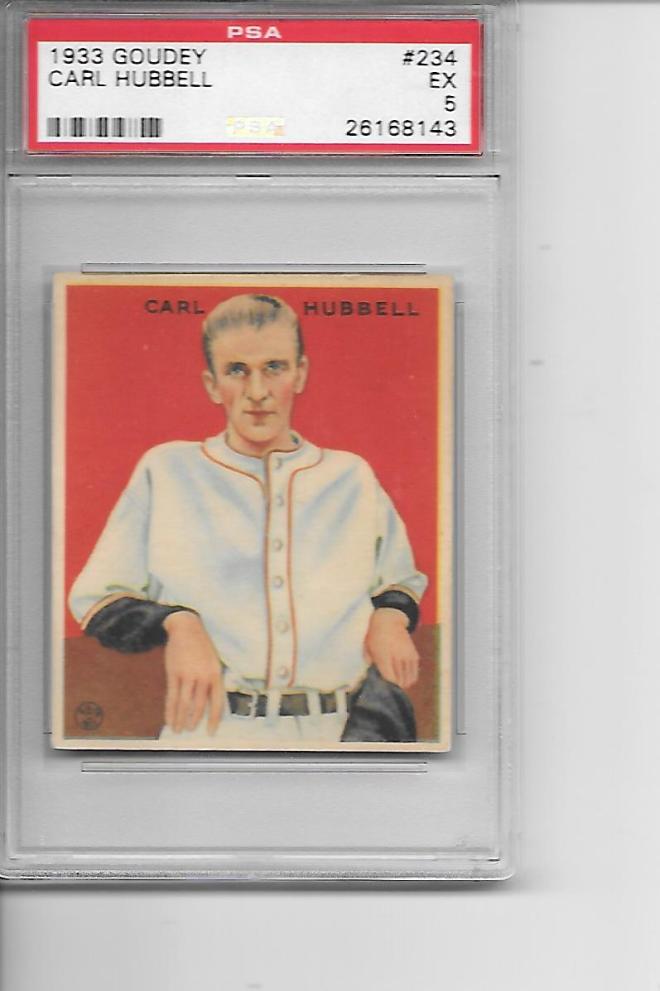
> Carl Hubbell (1934) – A Hall-of Fame pitcher for the Giants, “King Carl” is revered for his performance in the All-Star Game at the Polo Grounds on July 10th. Utilizing his famous screwball, Hubbell struck out five Hall-of-Fame AL batters in succession…Babe Ruth, Lou Gehrig, Jimmie Foxx, Al Simmons & Joe Cronin.


> Johnny Vander Meer (1938) – The Reds pitcher no-hit the Dodgers 6-0 after no-hitting the Boston Bees four days earlier. No other major league hurler has ever accomplished this feat.


> Lou Gehrig (1939) – Despite having one of the great careers in the history of the game, this defining moment came after his playing days were over. On July 4th at Yankee Stadium, the terminally ill “Iron Horse” told the crowd that “Today, I consider myself the luckiest man on the face of the Earth”.


> Mickey Owen (1941) – In the World Series, the Dodgers are leading the 4th game with two outs in the bottom of the 9th inning when Catcher Owen lets a 3rd strike get past him and the Yankees go on to win the game and the Series.


> Joe Nuxhall (1944) – Not yet 16 years old, the Reds LH Pitcher makes the first appearance of what would be a 16-year career. It was eight years before he pitched in the big leagues again.


> Jackie Robinson (1947) – On April 15th, he starts at 1B for the Brooklyn Dodgers and become the first player of color in the Major Leagues.


> Eddie Gaedel (1951) – The St. Louis Browns sent the 3’7″ pinch-hitter to the plate wearing uniform number 1/8. He walked on four pitches and was replaced by a pinch-runner.


> Bobby Thomson (1951) – “The shot heard ’round the world” was a home run in the bottom of the 9th inning to give the Giants the NL pennant over the Dodgers.


> Johnny Podres (1955) – Ending decades of frustration for Dodger fans, he shut out the Yankees 2-0 in game 7 of the World Series.


> Don Larsen (1956) – In game 5 of the World Series, this Yankee hurler pitched the only perfect game in post-season history when he retired 27 consecutive Dodger batters.


> Harvey Haddix (1959) – This Pirate hurler pitched 12 perfect innings but lost the game to the Braves in the 13th inning.


> Bill Mazeroski (1960) – The Pirates 2B hits a walk-off HR in the 7th game of the World Series to defeat the Yankees.


> Roger Maris (1961) – A good, but not great player overcame the intense pressure and the insult of the Commissioner to break Babe Ruth’s record with his 61st home run on October 1st…Holy Cow!


> Tony Cloninger (1966) – This Braves Pitcher beat the Giants 17-3 on July 3rd…he hit two grand-slam HR’s and had 9 RBI’s.


> Al Downing (1974) – He won 123 games in a 17-year career, but on April 8th, he gave up Hank Aaron’s 715th HR.


> Carlton Fisk (1975) – Another Hall-of-Fame player, he will always be remembered for guiding his HR off the foul pole in the 12th inning to beat the Reds in the 6th game of the World Series.


> Len Barker (1981) – This Indians hurler threw 84 of his 103 pitches for strikes and pitched a perfect game against the Blue Jays. He recorded 11 strikeouts and they were all swinging.


> Bill Buckner (1986) – Despite a career in which he had over 2,700 hits, all that is remembered is the error he made in game 6 of the World Series that doomed the Red Sox and opened the door for the Mets to become world champions.


> Kirk Gibson (1988) – His 9th inning walk-off (or was it limp-off) home run in game 1 of the World Series propelled the Dodgers to defeat the Athletics in 5 games…it was his only at-bat in the Series.


> Joe Carter (1993) – The Blue Jays OF hit a Series-ending 3-run HR to beat the Phillies and secure Toronto’s second consecutive title.


> Edgar Renteria (1997) – Another walk-off World Series winner, his 11th inning single won the 7th game for the Marlins against the Indians.


> Kerry Wood (1998) – This rookie pitcher for the Cubs struck out 20 Astros while pitching a one-hitter…it was his 5th major league start.


> Luis Gonzalez (2001) – His bloop single over the Yankees drawn-in infield in game 7 gave the Diamondbacks the World Series title.


> Aaron Boone (2003) – A walk-off home run in the 11th inning of game 7 gave the Yankees the AL Pennant over the Red Sox.


> Dave Roberts (2004) – As a pinch-runner, he steals 2B and eventually scores the tying run for the Red Sox, who go on the beat the Yankees in extra innings for the AL pennant.


> David Freese (2011) – Still an active player, nothing will ever compare to his performance for the Cardinals in the World Series where he had an OPS of 1.106.


That takes us to eight years ago and many current players still have their defining moment to come. Which of your memories did we leave out? How about names like Bucky Dent, Ray Fosse, Jack Morris, Fernando Tatis, Rennie Stennett, Vic Wertz, Cookie Lavagetto, Dusty Rhodes or Enos Slaughter? I’m guessing some of those snapshots are in your mental camera.


The Color Of The Game

'71 Clemente

Every April when Major League Baseball celebrates the anniversary of Jackie Robinson joining the Dodgers in 1947, the conversation inevitably turns to the question about the percentage of black players in the game being in decline. Everyone seems to have a different opinion and there is probably some validity to each point of view. The Old Duck subscribes to the theory that due to the increase in popularity of basketball and football, young black athletes in this country have many more options compared to 40 or 50 years ago. Even beyond the NBA and NFL, College sports is a booming business and High School programs are feeding those universities the players they need. No longer do youngsters become “dual sports” stars because the competition in each endeavor in so fierce, they must devote 100% of their time and training to a chosen sport.


The anecdotal evidence is very clear if you’ve watched a group of major league players over the last few years. Yasiel Puig, Yoenis Cespedes, Jose Abreu & Aroldis Chapman are all from Cuba and fans have been blown away by their skills and athleticism. These four average 6’2″ & 230 lbs. and some fans wondered out loud why we never see baseball players like this anymore. The answer seems obvious if you think it through. In Cuba, baseball is the national game with essentially no competition. A spectacular young athlete like Puig would be drawn to the baseball field with the dream of traveling the world as a member of the national team and then, hopefully, finding a way off the island to play in the major leagues. If Cespedes had attended the local High School in your community, he never would have made it to the baseball field. The basketball coach would have wanted him to play small forward and might still have lost out to the football coach who had him slotted as a Linebacker or a devastating Running Back.


Another aspect of this topic interestingly came up a few years back on the golf course. One of my golfing buddies and I were doing our usual damage to the course when the subject of baseball came up during a lull between hooks and slices. Over the years, he’s learned about my affinity for the game but indicated that he’s really not much of a baseball fan. It certainly wasn’t an aversion to sports in general because he has a Pittsburgh Steelers golf bag on his cart. On this particular day, I casually asked why he wasn’t also into baseball. Embarrassingly, he told me that his Father gave up his season tickets to the Pirates the year the team fielded an all-black line-up and while my friend was already a young adult at that point, baseball became an afterthought. Of course, none of us should be shocked that this type of attitude prevailed in the early 1970’s but a real-life story really crystallizes the significance. My friend’s Dad was born in 1922 and while it’s easy to be critical in retrospect, is it really possible for us to completely understand the society that was prevalent while he was being raised? Think about the fact that for the first 25 years of his life, major league baseball was all-white. Ironically, the City of Pittsburgh has a rich tradition in black baseball as both the Homestead Grays and the Pittsburgh Crawfords of the Negro Leagues called the steel city their home.


From a historical perspective, the date in question was September 1, 1971 and the Pirates, managed by Danny Murtuagh, were on their way to the National League pennant and an eventual World Series victory over the Baltimore Orioles. With the help of a wonderful article by George Skornickel in a 2011 SABR Research Journal titled “Characters with Character”, let’s take a closer look at this moment in the game’s archives.


One caveat to the story is that the first all-black line-up isn’t defined as an all-African American line-up, as the Pirates has numerous Latin players on the team who represented Panama, Puerto Rico, Venezuela and Cuba. The Bucs outstanding 1B Al Oliver was interviewed for the article and indicated that it’s doubtful that Murtaugh was even aware of the unique moment because his goal was to put the best available players on the field. Even Oliver didn’t notice the situation until the third or fourth inning and also pointed out that the line-up was configured with as many right-handed hitters as possible because the opposing Phillies had LH Woodie Fryman on the mound. Murtaugh’s quote after the game was, “I put the best athletes out there. The best nine tonight happen to be black. No big deal. Next question.”


In 1971, the Pirates were baseball’s most integrated team, with Black & Latino players making up almost half of the roster. Let’s take a look at that famous line-up card from 9/1/71…


> Rennie Stennett, 2B – This Panamanian was only 20 years old and didn’t become a regular player until the following season…he hit .353 in 153 AB’s in ’71.


> Gene Clines, CF – In his first full season, he was one of the Bucs back-up OF’s and hit .308 in 273 AB’s.


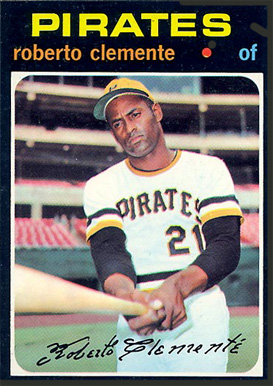
> Roberto Clemente, RF – The Puerto Rican legend was 36 but played like someone 10 years younger by hitting .341 and winning a Gold Glove.


> Willie Stargell, LF – “Pops” was the glue that held the team together…he hit 48 HR’s and finished 2nd in the MVP balloting.


> Manny Sanguillen, C – This All-Star was in his prime at age 27 and hit .319 while throwing out 50% of baserunners attempting to steal.


> Dave Cash, 3B – Normally the starting 2B, he was giving Richie Hebner the day off against a LH Pitcher.


> Al Oliver, 1B – Another versatile player, the team’s regular CF was playing 1B to give Bob Robertson a breather…he was a 7-time All Star.


> Jackie Hernandez, SS – This native Cuban was another role player, as Gene Alley was the everyday SS.


> Dock Ellis, P – The team’s ace with 19 Wins, he had appeared in the All-Star game a few months earlier where he gave up a famous home run to Reggie Jackson that cleared the right-field pavilion in Tiger Stadium.


How did the game turn out? The line-up strategy worked as Fryman gave up six runs in the 1st inning and the Pirates went on to win 10-7. Sanguillen hit a home run while Clemente & Stargell each had two hits and two RBI’s. A white Pitcher named Luke Walker came in to relieve early in the game and pitched the final six innings for the victory.


The curiosity 45+ years later is what the reaction was in Pittsburgh at the time. One local sportswriter looked back in 1997 and said, “Baseball at that time, in my opinion, had a whole lot of racial division and I think it went on inside baseball and angered some people. There was also some hostility in the city. Pittsburgh is a conservative city and there were a lot of snide remarks made privately. I’m sure there wasn’t a major reaction in the media other than to observe that it had taken place and it was a first.”


Another writer’s 1997 recollection was much more telling…”It’s always been a problem of management. How many blacks will the fans take? I went down to the GM’s office not long after that game and he had a stack of mail and told me I could take out any letter I want and it will be negative.”


GM Joe L. Brown defended the team he put together and said, “I was always proud of the fact that we never paid attention to color in our organization. I don’t think any club in the history of baseball had as many blacks on their roster at one time and consistently over the years.”


In 2011, Dave Cash remembered Danny Murtaugh with this quote…”I remember him saying that he didn’t realize who was out there, he just wanted to put the best team on the field and with the Pirate family, it didn’t matter what color you were. We were about winning. That was the most important thing. In 1970, when we got into the play-offs and lost, we tasted that defeat and didn’t want it to happen the next year. So in ’71, we took care of business!”


Clemente was the MVP of the Fall Classic, as he hit .414 with a 1.210 OPS.


E

Reaching 400

Williams '41

In today’s analytic game, a player’s Batting Average (BA) has lost some of its appeal and importance. Most fans realize that On-Base Percentage (OBP) is more important…both to the player’s value and team’s win-loss record. Without using the Internet, do most fans even know who had the best BA last season? Or, which player leads that category for 2019? The answers are Mookie Betts and DJ LeMahieu.


From a historical standpoint however, Batting Average has an exalted place in the game. For over a hundred years, it was the measurement of a hitter’s greatness and the stat we looked at first on the back of a baseball card. Even the Sunday paper listed every player in order of their BA…how else could we have determined the “Mendoza Line”?


In the modern era (starting in 1903), baseball has seen 27 players exceed 500 Home Runs, 32 pass the 3,000 Hits mark and 21 others have at least 1,800 RBI’s. But hitting .400? It has only been accomplished a dozen times and those seasons belong to only seven legendary players. And, due to numerous changes in the game, there’s a reasonably good chance it will never happen again. Let’s take a look at those magic numbers…


> 1911, Ty Cobb (Detroit Tigers) .419 – This should come as no surprise, as “The Georgia Peach” has the highest lifetime BA in history at .366. This was his 7th season in the big leagues and his first over the .400 mark…but it wouldn’t be his last.


> 1911, Shoeless Joe Jackson (Cleveland Naps) .408 – An impressive first full-season for Joe, as he also led baseball in OBP with .468. His lifetime BA is .356 but he was banned from baseball as a result of the “Black Sox” scandal. His final year in baseball was 1920 and he hit .382 at age 32!


> 1912, Ty Cobb (Detroit Tigers) .409 – Back-to back for Cobb in a season where he swiped 61 bases and had an OPS (On-Base + Slugging) of 1.040. Jackson was second in BA at .395.


> 1920, George Sisler (St. Louis Browns) .407 – The first .400 hitter in the “live-ball” era, he had 257 Hits and 122 RBI’s.


> 1922, George Sisler (St. Louis Browns) .420 – He “slumped” to .371 in 1921 and then came back with another amazing performance that included 51 SB’s and 18 Triples.


> 1922, Rogers Hornsby (St. Louis Cardinals) .401 – One of the greatest stat-lines of all time…250 Hits, 42 HR’s, 152 RBI’s.


> 1922, Ty Cobb (Detroit Tigers) .401 – He was slowing down at age 35, but still had another .400 season in him.


> 1923, Harry Heilman (Detroit Tigers) .403 – In his prime at age 28, he had an OPS of 1.113 and beat out Babe Ruth for the batting title by ten points. In ’25, he hit .393 and in ’27, hit .398.


> 1924, Rogers Hornsby (St. Louis Cardinals) .424 – This is the highest BA of the modern era. “Rajah” also drew 89 Walks for a .507 OBP!


> 1925, Rogers Hornsby (St. Louis Cardinals) .403 – Also led the NL with 39 HR’s & 143 RBI’s.


> 1930, Bill Terry (New York Giants) .401 – 254 Hits, 129 RBI’s and a 1.071 OPS.


> 1941, Ted Williams (Boston Red Sox) .406 – 6-for-8 in a double-header on the last day of the season got him over .400 and no player has done it since. He was 22 years old and opposing Pitchers walked him 147 times. When you add it all together, his OBP was .553…the highest ever until Barry Bonds discovered needles.


You are also slightly acquainted with one other person who has “hit 400”. Back in February of 2012, the great guys at mastersball.com invited me to contribute an article each week that touched on baseball and numerous related topics. It was a great relationship and I treasure their friendship to this day. After 200 columns, the Old Duck ventured into the blogosphere and today’s piece is number 200 under the byline of rotisserieduck.com.


After 7+ years and something over 250,000 words, there’s still a rush when I’m able to share my thoughts about baseball with family, friends and acquaintances. Some of you are occasional readers and others are dedicated “regulars” but you’re all appreciated.


Hope to see you at the ballpark.


Contact, Not Outcomes

'18 Alvarez Gold

MLB is on the cutting edge of sports technology and it is making their teams rich. In 2000, they established MLB Advanced Media (BAM) and it has become a $3 Billion enterprise that supplies streaming video services to ESPN, HBO and the WWE.


For the fan, player and front-office executive, BAM has become the go-to provider for advanced analytics through “Statcast”. For the past few seasons, this operation has tracked every pitch, hit & catch in every major league game and gives us information we’ve never been privy to before. Much of the data is proprietary but even the basics you can find at mlb.com are fascinating as well as informational.


One of the stats that has become mainstream is exit velocity. You see it on your TV screen every time a Home Run is hit along with the estimated distance.


Does exit velocity matter? Let’s look at the top ten hitters in average exit velocity for 2019 (through August 9th) and determine if your eyes tell the same story…


1) Aaron Judge – 97.9 mph

2) Joey Gallo – 96.2 mph

3) Nelson Cruz – 95.0 mph

4) Christian Yelich – 94.5 mph

5) Miguel Sano – 94.4 mph

6) Kyle Schwarber – 94.3 mph

7) Rafael Devers – 94.2 mph

8) Josh Donaldson – 94.1 mph

9) Yoan Moncada – 94.0 mph

10) Shohei Ohtani – 93.8 mph


The list seems to make reasonable sense but when you realize that Cody Bellinger (91.4), Mookie Betts (90.8), Ronald Acuna Jr. (90.8) & Mike Trout (90.8) aren’t even in top 35, you realize that exit velocity is only a piece of the puzzle.


With the numbers from StatCast, another statistical analysis is available to compare the best of the best when it comes to major league hitters. Here’s the definition…


” Expected Outcome stats help to remove defense and ballpark from the equation to express the skill at the moment of batted ball contact. By looking at the exit velocity and launch angle of each batted ball, a Hit Probability is assigned that gives each player an Expected Batting Average, Expected Slugging and (most importantly) Expected Weighted On-Base Percentage. These numbers tell the story of a player’s season based on quality and amount of contact, not outcomes.”


It may sound complicated, but the formula is essentially taking luck and ballpark factors out of the equation. So, the major league 2019 expected batting average for all players is .247. The top five are Cody Bellinger (.335), J.D. Davis (.320), D.J. LeMahieu (.318), Anthony Rendon (.318) & Christian Yelich (.317).


The 2019 expected slugging percentage for all players is .413 and, once again, here are the top five…Nelson Cruz (.655), Mike Trout (.655), Bellinger (.646), Yelich (.637) & Rendon (.601).


No surprise on the list for expected on-base average (mlb average is .319) as Trout leads with .460, then Bellinger (.448), Cruz (.435), Yelich (.433) & Rendon (.425).


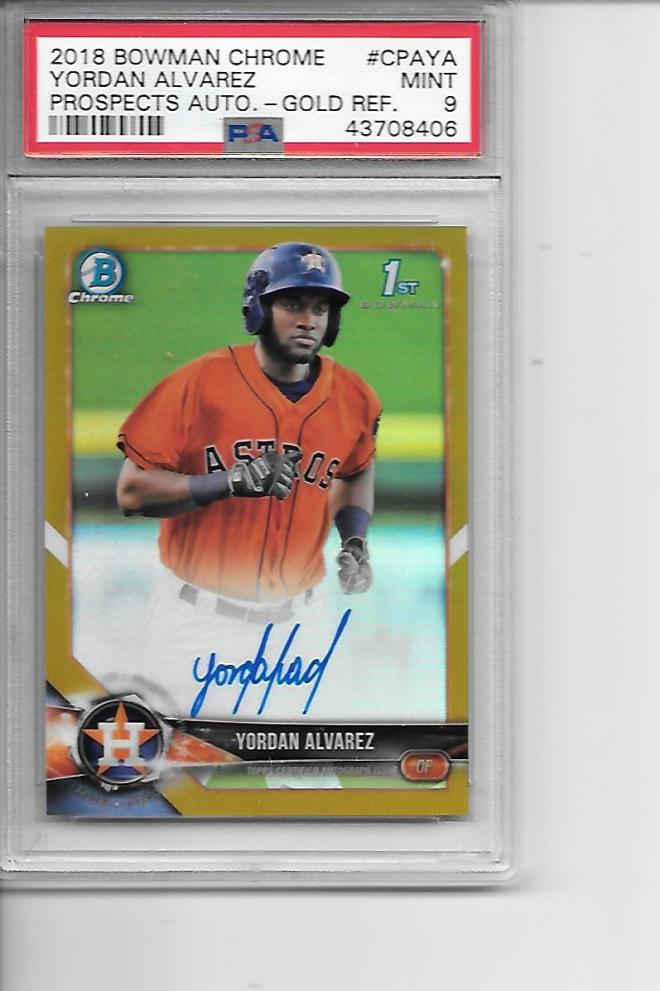
An interesting aside is that Astros rookie Yordan Alvarez (who has less than 200 AB’s) would be in 6th place with a .420 xOBA just ahead of J.D. Martinez (.412). And that doesn’t count the three HR game Alvarez had while I was typing this piece. Aaron Judge, George Springer and Freddie Freeman round out the top ten.


These are the best offensive players in the game…unless you’re fooled by your eyes.


I’ve Been Framed

Martin Heritage

Old-school fans had very little information when it came to judging the defensive skills of Catchers. The best option was to focus on their success with throwing out potential base-stealers. As with new analytic stats for hitters like OPS, the defensive value of a team’s backstop isn’t determined by only one measure. For example, if you learned that James McCann of the White Sox was in the top five in the caught stealing statistic (35.6%), you might assume that he’s a positive contributor behind the plate. The science of pitch framing however, might tell a different story.


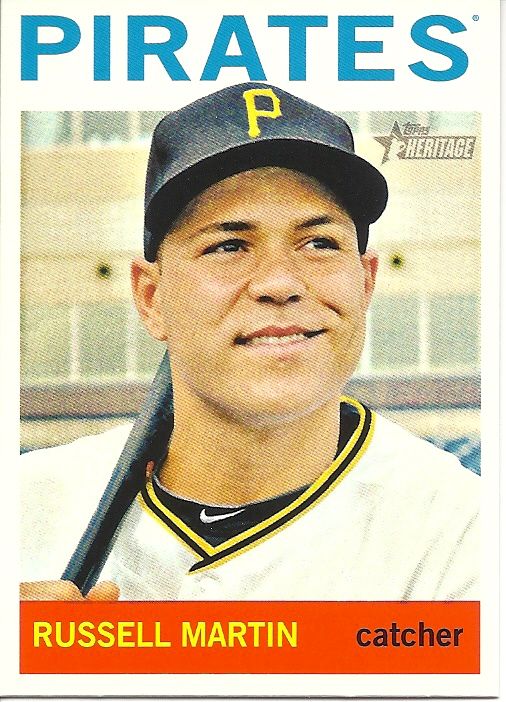
This old-school / analytic fan wouldn’t jump to a positive conclusion based on the caught-stealing stat because a few years ago, I took the time to read “Big Data Baseball” by Travis Sawchik. It is the story of the Pittsburgh Pirates resurgence starting in 2013 and how they got ahead of the curve regarding baseball analysis. This mid-market team with a limited payroll, found ways to win that confounded the experts. Defensive shifts, pitching adjustments and pitch-framing helped them turn around a 20-year losing streak. Possibly the most important move they made was signing a Catcher that had lost much of his appeal and was coming off a season where he batted just .211. His name was Russell Martin and the two-year $15 Million deal turned out to be life-changing for the Pirates & Martin.


In  both 2013 & 2014, Martin finished in the top ten for all MLB Catchers in the amount of runs saved through pitch-framing. If you think that statistic is a bunch of hooey, consider this…in 2015, the Blue Jays signed Martin (at age 32) to a five-year, $82 Million free-agent contract. The Pirates could no longer afford him, so they acquired Yankees back-up Catcher Francisco Cervelli to take Martin’s place. That season (2015), Cervelli rated out as the best pitch-framer in baseball and the Pirates locked him up with a three-year, $30 Million deal that paid off handsomely except when concussions got in the way.


What does pitch-framing mean? With today’s video technology, it has become rather simple to determine the number of called strikes caught outside the strike zone. That isn’t the only criteria, however, as Catchers can be guilty of catching a pitch in the strike zone that ends up being called a ball by the umpire. All of this, and more, goes into the overall ratings. If you’d like to see the formulas and better understand the statistic, go to statcorner.com.


If you’re a real baseball fan and actually watch at-bats and how they play out, you can begin to understand how this unique ability can change the dynamic of the game. The difference in success when the hitter is ahead in the count as opposed to being behind in the count is something even old-schoolers understand.


So, who are the best framers for 2019 through August 3rd? Austin Hedges of the Padres leads the way with 16.8 RAA (Runs Above Average). Red Sox backstop Christian Vasquez is 2nd (13.4) followed by the Brewers Yasmani Grandal (11.1) and Roberto Perez of the Indians (10.3). Two perennial top ten Catchers in this stat are 5th & 6th…Tyler Flowers of the Braves (9.7) and Tucker Barnhart of the Reds (9.5).


The #1 Catcher in throwing out runners is J.T. Realmuto of the Phils at 46.2% and he’s 10th in framing at 4.3 RAA. Perez is 2nd in nabbing base-runners at 39.5% and Vasquez is right behind at 39%. Talk about adding value to your team? As for McCann, his pitch-framing is the third worst in baseball (-10.6 RAA) topping only Pedro Severino of the Orioles and Elias Diaz of the Pirates (Cervelli’s replacement).


If you wonder about the impact of saving runs defensively, think about this…teams with a negative run differential almost never make the playoffs.


Believe In The OPS

Yelich Heritage

On the shelf in my office is the 1985 edition of “The Bill James Historical Baseball Abstract”. It wasn’t the first material of his that I read and certainly not the last, but it looks down at me with a reminder of the era in which this fan transitioned from old-school to analytic. After all, the inaugural “Rotisserie League Baseball” book had come out in 1984 and our home league (which is still going strong) started that April.


As a kid looking at the backs of baseball cards and reading Street & Smith’s preview issue along with “Who’s Who In Baseball”, the statistics we learned were the ones they gave us. Batting Average (BA), Home Runs (HR), Runs Batted In (RBI’s) were what we used to determine if a player was fair, good or great. The back of Mickey Mantle’s 1959 Topps card doesn’t even tell you how many Stolen Bases (SB’s) he had the previous season. The 1961 Who’s Who did include SB’s but nothing so exotic as Slugging Percentage (SLG) or On-Base Percentage (OBP).


So, now that at least 30 years has passed in the debate between tradition and analytics, maybe we can finally agree on the validity of one stat. No, I’m not going to try and sway you about Wins Above Replacement (WAR) because that glazed look in your eyes tells me it’s a hopeless task. As with Capt. Queeg in the Caine Mutiny, I’m going to “prove beyond the shadow of a doubt…with geometric logic, that a valid stat does exist”.


In his book, “Ahead Of The Curve”, Brian Kenny writes that Bill James #1 revolutionary theory about baseball is that getting on base is the most important thing in offense. It seems to make sense intuitively, but OBP was never on baseball cards, in magazines or listed in the Sporting News. After all, how did Eddie Yost of the Tigers lead the AL in Runs Scored (115) in 1959 at age 32 with a BA of only .278? Simple…he led the AL in OBP at .435. No player was going to get benched if he got on base 40% of the time, but writers and broadcasters paid no attention because it wasn’t a mainstream stat. Over 40 years later, Billy Beane and the A’s, followed quickly by the Red Sox, found that OBP was under-valued in the game along with the players who provided those quality numbers. The 2002 Athletics had eight offensive players with an OBP of .348 or better and they won 103 games with a small-market payroll. The 2004 Red Sox broke the “Curse of the Bambino” with eleven (11) hitters having a .365 OBP or higher.


Old-school fans and pundits still weren’t convinced and argued that OBP diminished the contribution of power hitters because those HR’s they hit were worth three more bases than a walk. That brings us to a slightly more traditional stat – Slugging Percentage. SLG tells us how many total bases a hitter has accumulated compared to his amount of plate appearances. After all, Roger Maris & Mickey Mantle led the AL in SLG in ’60 & ’61, so what could be more fair to power hitters?


That brings us to the stat that really matters when analyzing major league hitters. If you take OBP and add it to SLG, a player is rewarded for both his on-base skills and power production. The result is On-Base + Slugging (OPS) and even though we never spotted it on the back of a baseball card, it is the number that tells the tale. How do we know? Because there are only seven players with a lifetime OPS over 1.000…Babe Ruth, Ted Williams, Lou Gehrig, Barry Bonds, Jimmie Foxx, Hank Greenberg & Rogers Hornsby…Mike Trout is eighth at .999.  Others in top 20 include Mickey Mantle, Joe DiMaggio, Stan Musial, Frank Thomas, Johnny Mize & Jim Thome. Even old-school fans have to admit that there aren’t any flukes on that list.


Other than Trout, the three best active players are Joey Votto (.944), Miguel Cabrera (.937) & Albert Pujols (.931). As all are in their declining years, the numbers won’t get any better.


So, in today’s game, you’ll see what is called the “slash line” for an offensive player. It looks like .252/.322/.433 (BA/OBP/SLG), which is the average production for all major league hitters through July 26th. By adding the last two numbers, you arrive at the OPS of .755. While the OBP hasn’t changed much in recent years, the juiced baseball has increased the SLG by 4% since the last time we did this analysis in 2016.


In late-July of 2019, who are the best offensive players in the game based on OPS? Let’s look at the top ten…


1) Christian Yelich, Brewers OF…1.136 – Last year’s NL MVP is at it again in his age 27 season…he’s leading the league with 35 HR’s


2) Cody Bellinger, Dodgers OF…1.108 – The best player on the best team…and he’s only 23 years old.


3) Mike Trout, Angels OF…1.107 – At age 27, this player is so good, he’s almost taken for granted. This will be his 3rd MVP award.


4) Anthony Rendon, Nats 3B…1.010- Great timing for this 29 year-old All-Star, he’ll be a free agent after the season.


5) Nelson Cruz, Twins DH….988 – Even at 39, “Boomstick” hasn’t slowed down.


6) Josh Bell, Pirates 1B….974 – Lots of pundits thought he didn’t exhibit the skills to be a top-rated corner infielder…he has 86 RBI’s with two months to go.


7) Pete Alonso, Mets 1B….973 – Looks like a slugger and performs like one…this rookie has 34 HR’s.


8) Xander Bogaerts, Red Sox SS….973 – 2018 was great but 2019 is even better…at age 26.


9) Kris Bryant, Cubs 3B….972 – It seems like he isn’t having that good of a season but batting 2nd in the line-up takes advantage of his on-base skills (.408 OBP).

10) Charlie Blackmom, Rockies OF….966 – No doubt helped by altitude, but he’s a solid performer.


Now, of course, we could also discuss OPS+, which adjusts the figure based on the ballparks. OK, I see that “deer in the headlights” look, we’ll talk about it some other time.